H&M Group: Integrating Sustainability, Collaborative Financing

  • Decarbonization

Integrating decarbonization into business steering frameworks and leveraging shared investment across global supply chains.
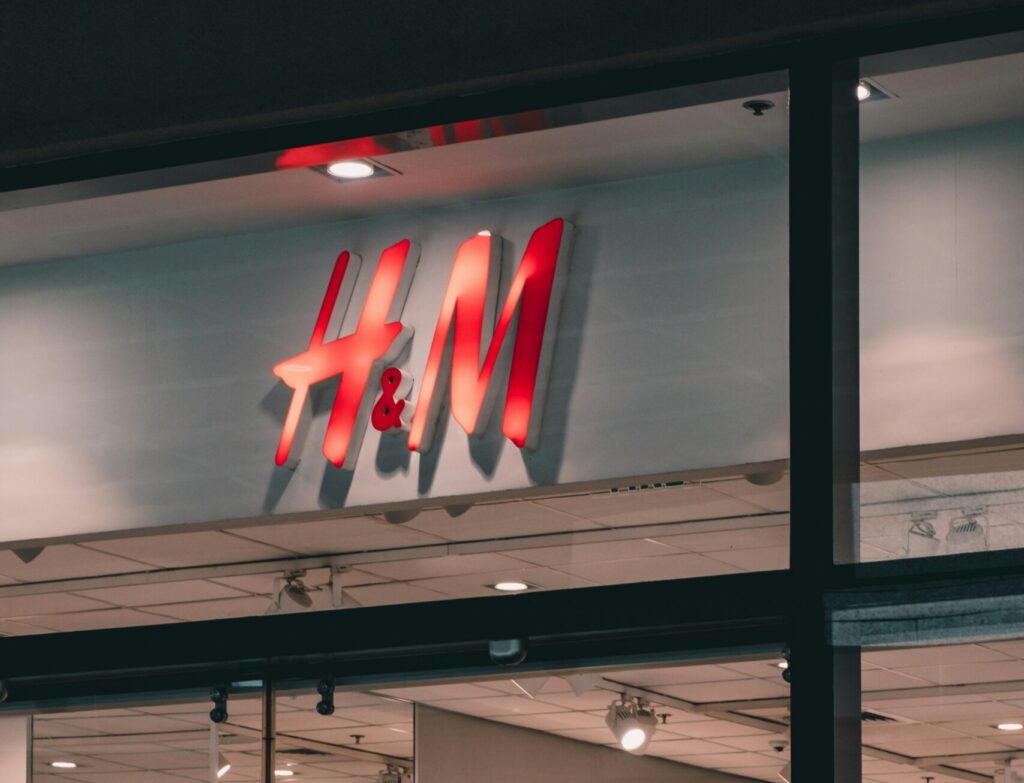
A view of the H&M sign and a window display in a shopping mall.
November 20, 2026

H&M Group (STO: HM-B) is actively aligning its global operations with long-term climate targets through systemic collaboration, supply chain decarbonization, and integrated financial steering. As published in the H&M 2025 Sustainability Report, the retail giant continues to strengthen its alignment with Corporate Sustainability Reporting Directive (CSRD) requirements while driving transparent, actionable reporting across its value chain.

KeyTop Takeaways

  • H&M Group embeds sustainability directly into its core business steering frameworks and financial decision-making processes rather than treating it as a separate agenda.
  • Transitioning from long-term target setting to implementation requires co-creating decarbonization strategies directly alongside sourcing, procurement, and supplier partners.
  • In partnership with industry initiatives like The Fashion Pact and Apparel Impact Institute, H&M is advancing collective financing mechanisms – such as the Future Supplier Initiative – to pool capital and de-risk supply chain decarbonization investments.
  • Grounded in standardized, pre-competitive tools like the Higg Index, stewarded by Cascale and exclusively available on Worldly, shared data provides the necessary foundation for joint brand-supplier transition plans.

Integrating Sustainability into Business Steering

A primary lesson from H&M’s decarbonization journey is that climate action in the supply chain cannot be driven by a sustainability team in isolation. Decarbonization strategies must be developed in tandem with sourcing, procurement, and supply chain teams, starting with company target setting, co-created strategy development, and common standards for performance measurement. To embed sustainability into day-to-day operations, H&M introduced internal mechanisms such as internal carbon pricing, tying emissions generated by supplier or material choices directly to procurement P&L metrics.

As Hampus Starre Friberg, head of sustainability, strategy, and controlling at H&M Group, explained on the Source of Good Podcast, aligning business leaders with climate objectives relies on co-creating feasible transition plans rather than imposing administrative complexity.

“We cannot look at sustainability – either if it is decarbonization or other sustainability topics – we can’t look at them as something that’s happening on the side or an agenda that we’re driving somewhere else,” Friberg said. “We have one business strategy, and it’s resolving the sustainability topics integrated in that strategy.”

Additionally, the H&M 2025 Sustainability Report emphasizes that integrating environmental KPIs across internal steering frameworks builds organizational resilience while supporting broader corporate goals. Details in this case study are sourced from these materials; Cascale has not independently verified the information.

Overcoming Fragmentation Through Collective Financing

Because brands share common supply chains, individual brand efforts often lead to fragmented requirements, administrative fatigue for suppliers, and mismatched financial incentives. When a single brand finances a supplier decarbonization project, it bears the full cost while the resulting emission reductions benefit all participating buyers.

To address this challenge, in March 2026 H&M Group and EY released a landmark white paper titled Collective Financing Models to Accelerate Supply Chain Decarbonization. The paper highlights how collaborative finance structures pool capital, share investment risks, and send unified demand signals to suppliers.

Together with Guidehouse, The Fashion Pact, and Apparel Impact Institute, H&M also co-founded the Future Supplier Initiative. As Friberg shared on the Source of Good Podcast, this platform aggregates supply chain projects into financeable portfolios, providing suppliers with affordable capital, technical support, and multi-brand backing needed for large-scale implementation.

Demonstrating this commitment to industry-wide engagement, Friberg represented H&M on the main stage at Cascale’s Annual Meeting, joining EY and HSBC on a panel titled “From Commitment to Capital Allocation: How Organizations Are Prioritizing Sustainability Investments Under Pressure.” During the panel, Friberg emphasized that overcoming the apparel industry’s challenges requires bridging the gap between ambition and implementation through shared financing models, commercial alignment, and collaborative capital allocation that connects climate resilience directly to long-term business value.

Leveraging Shared Data & The Higg Index Framework

Standardized, reliable data serves as the critical prerequisite for multi-stakeholder alignment and collective financing. Disparate data models increase complexity, whereas shared measurement platforms enable brands, suppliers, and financial institutions to evaluate performance and projected emissions reductions consistently.

H&M relies on tools to establish baseline environmental impacts and maintain transparent supply chain data. As shared in the company’s 2025 Sustainability Report, Higg Index tools including the Higg Materials Sustainability Index (Higg MSI) and the Higg Facility Environmental Module (Higg FEM), stewarded by Cascale and exclusively available on Worldly, provide a foundational, pre-competitive platform that allows industry partners to identify hotspots and assess technical interventions without competing on baseline environmental measurement.

Continuous updates to data frameworks ensure transparency and rigor as companies move deeper into Scope 3 decarbonization, as outlined in the report. Achieving global apparel decarbonization goals requires moving beyond individual ambitions into industry-wide execution. By connecting sustainability to financial steering, participating in pre-competitive data frameworks, and pooling capital through collective financing platforms, H&M Group demonstrates how large-scale retail brands can tackle supply chain barriers alongside global partners.

Curious about Cascale membership and the benefits our members receive?
Decarbonization Isn’t Just a Goal, It’s a Business Strategy with GG International

For manufacturers, the path to decarbonization can be far more complicated than setting a goal, especially when new technologies come with significant costs. But sustainability can also create business opportunities when approached strategically. Shein Han, Director of Compliance and Sustainability at GG International, shares how sustainability can strengthen business, why financing remains one of the biggest hurdles, and how brands, manufacturers, and policymakers can work together to decarbonize more efficiently.

November 17, 2026

Learn more about GG International

Produced by Cascale and Hueman Group Media.

Views and opinions expressed during the podcast are those of the individuals expressing them and do not necessarily reflect those of Cascale or Hueman Group Media.

Sustainability at “China Speed” with ANTA Sports

When ANTA Sports began looking into sustainability, its American and European counterparts had been at it for decades. So how did the manufacturing company close the gap? Suki Wong, Vice President of Sustainability at ANTA Sports, reveals how they accelerated progress at “China speed” by turning sustainability into a team sport.

Cover Image for Source of Good, Season 5, Episode 5 with Suki Wong, ANTA Sports
November 02, 2026

To learn more about ANTA Sports, visit anta.com

Produced by Cascale and Hueman Group Media.

—

Views and opinions expressed during the podcast are those of the individuals expressing them and do not necessarily reflect those of Cascale or Hueman Group Media.

Fast Retailing: Turning Data Into Supply Chain Action

  • Decarbonization
  • Decent Work

A signal is only useful if someone acts on it — here’s how UNIQLO’s parent company turns standardized data into decarbonization, traceability, and long-term supplier partnerships at scale.

Fast Retailing's media event on June 25 in New York City
October 28, 2026

Fast Retailing (TSE:9983), the parent company of UNIQLO, has embedded sustainability into its LifeWear business model, connecting product quality and durability with responsible sourcing, supply chain transparency, environmental performance, human rights, and circularity. The company combines data from the Higg Index, stewarded by Cascale and exclusively available on Worldly, with its own monitoring and traceability systems, direct factory engagement, and long-term supplier relationships to make sure a flagged risk leads to a conversation and a plan, not just a report.

Fast Retailing’s approach runs along three outcomes Cascale members work toward together: improving supply chain environmental performance, accelerating decarbonization, and transforming the purchasing practices that support decent work. Details in this case study include references from Fast Retailing’s 2025 Integrated Report and the Cascale “Source of Good” podcast episode with Eshan Chan, supply chain sustainability manager at Fast Retailing.

Key Takeaways

  • Improving supply chain environmental performance: Fast Retailing uses Higg Index tools, including Higg FEM and Higg FSLM, alongside its own monitoring systems to understand factory energy use and flag risks, and trained 716 factories on the Higg Index in FY2025.
  • Accelerating decarbonization: Higg FEM data informs individual factory plans to reduce greenhouse gas emissions, backed by technical support and energy diagnostics.
  • Transforming purchasing practices: Since 2022, Cascale Better Buying has given Fast Retailing structured, anonymous feedback from manufacturers on its own planning, forecasting, and lead times.
  • Deeper supply chain visibility: Since 2023, Fast Retailing has worked to trace UNIQLO products from raw-material origins to specific garment factories, expanding its focus upstream to spinning mills, fiber-processing facilities, and raw-material sources.
  • From measurement to action: Fast Retailing combines Higg Index data with factory engagement, technical support, and purchasing-practice feedback to address identified risks and improve performance.

From Facility Data to Factory-Level Action

For any company sourcing from hundreds or thousands of factories, a standardized assessment can only go so far on its own. A facility-level score can flag a risk, but flagging isn’t the same as fixing — closing that gap requires a way to route each signal to the right follow-up, at scale, across a supply chain that often extends further upstream than a company can easily see.


Higg FEM and Higg FSLM are part of the Higg Index, a suite of tools stewarded and governed by Cascale and delivered globally through Worldly’s technology platform. Higg FEM plays a central role in Fast Retailing’s environmental management and factory decarbonization work: the company has used Higg FEM information to understand factory energy consumption and support individual factory plans to reduce greenhouse gas emissions.


Fast Retailing pairs that data with active supplier support rather than leaving factories to interpret assessment results on their own. According to its 2025 reporting, the company provided Higg Index training to 716 factories during FY2025 — building supplier capability to use the tools well, alongside factory visits and technical support designed to help turn a flagged issue into an improvement plan.

Expanding Traceability Upstream

Fast Retailing has also worked to extend visibility beyond first-tier production. According to its 2025 report, the company began extending partnerships upstream in 2023, working to trace raw materials to specific garment factories and building an in-house system to manage supply chain information, with standards covering quality, production management, environmental performance, and human rights applied across the chain.

The company reports that cotton spinning mills have been identified and audited, and traceability audits have expanded to cashmere fiber-cleaning factories and spinning mills. In 2025, Fast Retailing began sourcing wool from designated farms in Australia and conducted trial audits covering animal welfare, environmental performance, human rights, and occupational safety.

“We want to make sure that our customers can buy our products with confidence — that they know UNIQLO knows the process throughout, and where the fabrics and everything is coming from,” Chan said on “Source of Good.” “We started mapping our garment factories to fabric mills, and now to spinners and our upstream suppliers.” The company manages this information through an internal digital system that records which supplier handled each step, letting Fast Retailing verify that submitted information reflects what actually happened at each stage.

That same push for reliable visibility extends to how Fast Retailing approaches human rights risk. The company’s 2025 report states that it strengthened its assessment program during the year to better identify human rights risks and improve inspection quality, adding checks related to factory governance, organizational structures, and the reliability of information supplied during assessments. Its human rights program combines workplace monitoring, due diligence, grievance mechanisms, and direct supplier engagement; its environmental program combines Higg FEM data with training, factory visits, and technical support.

Built on Long-Term Supplier Trust

None of this works without supplier relationships built over time. Fast Retailing’s 2025 report shows that 40 percent of its top 40 suppliers have relationships with UNIQLO spanning 20–29 years, while another 12 percent have worked with the company for 30 years or more. The company says these long-standing relationships create the foundation for joint work on quality, productivity, environmental performance, human rights, and working conditions — with suppliers sharing targets around GHG reductions, recycled materials, and workplace improvements, and investments in new technologies improving both efficiency and working environments.

This approach was highlighted at Fast Retailing’s June 2026 “LifeWear = A New Industry” event in London, where Cascale also participated.

Using Cascale Better Buying to Improve Purchasing Practices

Since 2022, Fast Retailing has used the Cascale Better Buying surveys to examine how its own purchasing practices affect suppliers, and support the process of direct meetings with strategic suppliers. “With Better Buying, it gave us the scale and the analytics that we just didn’t have before,” Chan said on “Source of Good,” describing anonymous surveys now run across the wider Fast Retailing group. Chan goes on to explain that feedback helped Fast Retailing identify opportunities to improve planning, forecasting, communication, and lead times.

This provides an important complement to Higg Index assessments. While Higg Facility Tools provide insight into environmental and social performance within facilities, Cascale Better Buying helps Fast Retailing understand how its own commercial decisions influence supplier performance and working conditions.

Driving Results

Fast Retailing’s combined use of standardized data, traceability, and supplier engagement is translating into measurable outcomes. Key outcomes include:

  • Scope 1 and 2 emissions: FY2030 target of a 90 percent reduction from its own operations compared with FY2019, a target Fast Retailing surpassed in 2025.
  • Scope 3 (supply chain) emissions: FY2030 target of a 30 percent reduction (revised upward from 20 percent in 2025 after reaching its initial target early), with emissions at 19.9. percent below the FY2019 baseline, as of FY2025).
  • Low-GHG materials: Reaching 19.4 percent of materials used in FY2025 against a roughly 50 percent target by FY2030, with recycled polyester reaching 46.4 percent of polyester used.
  • Energy diagnostics: Funded at select factories to identify excessive energy use and prioritize efficiency investments.

The Role of Collective Action

Fast Retailing’s experience demonstrates how standardized measurement can provide a foundation for broader supply chain transformation when combined with supplier relationships, transparency, and action.

Cascale’s role has been to provide the shared infrastructure underneath that work. Higg Index tools give Fast Retailing a common framework for facility-level data instead of a proprietary one it would otherwise have to build and maintain alone — the same framework other Cascale members and their supply chain partners already use. Better Buying offers a similar foundation: a structured, anonymous channel for supplier feedback that Fast Retailing didn’t have to design itself. Fast Retailing has been a Cascale corporate member since 2014, and the results in this case study — lower supply chain emissions, visibility further upstream, and decades-long supplier  partnerships — are the product of the company’s own sustained work, built on that shared foundation.

Shared tools mean Fast Retailing didn’t have to build this infrastructure alone — and a decade of consistent use is what let the company scale it, training hundreds of factories in a single year and extending traceability further upstream each year, without starting over each time. As supply chain pressures grow more complex, that’s what shared data and a wider community of members make possible: measurement that scales into collective progress.

Putting it Into Practice

Fast Retailing’s work draws on tools and communities any Cascale Corporate Member can use.

Improve supply chain environmental performance. Higg FEM is the foundation of Fast Retailing’s factory environmental work. The Higg FEM 2026 launch, the Higg FEM Peer Action Groups on Cascale Connect, and benchmarks in the Member Analytics Portal give members the same foundation.

Accelerate decarbonization. Turning facility energy data into reduction plans is the work the Decarbonization Knowledge Hub, the Climate Action Community of Practice, and the Manufacturer Climate Action Program (MCAP) exist to support.

Transform purchasing practices. Better Buying gave Fast Retailing manufacturer feedback at a scale it didn’t have before, and Higg FSLM showed it where to look closer. The Responsible Purchasing Practices Learning Series this fall, the Higg FSLM CAF v2.0 update in November, and the Decent Work Community of Practice support members doing the same.

Exploring membership? Associate and Corporate membership meet different needs. One is for credible, comparable measurement. The other adds a seat at the table shaping where the industry goes. Explore membership →

Turning Data Into Action with la Vie en Rose

Data only matters if you do something with it. But too often, sustainability data sits on a shelf instead of driving real change.

In this episode, Sarah Baker, Principal Advisor of Corporate Social Responsibility at la Vie en Rose, shares how the Canadian company is turning data into action — from calculating FLAG emissions to setting science based targets — and how support from the Cascale community helped her small team navigate the process.

October 21, 2026

To learn more about la Vie en Rose, visit lavieenrose.com

Produced by Cascale and Hueman Group Media.

Views and opinions expressed during the podcast are those of the individuals expressing them and do not necessarily reflect those of Cascale or Hueman Group Media.

How Digital Product Passports Could Transform Fashion with SML Group

  • Source of Good Podcast

New EU regulations will soon require Digital Product Passports (DPPs) for certain apparel products sold in the EU, but Nanna Ingemann Dalsgaard sees them as far more than a compliance checkbox. In this episode, she explains how a simple QR code or hidden chip embedded in a garment could reshape supply chain transparency, customer engagement, and the future of how we shop.

October 09, 2026


Please note: Since recording this episode, Nanna Ingemann Dalsgaard’s role at SML Group has changed to Vice President, Strategic Intelligence at SML Group.

NOTE: Digital Product Passport requirements for textiles and apparel under the EU Ecodesign for Sustainable Products Regulation (ESPR) are still under development. The textile-specific requirements, including the detailed DPP requirements, will be defined through the relevant product-specific delegated act. Regulatory references in this conversation therefore reflect the status at the time of recording.

To learn more about SML, visit sml.com

Check out our previous episode about Digital Product Passports with Nobody’s Child

Produced by Cascale and Hueman Group Media.

Views and opinions expressed during the podcast are those of the individuals expressing them and do not necessarily reflect those of Cascale or Hueman Group Media.

How Collective Financing Models Can Jumpstart Supply-Chain Decarbonization with H&M

The next phase of climate action depends on pre-competitive collaboration across shared supply chains. Hampus Starre Friberg, head of sustainability, strategy, and controlling at H&M Group, explains how the company is helping to build collective financing models to decarbonize shared supply chains.

September 22, 2026

Check out H&M Group’s latest Annual Sustainability Report

To learn more about H&M, visit hmgroup.com

Produced by Cascale and Hueman Group Media.

Views and opinions expressed during the podcast are those of the individuals expressing them and do not necessarily reflect those of Cascale or Hueman Group Media.

A Thermometer Never Cured A Fever: From Measurement To Impact with Ying McGuire

Cascale’s CEO Ying McGuire shares why now is the time for the consumer goods supply chains to move from measuring problems to working together on solutions – treating social and environmental sustainability as a business strategy.

September 08, 2026

Learn more about Cascale membership

Produced by Cascale and Hueman Group Media.

Views and opinions expressed during the podcast are those of the individuals expressing them and do not necessarily reflect those of Cascale or Hueman Group Media.

The Business Advantage of Sustainability Investment with Gokaldas Exports

For global apparel manufacturers, real change doesn’t happen with the flip of a switch. According to Siva Ganapathi, Vice Chairman & Managing Director at Gokaldas Exports, it’s more like steering a massive ship in a new direction. In this episode, Siva demonstrates the importance of long-term vision versus short-term thinking, and how investing in sustainability delivered a business advantage for Gokaldas.

August 04, 2026

Learn more about Gokaldas Exports.

Produced by Cascale and Hueman Group Media.

Views and opinions expressed during the podcast are those of the individuals expressing them and do not necessarily reflect those of Cascale or Hueman Group Media.

Why Components Count with Stretchline

The neck tape in your shirt collar, the waistband in your yoga pants, the strap in your bra – these small components are easy to overlook. But as Nilanthi Wijegunawardena, Group Lead for Environmental Sustainability and Compliance at Stretchline, explains, they play a crucial role in a garment’s overall sustainability. Today, we go deep on the details and explore why the industry needs to get more honest about the true cost of improvement for manufacturers.

July 24, 2026

Learn more about Stretchline

Produced by Cascale and Hueman Group Media.

Views and opinions expressed during the podcast are those of the individuals expressing them and do not necessarily reflect those of Cascale or Hueman Group Media.