


On March 6, 2024 we hosted over 200 attendees at the Manufacturer Forum: Dhaka under the theme “Catalyst for Change.”
Cascale convened industry leaders to explore BBPPI 2025 insights, highlighting shared responsibility between brands and suppliers amid global market volatility.
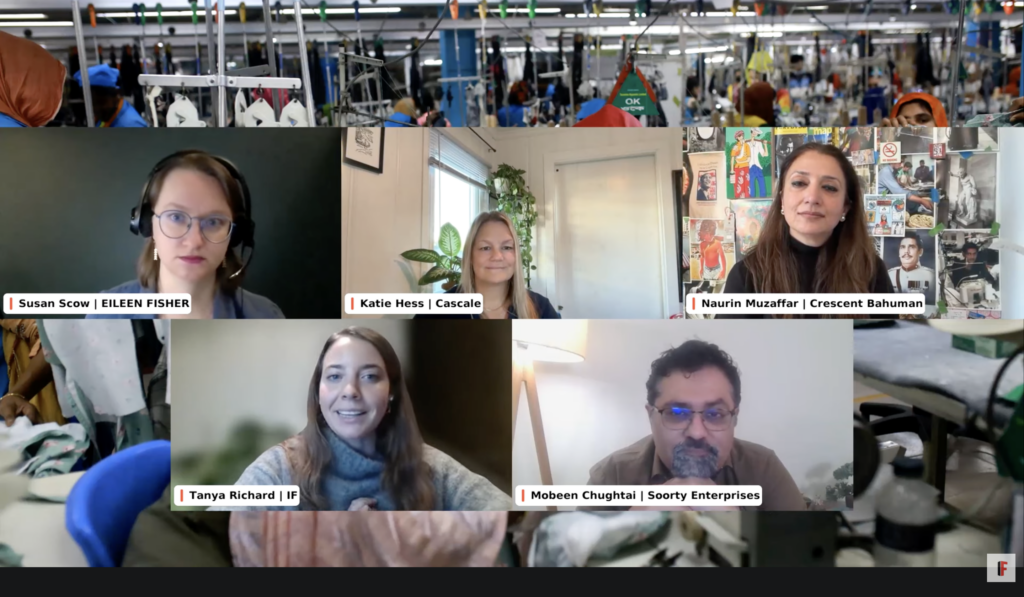
Cascale recently played a convening role in a jointly produced webinar with Innovation Forum, “Better Buying 2025 Insights: Navigating Global Volatility and Defining the Next Steps for Better Purchasing Practices.”
The December virtual event brought together more than 250 executives and supply chain leaders from across the consumer goods industry to examine how responsible purchasing practices can be strengthened amid ongoing market uncertainty.
Grounded in both data and real-time industry feedback, the webinar underscored the need for shared responsibility between brands and suppliers, and the interdependent roles each plays in planning, sourcing, and purchasing decisions that directly shape environmental and social outcomes.
To set the stage, Katie Hess, head of product at Cascale’s Better Buying, delivered key insights on the Better Buying Purchasing Practices Index (BBPPI) 2025. The survey is free to complete and maps anonymous supplier feedback across seven key indicators.
Hess highlighted how global pressures — including tariffs and fluctuating demand — are placing significant strain on purchasing processes, with the steepest declines seen in planning and forecasting. Supplier experiences, she noted, vary widely depending on buyer practices, sourcing contexts, and regional dynamics.
She emphasized that BBPPI is not intended as a static benchmark, adding: “When brands actually use the data with their suppliers, behaviors and outcomes change.”
Hess also reinforced communication as a recurring theme across Better Buying surveys, stressing that purchasing practices must be treated as a core business priority, not solely as a CSR initiative.
Following the data presentation, a panel of experts joined to discuss perspectives on the findings, while identifying areas for improvement.
Speakers included Mobeen Ahmed Chughtai, group head of CSR and corporate communications at Soorty Enterprises Pvt. Ltd.; Naurin Muzaffar, lead advisor sustainability strategy, operations, and transparency at Crescent Bahuman Ltd.; and Susan Scow, sustainability impact specialist at Eileen Fisher, Inc. As moderator, Tanya Richard, chief operating officer and head of stakeholder engagement at Innovation Forum, guided the discussion.
Scow highlighted the value of long-term supplier relationships, noting that Eileen Fisher’s average supplier partnership spans approximately eight years, with some relationships extending beyond 25 years. She shared how Better Buying data can inform product development and logistics decisions — such as shifting freight from air to sea — and pointed to the benefits of supplier-driven initiatives through Cascale’s Manufacturer Climate Action Program (MCAP).
From the supplier perspective, Chughtai spoke candidly about the risks suppliers face when sharing feedback, noting their frequent fear of repercussions for speaking out. He emphasized the importance of suppliers being able to set boundaries and engage in honest dialogue with brand partners.
Muzaffar echoed these challenges, describing a “state of confusion” driven by paused orders and limited visibility that undermines planning. She also raised critical questions around growing regulatory demands and lagging progress on environmental and social goals.
Across perspectives, speakers aligned on the importance of clear communication, trust, and supplier inclusion. The webinar reinforced both the relevance of Better Buying insights and Cascale’s convening power.
Purchasing practices performance in Apparel, Footwear and Household Textile Supply Chains.

Cascale’s global membership manager, Peony Tam, represented Cascale at two events in Asia focused on advancing sustainability in consumer goods supply chains through collaboration, data, and education.

Last month, Peony Tam, Cascale’s global membership manager, represented Cascale at two events in Asia focused on advancing sustainability in consumer goods supply chains through collaboration, data, and education.
Hosted by Huali Group, one of the world’s largest footwear manufacturers and a key supplier to brands such as Nike and Puma, Tam joined more than 90 strategic material suppliers to discuss the future of sustainable manufacturing.
In her remarks, Tam introduced Cascale and the Higg Index — the industry’s leading suite of tools for measuring environmental and social impact, exclusively available on Worldly — and highlighted Cascale’s role in empowering manufacturers to improve their ESG performance.
She emphasized Cascale’s commitment to combating climate change, aligning closely with Huali’s sustainability priorities, and underscored how Cascale provides guidance, programs, and a platform for manufacturers’ voices to be heard. The session fostered new understanding of how collective data-driven approaches can strengthen transparency and resilience across global supply chains.
In a separate event, Tam returned to her alma mater, Hong Kong Baptist University, as a guest lecturer in the university’s course on corporate social responsibility and stakeholder engagement.
Building on her professional journey from student to sustainability practitioner, Tam spoke to over 40 undergraduate students from the School of Communications, about how Cascale and its partners — including Textile Exchange, ZDHC, and the Apparel Impact Institute — work together to transform the consumer goods industry through the Higg Index tools and capacity-building programs.
During an interactive exercise, students mapped industry stakeholders using Cascale’s membership network, exploring how collaboration among brands, manufacturers, NGOs, and solution providers can drive measurable progress. The session concluded with a call to action, encouraging students to stay engaged in the sustainability field and explore careers that connect purpose with impact.

Cascale was proud to join global apparel and textile leaders in London for the official launch of the manufacturer-led Apparel and Textile Transformation Initiative (ATTI).

Cascale was proud to join global apparel leaders in London for the official launch of the Apparel and Textile Transformation Initiative (ATTI) – a manufacturer-led, nationally grounded, and globally coordinated effort to accelerate environmental transformation across the apparel and textile sector.
Convened by the International Apparel Federation (IAF) and the International Textile Manufacturers Federation (ITMF), the event drew manufacturers, brands, federations, and civil society into a unified call for bold, localized action and a rebalancing of industry systems to better support those driving production.
Opening remarks from Matthijs Crietee (IAF secretary general) and Cem Altan (IAF president) laid the foundation for a day focused on structural change, while Christian Schindler (ITMF director general) emphasized that ATTI is designed not to compete with existing initiatives but to fill a critical gap; centering manufacturers in transformation efforts that have often been brand-led or fragmented.
Lindita Xhaferi-Salihu, business engagement lead for global climate action at UN Climate Change, spoke to the complexity of the current moment, urging the industry to move beyond isolated efforts and toward truly collaborative models that include policy, finance, and operational stakeholders. She emphasized that the pressure cannot fall solely on sustainability teams, and that systems change demands cross-functional and cross-sector alignment.
The core focus of the event was unpacking the ATTI model, which first prioritizes a needs assessments and collaborative solution design. From there, implementation can expand toward national chapters, which are to be decided. Speakers such as Miran Ali (ATTI global council, Bangladesh) and Selçuk Mehmet Kaya (İHKİB sustainability committee president) spoke candidly about the ongoing mismatch between brand expectations and manufacturer realities, citing rising demands with little corresponding support. Both emphasized the need for greater accountability from brands and a commitment to shared investment in decarbonization.
From the brand side, Fernando de Bunes (Inditex’s chief risk officer) and Felicity Tapsell (BESTSELLER’s head of responsible sourcing) affirmed their support for ATTI’s practical, country-focused structure. They stressed the importance of building transformation plans that respond to the national context and working directly with manufacturers to identify systemic barriers.
Later in the program, Eva von Alvensleben, executive director of The Fashion Pact, framed ATTI as a much-needed mechanism to connect initiatives, scale impact, and ensure manufacturers have a seat at the table. She highlighted the role of coalition-building to unlock industry-wide transformation, even when the path is complex and sometimes messy.
Andrew Martin, executive vice president at Cascale, highlighted the alignment between ATTI and the Industry Decarbonization Roadmap (IDR), a collaborative, industry-wide initiative to accelerate greenhouse gas (GHG) emissions reductions across the textile, apparel, and footwear value chain, aiming for a 45 percent reduction by 2030. It moves the industry from ambition to measurable action — prioritizing high-impact facilities while supporting scalable, inclusive, and commercially viable pathways to decarbonization. Initially catalyzed by Cascale and the Apparel Impact Institute (Aii), the IDR is now designed as an open, evolving platform for collective industry leadership and action.
Martin described ATTI as a natural complement to the IDR’s goals of supporting national transformation pathways with global coordination: “Manufacturers know what needs to be done. What they’re asking for is alignment. Not ten different targets and twenty different timelines from brands. Brand alignment came out as the top barrier in our recent polling of manufacturers at our Cascale Forum event in Ho Chi Minh City – not finance, not tech. Alignment.”
He also emphasized the importance of avoiding duplication and building trust through meaningful support. “We’re bringing what we can — harmonized data, brand engagement, and credible partnerships. But this only works if manufacturers are the ones leading the agenda.”
Andres Bragagnini, senior manager of strategic engagement at Aii, underscored the need for coordinated action that integrates technical solutions, financing mechanisms, and manufacturer-led planning. He outlined how ATTI complements the IDR’s intent to focus action in high-impact production countries by putting solutions directly into manufacturers’ hands.
As the event concluded, speakers and participants agreed that ATTI represents a fresh opportunity to address climate targets through grounded, practical collaboration. With manufacturers leading, brands aligning, and organizations like Cascale and Aii providing trusted support, the industry has a clearer path to deliver on its 2030 climate goals.
“This is a dream come true,” Martin concluded. “For years, we’ve been trying to connect the dots – harmonizing data, aligning with brand expectations, and localizing implementation. ATTI brings all of that together, but crucially, it puts manufacturers in the driver’s seat.”

Speakers at the ATTI launch event in London.
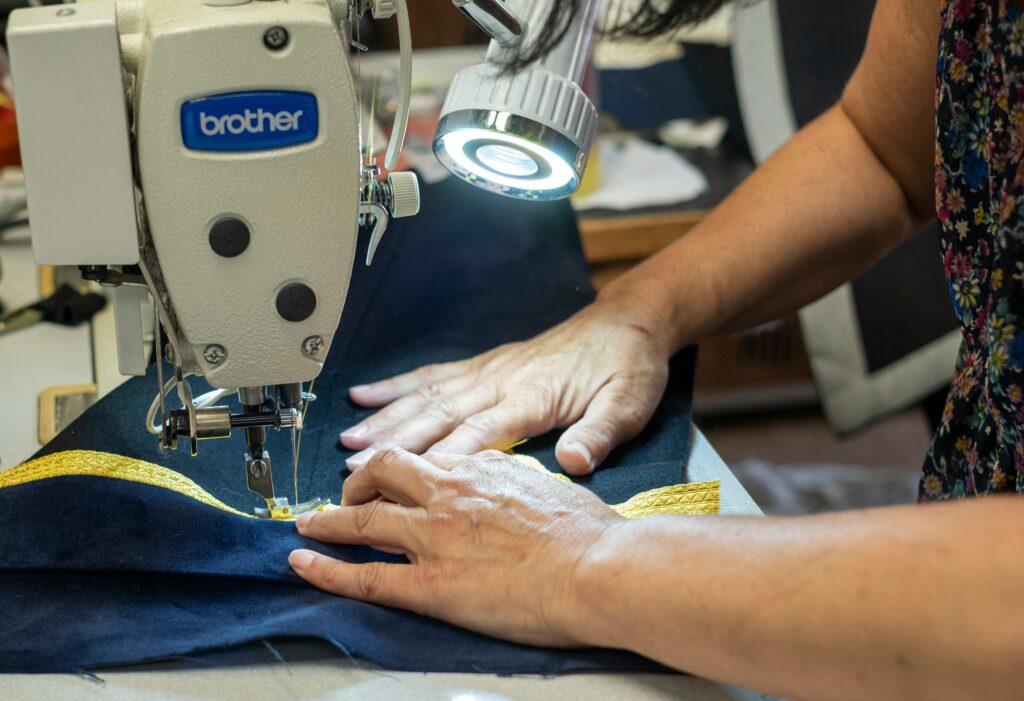
Andrew Martin, executive vice president, Cascale participated in the inaugural global apparel factory summit hosted by Avery Dennison, a Cascale member at the forefront of sustainability and innovation.
Avery Dennison is a global materials science and digital identification solutions company that provides a wide range of branding and information solutions that optimize labor and supply chain efficiency, reduce waste, advance sustainability, circularity and transparency, and better connect brands and consumers. The event took place in Singapore in September and attendees included a select group of owners and CEOs of manufacturing facilities in Asia and Europe. Presentations and discussions centered around challenges in the supply chain, from traceability to circularity.
In a fireside chat, Martin began by sharing the main purpose of his attendance: to listen to the concerns and challenges of manufacturers—voices that need greater attention, especially in the context of traceability—and to explore how Cascale, in its role as a convener of the entire value chain, can support them. He examined how the supply chain must work together to unlock transparency and traceability. Both referenced data from Cascale’s Higg Facility Environmental Module (FEM) tool, which is exclusively available on Worldly. The Higg FEM is a transformative tool used to assess the environmental impact of product manufacturing at facilities, from water use to waste management, to chemical and energy use.
Martin’s presentation was especially relevant to attendees in showcasing how transformative Higg FEM data is for advancing facility improvements while reducing redundancy. He emphasized the value of the Higg Index tools in offering standardized approaches and highlighted Cascale’s crucial role in reducing duplication, increasing harmonization, and ensuring consistency, particularly in the context of data collection for traceability in response to upcoming regulations. Additional speakers included Steve Lamar, president and CEO of the American Apparel and Footwear Association (AAFA), among others.
Martin also shared learnings from Cascale members, noting that since much of the, legislation, —such as the EU’s Corporate Sustainability Reporting & Due Diligence Directives (CSRD & CSDDD), Eco-Design for Sustainable Products Regulation (ESPR), and Digital Product Passport (DPP), and the US’s Uyghur Forced Labor Prevention Act (UFLPA),—are still pending further clarification, and even aligned implementation, the focus of ESG data collection processes is still being focused just on compliance with specific data points. He emphasized however that the importance of the industry shifting towards traceability, that enables more effective due diligence, risk identification, and opportunities for and verification of ESG progress.
Martin emphasized the importance of making sustainability information transparent at the site level, a core component of traceability, defined as “the process of creating visibility of materials, products, and the information in which they were produced through the supply chain, to ensure the accountability of environmental and social progress.” He characterized the burden that traceability places on manufacturers as “irrational” and called for rapid collaboration on pragmatic interventions to harmonize the ESG data reporting landscape, standardizing supply chain data points, align data collection templates and questionnaires, and harmonizing data requests and verification cycles.
He also mentioned initiatives like Cascale’s decarbonization programs, including the Manufacturer Climate Action Program (MCAP), inviting attendees to consider their involvement.
In a new recurring series “A Manufacturer’s Perspective,” manufacturers share their ideas, visions, and lessons in sustainability. First up, Busana Group’s CEO Sunil Shewakramani.
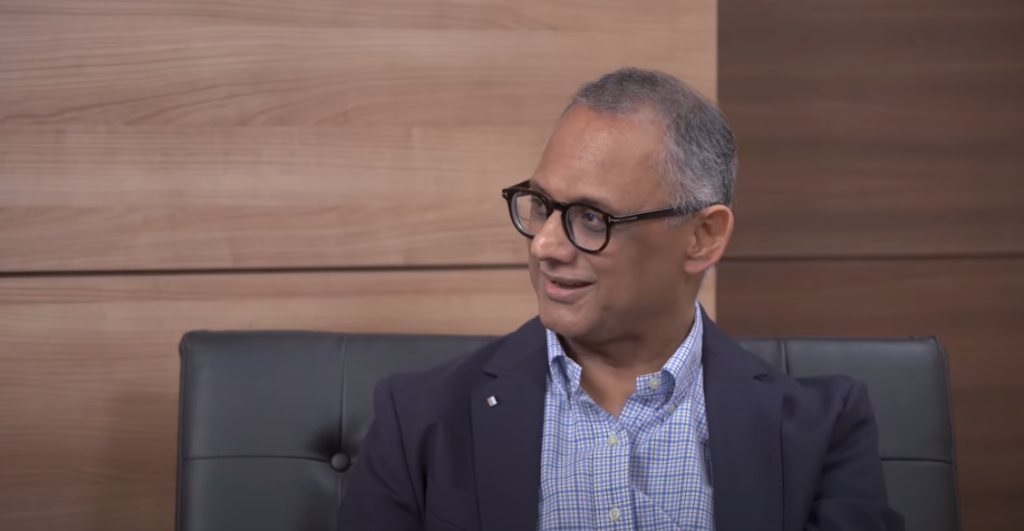
As the CEO of Busana Group, a family-owned business based in Indonesia, I am proud to reflect on our nearly 50-year journey in the textile manufacturing industry.
Over the years, we’ve grown into a mid-to-large-scale company with a diverse product portfolio, including denim, athleisure, men’s shirts, ladies’ soft dressing, and outerwear. With 24 factories in Indonesia and joint ventures in countries like Jordan, Bangladesh, India, and Ethiopia, we’ve built a solid foundation based on innovation, sustainability, and a people-centric approach. We employ around 34,000 people, of whom 92 percent are women, and we are committed to fostering a stable, skilled workforce.
At Busana Group, sustainability is more than just a buzzword — it’s part of our DNA. Our journey toward environmental, social, and governance (ESG) goals began back in 1982, long before ESG became an industry staple. It started with a focus on social impact—caring for our people and fostering community development. Over time, this expanded into environmental impact, where we prioritized energy efficiency, automation, and sustainable practices. We’ve always believed in doing good simply because it’s the right thing to do.
As a result, our sustainability initiatives have led to tangible improvements in efficiency, employee well-being, and environmental outcomes. One example is our LEED Platinum-certified factory, which set a global benchmark for green manufacturing when it was established in 2017. This factory, the highest-rated globally, reflects our commitment to not only meeting but exceeding industry standards. It’s investments like these that demonstrate our belief in doing well by doing good — combining ethical values with operational excellence.
But sustainability isn’t just about the environment; it’s about people and profits too. At Busana Group, we believe in the intersection of people, planet, and profit, and see this approach as a long-term competitive advantage. The journey hasn’t always been easy, but it’s been rewarding, and it’s shaped who we are as a company today.
A key driver of our sustainability efforts is data. The ability to measure and track environmental and social performance is critical to making informed decisions and driving continuous improvement. This is why tools like the Higg Index, which we’ve been using for several years, are invaluable. The Higg Facility Environmental Module (Higg FEM) provides us with a standardized framework to measure our environmental performance, identify gaps, and drive improvements across our operations. This kind of data-driven approach ensures that we stay on top of our sustainability goals, constantly pushing forward toward higher standards.
We’re also proud to be part of Cascale, the largest coalition in the fashion and consumer goods industry, where collaboration is key. Our membership gives us access to resources like the Higg Index and the broader sustainability network, allowing us to engage with brands, suppliers, and stakeholders on a deeper level. Being part of Cascale aligns with our vision of not just being a participant in the industry, but helping to lead the charge in sustainability through collective action.
As we continue to work with Cascale and leverage tools like the Higg Index, one of the most important aspects we’ve observed is the need for better alignment between brands and manufacturers. As a tier-one supplier, we play a crucial role in providing the data that brands need to meet regulatory requirements, address climate issues, and drive sustainability across the supply chain. But it’s clear that more needs to be done to bring all stakeholders — brands, manufacturers, tier-two and tier-three suppliers — into the same conversation. This is where organizations like Cascale can play a pivotal role by facilitating collaboration and setting joint sustainability goals for the entire supply chain.
The road ahead for the fashion and consumer goods industry is challenging, but the potential for meaningful, long-term impact is immense. Regulations are tightening, customer expectations are shifting, and the demand for transparency and traceability is greater than ever. In this evolving landscape, the role of data and collaboration cannot be overstated. At Busana Group, we are committed to being part of the solution, working hand in hand with our partners and leveraging tools like the Higg Index to drive meaningful change across the industry.
Our work is far from over, but I believe we are on the right path. As we move forward, we will continue to innovate, collaborate, and push the boundaries of what’s possible in sustainable manufacturing. By working together with our peers, brands, and stakeholders, we can create a more sustainable, transparent, and equitable future for the industry—and for the planet.
Sunil Shewakramani is the CEO of Busana Group, an Indonesia-based global apparel manufacturer.

San Francisco, Amsterdam, Hong Kong – January 22, 2024: The Sustainable Apparel Coalition announced a significant milestone today, welcoming its first member in Korea, Hansoll Textile Ltd. New members, like Hansoll, reflect ongoing efforts to elevate APAC manufacturing voices, which are critical to the SAC’s mission of industry transformation.
“We are thrilled to celebrate the milestone of expanding our reach to Korea with new member Hansoll,” said Andrew Martin, executive vice president of the SAC. “As we demonstrate our commitment to engage more manufacturers in the APAC region, we are honored and humbled by new members that demonstrate their leadership by joining us in industry transformation across the consumer goods industry.”
Founded in 1992, Hansoll Textile Ltd. is a leading global textile company, specializing in the manufacturing and export of knit apparel to the United States, Europe, and Japan. Over the past 30 years, they have achieved a remarkable 200-fold increase in revenue and continue improving their marketing and design capability and investing in owned manufacturing and the world’s best smart factory. As a forward-thinking organization, Hansoll Textile actively responds to evolving market demands by spearheading the transformation of the global digital value chain through a digital platform. Committed to sustainability, they practice green management to contribute to a sustainable future and actively embrace ESG-focused work processes to meet corporate social responsibility.
“As one of the biggest manufacturers in the world, Hansoll Textile is committed to active engagement in ESG-focused management. Joining the SAC provides a pivotal opportunity to align with global sustainability standards,” said Diana Oh, Senior Manager, CSR/Sustainability at Hansoll Textile, a new SAC manufacturer member. “Our SAC membership will significantly benefit Hansoll Textile by enhancing our sustainability practices and integrating us more deeply into the global sustainability textile community. Leveraging SAC’s resources, we aspire to enhance our corporate social responsibility initiatives, broaden our expertise, and set new benchmarks in sustainable manufacturing within the global textile industry. Our SAC membership symbolizes our dedication to shaping a more sustainable and responsible future for the textile industry.”
Now reflecting over 300 members around the world, the SAC doubled the number of manufacturing members in 2023, as compared to the previous year. And, in response to calls from members, the organization began expanding its membership to the adjacent product categories of home furnishings, sporting and outdoor goods, and bags and luggage.
— ENDS —
About the Sustainable Apparel Coalition
The Sustainable Apparel Coalition (SAC) is a global, non-profit alliance of over 300 organizations in global apparel and consumer goods. Initially formed to create standardized sustainability metrics, the SAC has sharpened its focus to driving pre-competitive, collective action across three foundational pillars. As an independent entity, the SAC brings together brands, retailers, manufacturers, NGOs, academics, and industry associations to combat climate change, ensure decent work, and contribute to a nature-positive future. Central to the SAC’s mission is the Higg Index, a suite of comprehensive tools that empower members to measure, evaluate, and improve sustainability performance across the supply chain. To support evolving industry needs, the SAC also brings together a focus in policy, transparency, and programs for collective action.
On March 6, 2024 we hosted over 200 attendees at the Manufacturer Forum: Dhaka under the theme “Catalyst for Change.”
Event Gallery
We hosted our Manufacturer Forum: Bangalore in India, on December 4, 2023, under the theme “Catalyst for Change”


Welcome to Cascale’s Manufacturer Forums! Our Manufacturer Forums are designed to empower business leaders like you to become Catalysts for Change. By participating, you’ll strengthen relationships with customers and value chain partners while championing positive change.
Learn More about our Manufacturer Forums
Welcome to Cascale’s Manufacturer Forums! Our Manufacturer Forums are designed to empower business leaders like you to become Catalysts for Change. By participating, you’ll strengthen relationships with customers and value chain partners while championing positive change.
