Scaling textile-to-textile recycling requires overcoming persistent barriers related to fiber quality, feedstock consistency, and commercial adoption. As expectations around sustainability performance continue to rise, companies are also under increasing pressure to deliver circular solutions backed by credible, measurable impact.
A Cascale Corporate member since 2020, Recover recognized that advancing circularity would require material innovation supported by trusted data, consistent measurement, and collaboration across the value chain. By combining fiber innovation with industry-aligned tools such as the Higg Index, Recover is working to scale recycled cotton while strengthening its ability to measure and benchmark performance over time.
Top Takeaways
- Recover is scaling textile-to-textile recycling by pairing recycled fiber innovation with standardized sustainability measurement through the Higg Index.
- Recover uses Higg FEM, Higg FSLM, and Higg MSI to benchmark environmental and social performance, improve reporting consistency, reduce audit duplication, and strengthen transparency with brand partners.
- From 2024 to 2025, Recover reported measurable improvements across its production hubs, including Higg FSLM scores averaging above 92% and gains in water management, emissions reduction, and employee engagement.
- Collaboration across the value chain — including with Primark — alongside supportive policy frameworks like EPR, is helping move circular materials from innovation to commercially scalable solutions.
“Scaling circularity requires more than innovation in materials alone,” said Orsolya Janossy, senior sustainability manager, Recover. “It depends on combining technical solutions with credible measurement, strong partnerships, and the systems that enable progress at scale. Using frameworks like the Higg Index alongside collaboration across the value chain helps us turn circularity from ambition into action.”
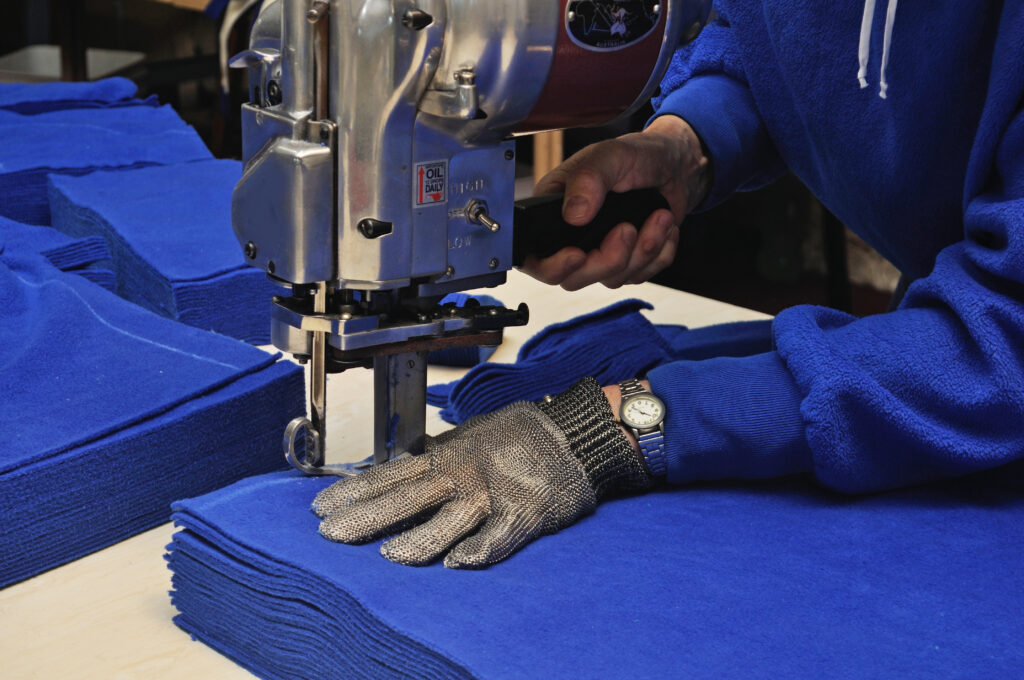
To achieve this goal, Recover developed a mechanical recycling process that transforms post-industrial and post-consumer textile waste into recycled cotton fiber for use in new products, most notably apparel, accessories, and home textiles. Its approach combines three reinforcing strategies.
Fiber Innovation
Recover’s recycling process is designed to help preserve fiber quality and performance, supporting the integration of recycled cotton into commercial applications. Through its work with brands and value chain partners, Recover is helping demonstrate how circular materials can move from innovation to market-ready products at scale.
Sustainable Policy
Recover views supporting policy, including Extended Producer Responsibility (EPR), as critical to building the infrastructure needed to scale circularity. Stronger collection systems, more reliable feedstock supply, and investment in recycling capacity can help create the conditions needed for recycled materials to become more widely available and commercially viable.
Data-Driven Performance
Recover uses the Higg Index as part of its approach to measuring and improving social and environmental sustainability performance across its facilities. Through the Higg Facility Environmental Module (Higg FEM) and Higg Facility Social & Labor Module (Higg FSLM), Recover applies a structured assessment framework to identify gaps, prioritize actions, and track progress year over year.
Using the Higg Facility Tools also gives Recover a consistent way to measure sustainability performance across its operations and value chain. This common methodology supports more reliable data, clearer internal and external reporting, and more meaningful benchmarking against industry peers.
For Recover, verified Higg Index assessments also support stronger customer relationships. By using a framework recognized by major global brands, Recover can help reduce duplicative audits, lower the overall audit burden, and build trust with partners through greater transparency and shared sustainability goals.
Recover also uses the Higg Materials Sustainability Index (Higg MSI), helping integrate recycled materials into product-level impact assessment.
By integrating the Higg Index into its operations, Recover has strengthened its ability to measure, benchmark, and improve performance over time. From 2024 to 2025, Recover reported improvements across both Higg FSLM and Higg FEM assessments across its three production hubs* reflecting:
- Improved Higg FSLM performance across Recover’s production hubs, with an average score above 92 percent.
- A 6.9 percent increase at the Bangladesh hub, driven by improvements in employee engagement and management systems.
- A 3.5 percent increase at the Spain hub, supported by progress in health and safety and management systems.
- A first-year Higg FSLM score for the Vietnam hub that was in line with Recover’s other hubs, reflecting strong and adaptable social policies.
- Improved Higg FEM performance across Recover’s production hubs.
- A 5 percent increase at the Bangladesh hub, driven by stronger water and wastewater management.
- A 2 percent increase at the Spain hub, mainly due to reduced air emissions.
- A 1 percent increase at the Vietnam hub, linked to environmental management systems, air emissions, and chemicals.
* Aggregate averages were calculated across the three hubs; only Bangladesh data is externally verified, while the remaining facilities conducted self-assessments.
Demonstrating Impact
Recover seeks to demonstrate the viability of textile-to-textile recycled cotton as a solution that can help reduce waste and support lower-impact material inputs. Consistent measurement helps Recover benchmark performance, plan for continuous improvement, and strengthen credibility with customers and partners.
Its collaboration with Primark, also a Cascale Corporate member, was highlighted in Cascale’s “Source of Good” podcast and shows how brand partnerships can help move circular materials into commercial products and support shared solutions at scale.
Recover’s use of the Higg Index also demonstrates how a common measurement foundation can support more consistent insights, reduce duplication, and enable more confident decision-making. As circularity moves from ambition to implementation, this combination of innovation, benchmarking, and collaboration can help accelerate progress across the apparel and textile value chain.