Sustainability targets across the consumer goods industry are steep, and coordinated, collective action is critical to meet them. Optimism and confidence help create momentum — and that momentum can be half the battle. Our survey results were encouraging, with strong optimism reflected across potential impact and progress: 84 percent of respondents believe the consumer goods industry can reduce carbon emissions in its supply chain, and 87 percent believe it can improve working conditions.
Confidence in Cascale’s role is also strong. A majority 86 percent of respondents are somewhat or very confident Cascale will drive meaningful change on decarbonization by 2030, and 87 percent are somewhat or very confident Cascale will drive meaningful change on working conditions by 2030. We also gained a useful read on awareness of Cascale’s work. Over 81 percent of respondents indicated they were aware of one or more of Cascale’s programs, tools, and methodologies — an encouraging foundation to build on. However, although Cascale is a 501(c)(6) nonprofit, nearly 49 percent of respondents incorrectly identified us as a for-profit company – a mistake we will continue to remedy.
A Closer Look at What Cascale Offers
Our survey showed us that awareness of the full set of offerings still varies across audiences. This only strengthens our imperative to organize and present our work more clearly, with improved pathways for organizations to explore what’s most relevant to their goals and better understand how Cascale helps the industry align and take action.
Cascale’s programs, tools, and methodologies are designed to help the industry align on credible approaches — and then use that alignment to drive measurable progress. Here are a few key offerings to explore:
- Higg Index — Since Cascale’s foundation as the Sustainable Apparel Coalition, the Higg Index has provided a common foundation for consistent social and environmental sustainability measurement across the value chain. Cascale stewards and governs the Higg Index frameworks, modules, and methodologies, which are implemented globally through the Worldly sustainability and supply chain intelligence platform.
- Manufacturer Climate Action Program (MCAP) — Helps manufacturers strengthen climate action planning and implementation through capacity building, guidance, and peer exchange.
- Better Buying — Strengthens responsible purchasing practices by elevating supplier feedback and supporting more resilient, durable buyer–supplier relationships.
- Sustainable Furnishings Council tools — Added to Cascale’s toolbox in 2025 to further support cross-sector relevance and practical action in the home furnishings industry.
- Foundational Environmental Performance (FEP) — Cascale convened members and stakeholders to establish a clear, industry-aligned definition of Foundational Environmental Performance (FEP), baseline environmental management practices expected of all global facilities manufacturing consumer goods, in order to align with legal compliance, improve comparability, and mitigate critical risks of environmental harm.
Cascale’s Role in Delivering Member Value
While Cascale is a 501(c)(6) nonprofit, we are ever attuned to the business realities of our members. Our membership spans manufacturers, brands, retailers, non-corporates, service providers, academia, and others. And our unique strength lies in convening them all. (Learn more about Cascale membership).
Today, we operate not only in apparel and footwear, but also in home furnishings, bags and luggage, sporting and outdoor goods, and the wider sweep of consumer goods. This is a knowledge gap we will continue to work on closing.
Why does membership matter? As we explored in the recent State of the Industry 2026 report, many of the industry’s most pressing challenges — like climate change and decent work — are impossible for a single organization to address alone. Cascale membership brings the industry together to set shared priorities for measurable progress. By aligning measurement frameworks, expectations, and improvement approaches, we help organizations reduce duplicative efforts and strengthen the credibility of their sustainability practices.
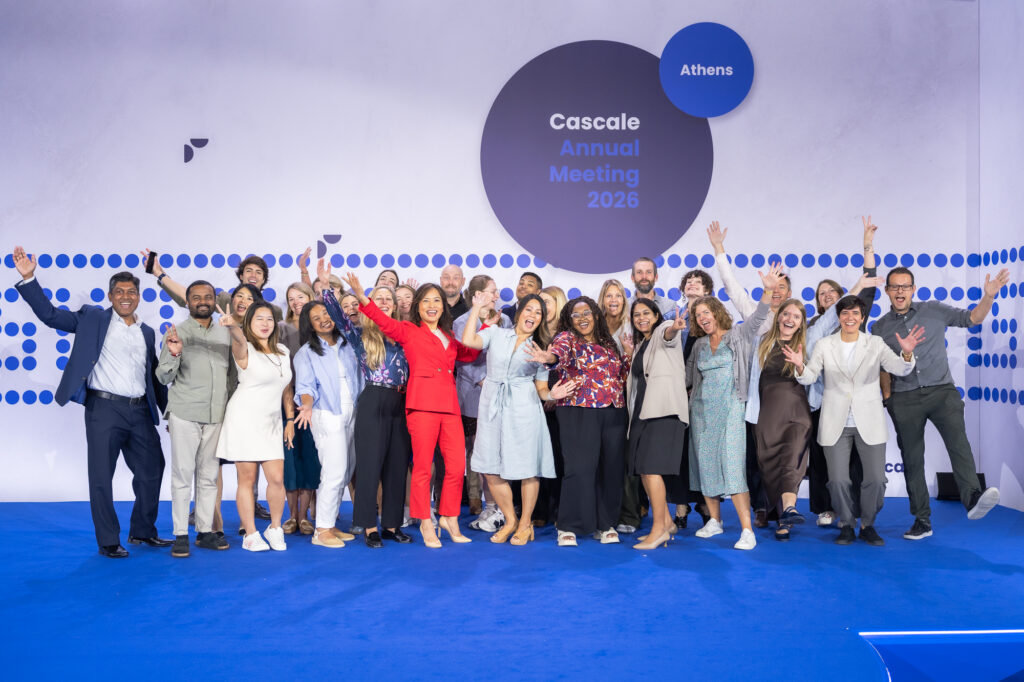
That role comes to life through how we strengthen measurement, enable action through our tools and methodologies, and convene the industry to move forward together. This includes our forthcoming Annual Meeting in Athens, where the industry comes together to discuss system-level challenges, collaborate, and learn from one another.
Want to help inform our process? Take two minutes to complete Cascale’s 2026 Industry Survey today!