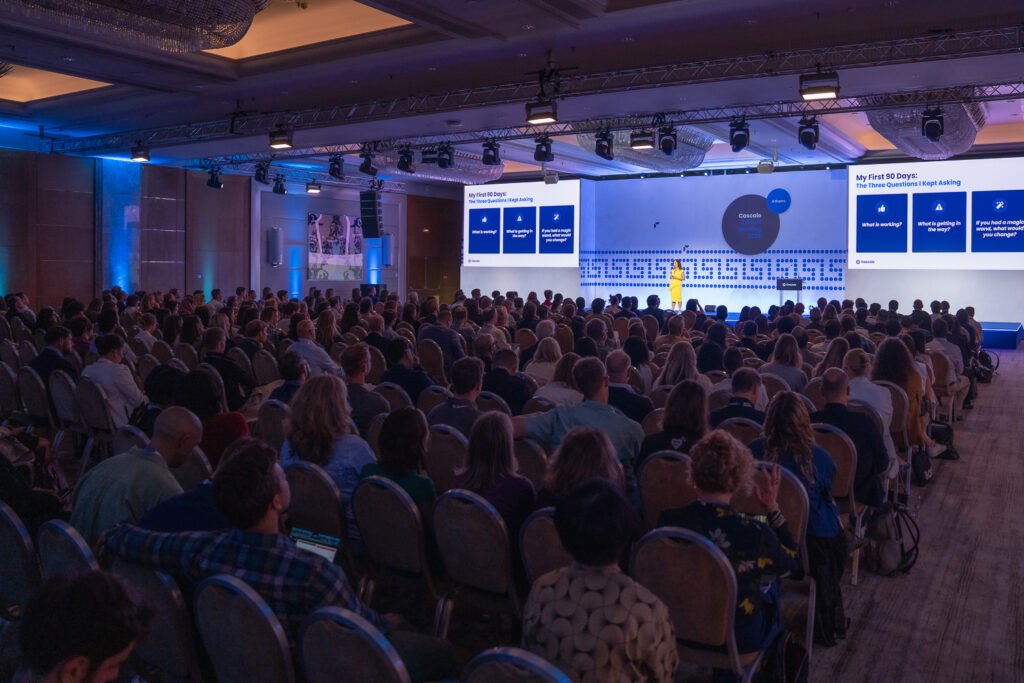
We’re grateful to everyone who joined and spoke candidly. Conversations like this only work when people are willing to say what they’re actually grappling with, and this one delivered.
The starting point was our recent report on the new trade landscape. Trade fragmentation, geopolitical tension, and a fast-thickening layer of sustainability regulation are reshaping how consumer goods move around the world. Companies are responding the way you’d expect — diversifying and regionalizing where they source — but that response carries its own cost. Every new supplier, every new region, adds complexity, and complexity tends to erode the one thing everyone in the room said they need more of: visibility.
That was the first thread worth pulling on. Resilience and sustainability are often treated as separate agendas, one about protecting the business and the other about protecting people and the planet. The discussion made clear how false that separation has become. Both depend on the same foundations — visibility into where things are made, trusted data you can actually act on, traceability deep into the supply chain, durable supplier relationships, and coordination inside your own organization. Get those right and you’re better placed on both fronts at once. Get them wrong and you’re exposed on both fronts — to disruption and to sustainability risk.
Regulation is what fuses the two together. Due diligence requirements, forced labor import controls, and product-level rules increasingly tie sustainability performance directly to market access. A supplier’s capacity and stability are no longer a values question anymore. They help determine whether goods clear customs. That shift changes the internal conversation, and several participants described how they’re using it to protect sustainability budgets when trade costs are climbing. The framing that lands with leadership isn’t sustainability as a standalone program. It’s sustainability as risk management and business continuity — the cost of inaction modeled out to the end of the decade, the disruption avoided, the energy and commodity exposure reduced. Framed that way, it competes for resources on the same terms as everything else.
The hardest part of the discussion was about trust, and it’s where the consumer goods industry still has the considerable work to do. Many facilities who adopt unified frameworks like the Higg Index see thousands in annual cost-savings. And the manufacturers who don’t are carrying an extraordinary audit load. Suppliers can face well over two hundred audit days a year with significant duplication across customers and requirements. Participants pointed to a broader challenge: brands frequently request data without sufficient clarity on how it will be used or without closing the loop with suppliers. The result is fatigue at exactly the point in the chain where we most need capacity for genuine improvement. When a supplier spends its year being audited rather than improving, everyone loses. There was a clear appetite in the room to find and eliminate the redundant asks, and that felt like one of the more actionable outcomes of the day.
Preparedness came up repeatedly, and not only on the industry side. Many companies are still building the IT infrastructure and standardized data practices that the evolving regulatory requirements will demand, and sustainability teams often lack the data sophistication their trade compliance colleagues already have. At the same time, participants highlighted the importance of clear implementation guidance and greater recognition of credible frameworks and data systems that already exist within the industry. Better dialogue between policymakers and industry would help reduce duplication and drive more effective implementation.
This brought us to what may be the most important theme of the afternoon: acting alone isn’t enough. Individual companies lobbying in isolation won’t produce coherent, workable policy. Participants saw value in earlier engagement in the legislative cycle, coordinated representation at a senior level, and alignment with established international frameworks such as the Organization for Economic Co-operation and Development (OECD) and United Nations guidelines. The appetite for a more unified industry voice — one that can advocate for greater coherence across jurisdictions and help avoid a patchwork of conflicting or duplicative requirements — was one of the clearest signals we took away.
None of this is Cascale’s to solve alone, and that’s rather the point. Our role is to convene the pre-competitive space where this kind of honest exchange can happen, to steward the shared frameworks that enable more consistent and comparable data, and to help members turn common ambition into measurable progress on the priorities that matter most: climate and decent work. We came away from the roundtable with sharper questions and a shared sense of direction, including work on how to bring business value and sustainability impact into closer alignment rather than treating them as neighboring but separate concerns.
To everyone who gave their time and their honesty, thank you. The new trade landscape isn’t going to get simpler. But the conversation last week left us more confident that the industry can meet it — resilient and responsible, together.