La Vie en Rose Group: Validating a Science-Based Targets Journey

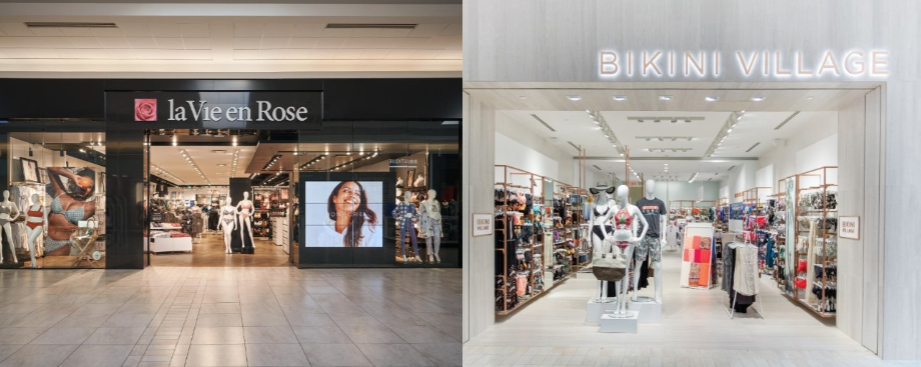
For la Vie en Rose Group, sustainability directly informs business direction.
La Vie en Rose Group has built its sustainability work within a business that continues to grow in scale and reach. Experts in lingerie, swimwear, and loungewear since 1985, la Vie en Rose Group is headquartered in Montreal and operates more than 320 boutiques across Canada and the United States, and has 89 franchise locations in 19 countries internationally. As the company has expanded, it has continued to strengthen its approach to corporate social responsibility, integrating social and environmental impacts into its operations.
In December 2021, the company became a Cascale member and integrated the Higg Index, delivered through Worldly’s global technology platform, into its corporate social responsibility strategy to help evaluate environmental impact, working conditions, and governance. In collaboration with manufacturers, la Vie en Rose Group works to improve supply chain practices. With Cascale’s guidance in November 2023, la Vie en Rose Group submitted its commitment to the Science Based Targets initiative (SBTi) to set near-term science-based emissions reduction targets in line with SBTi criteria and recommendations.
Recently, la Vie en Rose Group reached an important milestone when its target was approved by the Science-Based Target Initiative (SBTi). Under its parent company, Administration LVER Inc., la Vie en Rose Group committed to reducing absolute scope 1 and 2 GHG emissions by 63 percent by 2035 from a 2023 base year. They also committed to reducing scope 3 GHG emissions by 66.3 percent per unit sold within the same timeframe.
Responding to a New Requirement During Validation
As companies move through science-based target setting, technical requirements can become more detailed during validation. For la Vie en Rose Group, one of those requirements was accurately accounting for forest, land, and agriculture (FLAG) impacts within its emissions inventory.
The FLAG requirement surfaced during target validation with SBTi Services. Because la Vie en Rose Group’s Scope 1, 2, and 3 inventory had not originally been developed with FLAG emissions in mind, the company needed to integrate this component mid-validation while remaining aligned with SBTi Services’ 30-day validation timeline.
That made FLAG emissions a significant step in the process. It required la Vie en Rose Group to adapt quickly and apply a credible methodology within a narrow window.
Applying Sector Guidance to Integrate FLAG Emissions
To guide FLAG emissions accounting for the sector, Cascale and Worldly published the Navigating Forest, Land, and Agriculture (FLAG) Emissions report in August 2025. The report offers a standardized method for estimating FLAG emissions for the apparel and footwear industry using the Higg Materials Sustainability Index (MSI).
La Vie en Rose Group was already calculating product impacts for tiers 2, 3, and 4 using Higg MSI LCA assessment values, which gave the team a strong starting point for applying the methodology in a way that aligned with the logic and factors already being used in its inventory work.
However, one point required additional clarification. The methodology needed to be applied only to the raw material source portion of the LCA impacts. Before that was clarified, the company encountered estimates that appeared unusually high. With quick 1:1 support from Cascale’s technical team, la Vie en Rose Group was able to proceed with greater confidence in both their calculation and their submission to SBTi.
“Integrating FLAG impacts into our validation process required us to move fast and work in a very structured way. Careful application was essential, and Cascale’s methodology gave us a clear framework for addressing the requirement with confidence,” said Sarah Baker, corporate social responsibility principal advisor, la Vie en Rose.
Achieving Approval and Strengthening an Ongoing Effort
La Vie en Rose Group’s target was approved by SBTi Services without follow-up questions regarding its FLAG emissions calculation.
A huge achievement that reflects the work la Vie en Rose Group completed internally to adapt its inventory, apply the methodology, and stay on track through the validation process. It also shows that a structured approach, grounded in sector-relevant guidance, can support companies as they respond to more technical requirements within target setting.
Putting FLAG into Practice
Even for companies that are not assumed to fall within FLAG sector remits, there is a lesson to be learned. La Vie en Rose Group’s experience shows that integrating FLAG emission calculations during validation is possible and that earlier preparation can make the process smoother.
Another takeaway for CSR professionals is the necessity of leading with a sound methodological approach. The Higg MSI in its current iteration does not include land-use change emissions, which form part of what needs to be measured in FLAG. Those values need to be adjusted to account for FLAG emissions. La Vie en Rose Group’s experience shows that companies can work through that requirement with a sound methodology and the right application.
For Cascale, this is a practical example of how shared methodologies can support members in achieving their goals. The guidance did not replace the work la Vie en Rose Group needed to do internally. It gave the company a sector-specific framework it could apply at a critical point in the process. That kind of support can help members move forward more efficiently, respond to evolving expectations, and build confidence in their approach.
For other companies navigating similar questions, la Vie en Rose offers a strong example of how thoughtful preparation and shared industry guidance can support progress on complex climate goals.