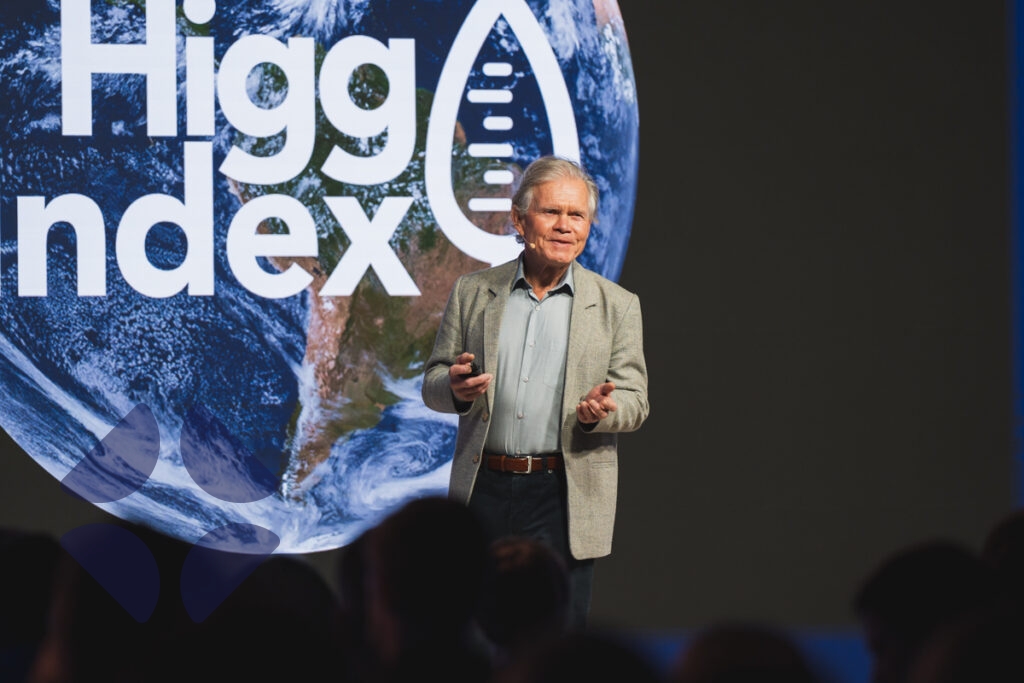
Cascale Annual Meeting 2025 Unites Global Leaders to Rewire the Industry for Climate Action and Decent Work

  • Annual Meeting

Two-day flagship event draws record 700 participants across five stages to tackle climate, purchasing practices, and supply chain resilience

September 23, 2025

Amsterdam, Hong Kong, Oakland (CA) – September 23, 2025: The Cascale Annual Meeting 2025 was more than an event — it was a movement in action. Over two days, 700 attendees, 100+ speakers, and 33 sponsors came together under the theme “A Movement for All.” From the main stage to hands-on workshops and closed-door roundtables, the global community’s energy was unmistakable: frank conversations, bold commitments, and a shared determination to rewire the industry.

“The Cascale Annual Meeting was a powerful reminder that no single actor can solve the challenges we face alone,” said Harsh Saini, interim CEO, Cascale. “By bringing manufacturers, brands, policymakers, and innovators together, we are building the partnerships needed to accelerate climate action and improve lives across the value chain.”

This year’s focus zeroed in on two urgent questions:

  • How can brand–manufacturer engagement unlock the decarbonization needed to meet science-based targets?
  • What will it take for responsible purchasing practices to become the baseline, not the exception?

C-suite leaders spoke candidly. “It’s important that sustainability should be given equal if not more weightage in the conversation [with brands and buyers],” reflected Dinesh Virwani, Executive Vice Chairman, Epic Group. Others echoed the urgency for rebalancing power in buyer–supplier relationships to enable investment in decarbonization and worker well-being, and made an urgent call for brand CEOs to get back on the factory floor.

On day one, Joseph Phi, CEO of Li & Fung, opened his session on the importance of working together to turn ESG ambition into action, and action into impact. He then closed with an even stronger message:  “In the end, sustainability is not about saving the planet from business. It’s about saving business on a changing planet.” The day ended with a stirring call to action from David Begbie of Crossroads Foundation, who told the audience: “This cannot be a movement for some; it must be a movement for all.”

Day two brought further energy with Suren Fernando, CEO of MAS Holdings, underscoring the importance of shared commitments between brands and manufacturers, noting: “What we have found essential is to work with partners who believe, like we do, that sustainability is a driver of resilience – not a tradeoff against it, “ and an electrifying panel amplifying supplier voices. The meeting closed with Hon. Sunny Tan, Chairman of the Hong Kong Fashion Council, celebrating Hong Kong’s role as a hub for global fashion leadership.

Reflecting on the record-breaking event, Lee Green, Vice President, Marketing & Communications, Cascale, added: “This was our biggest and best Annual Meeting yet. What stood out was the presence and candor of manufacturers. Their voices shaped the dialogue and reminded everyone that transformation starts where products are made. The conversations were real, the commitments tangible, and the sense of shared purpose stronger than ever.”

The program also saw the launch of Cascale’s China Country Report: Macroeconomic and Sustainability Analysis, highlighting opportunities for renewable energy, circularity, and digital innovation in China’s apparel sector, and an announcement from Rick Ridgeway, author, former Patagonia executive, and Cascale co-founder, on Cascale’s acquisition of key assets of the Sustainable Furnishing Council.

Sponsors included Li & Fung & LFX, Retraced, Epic Group, TAL Apparel, VF Corporation, Nike, and many others.

Looking ahead, Cascale will continue to raise the bar: the Annual Meeting 2026 will take place in Greece, further cementing its reputation as the leading convening space for driving collective sustainability action. Contact Cascale’s events team to learn more.

Cascale Acquires Sustainable Furnishings Council Key Assets

  • Annual Meeting

Cascale has acquired key assets of the nonprofit Sustainable Furnishings Council (SFC), the only industry-wide member organization dedicated to advancing sustainability in home furnishings.

Rick Ridgeway and Scarlette Tapp on stage at the Cascale Annual Meeting 2025
September 16, 2025

Acquisition will expand goals to combat climate change and support decent work in the global home furnishings sector

Hong Kong – September 17, 2025: Cascale has acquired key assets of the nonprofit Sustainable Furnishings Council (SFC), the only industry-wide member organization dedicated to advancing sustainability in home furnishings. After expanding beyond apparel into the wider consumer goods industry, which includes home furnishings, Cascale leads the drive to combat climate change and support decent work across the value chain. At Cascale’s 2025 Annual Meeting in Hong Kong, Rick Ridgeway, author, former Patagonia executive, and Cascale co-founder, joined Scarlette Tapp, SFC Executive Director, to announce the key asset acquisition.

SFC services will now be delivered by Cascale, while SFC continues as a membership organisation for a transitional period. This means SFC members benefit from the same trusted brand — with expanded global support and expertise from Cascale.

“From the beginning, Cascale has worked to unite industries around a shared vision: tackling climate change and supporting decent work throughout the value chain,” said Rick Ridgeway, author, former Patagonia executive, and Cascale co-founder. “Sustainability cannot be siloed — it must be systemic, spanning every sector that touches people and the planet.”

“For nearly two decades, SFC has worked to embed sustainability in the DNA of the home furnishings industry,” said Scarlette Tapp, Executive Director, Sustainable Furnishings Council. “Cascale will ensure that this legacy will not only continue, but scale globally — supporting businesses that are committed to reducing their environmental footprint and improving social outcomes.”

“Cascale is evolving as the leading industry association for sustainability in consumer goods,” said Harsh Saini, Cascale interim CEO. “We’re expanding our capacity to drive climate action and decent work across a broader value chain — from fashion to furnishings and beyond.”

“This milestone marks the beginning of an exciting new chapter for SFC,” said Michela O’Connor Abrams, MOCA+ CEO and SFC Board Chair. “Cascale’s global reach and cross-sector leadership bring new energy to our mission and greater impact for our members, who have long been pioneers in sustainable design and manufacturing.”

Cascale will uphold SFC’s nearly 20-year legacy of education, training, and advocacy. Based in North Carolina, with most members based in North America, SFC leads efforts to promote decarbonization, reduce waste, and minimize the use of toxic chemicals in the home furnishings value chain. SFC’s tools and expertise, including the Eco-Insight Assessment Tool, accredited sustainability course, and support for the Wood Furniture Scorecard program, will continue to be available to SFC members and will eventually become part of Cascale’s global offering, benefiting members worldwide. The move follows the successful acquisition, announced in February 2025, of the Better Buying Institute’s tools.

Creating a Solutions-Oriented Agenda for Cascale’s 2025 Annual Meeting

  • Annual Meeting

Cascale’s 2025 Annual Meeting is built around solutions. Discover how this year’s program is designed to deliver real progress for our industry.

Black and white headshot of Jeremy Lardeau
Jeremy Lardeau
August 22, 2025

The Cascale Annual Meeting is our flagship event — a milestone for our alliance and the industry.

For Cascale staff, it’s an all-hands-on-deck moment as we aim to deliver an exclusive, high-caliber event experience for members: professional branding, innovative formats, and actionable content designed to drive progress.

This year, the agenda has been shaped with one clear objective: to ensure every session delivers concrete value and practical takeaways that members can apply in their own operations. We’ve moved beyond passive knowledge-sharing toward a more participatory, solutions-driven approach; one that prioritizes solving real, systemic problems. While we still have panels and presentations for information-sharing, our workshops and manufacturer-retailer roundtables offer a space for peer-to-peer problem solving. This is how your case studies come to life to solve real-world problems.

To keep the focus sharp and outcomes tangible, the program is anchored around two critical challenges drawn directly from Cascale’s strategic plan and our commitment to combating climate change and supporting decent work for all. These problem statements frame the conversations from the opening plenary through to the closing session, ensuring members leave with not just insights, but actionable paths forward.

1. Combating Climate Change: Fairness & Equity in Climate Action

What is the engagement model between brands and manufacturers that will effectively unlock the decarbonization efforts needed to meet ambitious climate targets?

Despite years of effort, progress on decarbonization has been slower than the urgency demands. Challenges include duplicative initiatives, inconsistent brand approaches, and costly upgrades without clear ROI for manufacturers and suppliers. A fair and equitable phase-out of fossil fuels requires shifting from top-down mandates to a collaborative model where manufacturers have a real voice in shaping solutions.

This track will set the scene with a candid panel discussion on systemic barriers before diving into problem-solving workshops and member-led case studies. The goal: to identify practical, equitable engagement models that align ambition with on-the-ground realities.

Here’s just a selection of those we’ve curated to address some of the thorniest systemic barriers to our industry decarbonization efforts:

Aligning Sourcing and Sustainability: Collaborative Decarbonization in the Apparel Supply Chain
Senior sourcing executives juggle competing priorities — cost, quality, lead time, resilience, and sustainability. Through an audience-participative workshop and panel discussion, this session explores how sustainability is currently embedded and debates alternative models of brand–manufacturer collaboration.

Engaging Across Tiers for Supply Chain Decarbonization
The bulk of GHG emissions occur in Tier 2 material manufacturing, yet engagement here is often limited. This session looks at multi-partite engagement models between brands, sourcing agents, garment producers, and upstream textile manufacturers.

Understanding the Journey: Sharing on Scope 3 Emissions Challenges and Opportunities
Hear from leading manufacturers extending climate action into their own Scope 3 emissions, including successes, setbacks, and lessons learned.

Climate Adaptation: Understanding Climate Risks and Building Resilience in the Supply Chain
We cannot bring up fairness and equity in climate action without addressing the disproportionate impact that climate change is having in many manufacturing countries. This session will examine these impacts and showcase strategies manufacturers and their partners are using to adapt — protecting people, safeguarding production, and building long-term resilience from cotton fields to garment factories.

Emerging Decarbonization Financing Models
Attendees can anticipate real-time case studies to help showcase the emerging examples of sustainable financing models. Designed as an engaging roundtable, this format will allow for maximum engagement from speakers and attendees.

2. Supporting Decent Work for All: Making Responsible Purchasing Practices the Norm

What will it take to make responsible purchasing practices the baseline expectation rather than the exception?

Decent work starts with how brands buy, and there are many global factors impacting this process. Yet, for many manufacturers, late payments, unrealistic lead times, and last-minute changes are still commonplace. The Better Buying Garment Scorecard 2025 found progress is, in fact, slowing. With Better Buying now part of Cascale, we have powerful tools and data to address these issues — but adoption, integration across business functions, and follow-through are still lacking.

This track will confront the gap between intention and impact, exploring how to embed responsible purchasing practices across sourcing, finance, and leadership, while amplifying supplier voices in shaping buying behavior. It will also tackle the practicalities of aligning with due diligence legislation, anticipating ripple effects of global trade, and building shared accountability across the value chain.

Take a look at just some of the sessions being developed on this topic, with more available to choose from:

Setting the Scene: What Will it Take to Make Responsible Purchasing Practices the Norm, Not the Exception?
This opening panel will confront the reality that harmful purchasing behaviors persist despite widespread recognition of the problem. It will unpack why progress has slowed, explore the potential unlocked by Cascale’s integration of Better Buying, and outline how aligned data, shared commitment, and collective leadership can shift the industry from intention to action.

What’s Holding Back Supplier Voice and How Do We Fix It?
This session will examine why supplier feedback often goes unheard and why tools like the Better Buying Purchasing Practices Index see limited uptake. It will explore barriers such as fear and fatigue, highlight the potential of collective, anonymized feedback, and identify strategies for strengthening safe, effective supplier-led engagement.

Audit Fatigue: From Dialogue to Real Movement
As regulatory demands grow, audit duplication continues to drain resources without delivering proportional value. This session will explore convergence, shared data, and mutual recognition as pathways to credible, scalable solutions, focusing on how to build trust and reduce repetitive assessments across the value chain.

Aligning Policy and Practice: Advancing Responsible Business Conduct and Fair Purchasing Practices
Bringing together experts in social affairs and legislation, this session will examine the role of policy in advancing responsible purchasing. It will address alignment with due diligence laws, such as the EU CSDDD, and showcase Cascale’s work to connect Better Buying Purchasing Practices Index data with regulatory frameworks.

View the full program to learn more.

Expanding Access

In response to member feedback, two stages will be live-streamed for in-person and online attendees, with recordings available within an hour. Additional virtual-only sessions will be scheduled for European and Americas time zones to ensure global participation.

A Collaborative Effort

The program is developed with guidance from a dedicated Program Advisory Council and internal champions:

  • Advisory Council: Dr. Delman Lee (TAL Apparel), Dhanujie Jayapala (MAS Holdings), Dr. Katy Stevens (European Outdoor Group), Matthew Thurston (REI), Priyanka Khanna (Fashion for Good), Quentin Thorel (CIEL Textile), Shasta O’Loughlin (KMD Brands)
  • Internal Champions: Christina Fleming (Events), Jeremy Lardeau and Chris Marshall (Climate), Katie Hess (Decent Work)

Join Us

This is more than an agenda: it’s a commitment to progress. Join us at the Cascale Annual Meeting to help co-create the solutions, collaborations, and commitments that will shape what comes next for our industry.

Cascale’s Lee Green, Christina Fleming, Katie Hess, and Chris Marshall also contributed their insights to this blog.

ReThink Hong Kong 2025

  • Industry Event

Cascale attendees can enjoy exclusive complimentary and discounted passes to ReThink HK 2025 — Hong Kong’s flagship sustainability event.

Learn from industry leaders and recognized change-makers from across Hong Kong as they share critical insights and address global risks and opportunities from a regional perspective.


Date & Time
September 11 2025 | 09:00 - September 12 2025 | 18:00 (HKT)

Speakers

  • Cascale Event

Program

  • Cascale Event

Sponsors & Exhibitors

  • Cascale Event

Annual Meeting 2025

  • Cascale Event

Thank you for joining us in Hong Kong on September 15-17, for Cascale’s flagship Annual Meeting, where our brand, retailer, manufacturer, and affiliate members came together under the theme “A Movement for All” to drive impact at scale. Through collective action, future-proofing with standardized tools and data – such as the Higg Index – and amplifying diverse voices, this hybrid event showcased how unified action creates tangible, and sustainable, business value for all.

Date & Time
September 15 2025 | 09:00 - September 17 2025 | 18:00 (HKT)
Location
Hong Kong & Online

Annual Meeting 2024 Executive Summary

  • Annual Meeting

Relive the highlights and explore key takeaways from the Cascale Annual Meeting 2024, held in Munich Germany on September 9-11, 2024.

October 29, 2024

Reflections on the Founding of Cascale: A Vision That Endures

  • Annual Meeting
  • Decarbonization
  • Higg Index Tools

Cascale’s co-founder reflects on the organization’s origins and roadmap for future success from the Annual Meeting in Munich.

Headshot of Rick Ridgeway
Rick Ridgeway
September 20, 2024

In 2010, a conversation between Patagonia and Walmart sparked an idea that would reshape the sustainability landscape for the apparel and footwear industry.

At the time, I was at Patagonia, working on environmental initiatives, when Walmart approached us for feedback on a supplier scorecard they were developing. It was a basic concept, but it got me thinking—what if we could build a coalition of apparel and footwear companies to develop a robust, industry-wide standard for measuring sustainability? It was a long shot, but we accepted the challenge and we code-named the effort “David and Goliath,” borrowing inspiration from the timeless fight between unmatched strengths. Walmart surprised us—they wanted to be David, and Patagonia would be Goliath.

From the beginning, we knew the initiative needed to go beyond just brands and manufacturers. We aimed to create a multi-stakeholder alliance that included NGOs, governments, academia, and other key players. This inclusive approach was critical to ensuring that the solutions we developed were robust, credible, and widely accepted.

A Mission Rooted in Collaboration and Pragmatism

The founding principles of Cascale were straightforward but ambitious: Build on existing work to move quickly and don’t let perfection stand in the way of progress. With these values in mind, we reached out to CEOs of various companies, NGOs, and universities to establish a universally-accepted approach for measuring sustainability in the apparel sector. This effort quickly gained traction, and the group, originally named the Sustainable Apparel Coalition, grew rapidly.

Our early vision was simple yet ambitious: Create business value by reducing environmental impact and increasing social justice across the value chain. The strategy was also simple yet ambitious: manage impact by measurement that was deep, wide and standardized. To help understand how strategy could lead to vision, we brought in a team of complex systems analysts from the Massachusetts Institute of Technology (MIT) to map out a measurement tool–an index–that, put in the hands of key decision-makers, could incentivize them to make better decisions.

The MIT team gave us a Theory of Change and we built a 1.0 version of the tool. But we needed a name for the tool that could transcend apparel. At the same time, we learned that a group of physicists had discovered a subatomic particle that was going to unify the universe, and they were going to call it the Higgs Boson. I smiled and said, “If the Higgs Boson particle is going to unify the universe, then the Higg Index was going to save it.

Sharing Our Vision in Munich

At Cascale’s recent Annual Meeting in Munich, I had the opportunity to reflect on these early days and share why our founding mission remains as critical today as it was over a decade ago. The challenges we set out to address then—fragmented efforts and outdated practices—are still prevalent. Today, the urgency is even greater. Emissions are on track to be 2.5 times higher than needed by 2030 if we don’t act decisively. Cascale was created to provide a unified solution to these industry-wide challenges, and the need for a coordinated, collective effort is now more important than ever. From its simple spreadsheet origins, the Higg Index has evolved into a critical suite of tools relied on by over 40,000 users to decrease environmental impact and increase social justice unlike any other industry.

The Path Forward: Accountability, Transparency, and Collective Action

One of the key points I shared in Munich was the importance of accountability and transparency—areas where Cascale has made progress but where there is still much work to do. Cascale’s strength lies in its ability to unite diverse perspectives and drive collective action. The Higg Index continues to provide essential data and insights that empower decision-makers across the value chain to make better, more informed choices, but we have to hold the industry to account for its performance..

Looking ahead, Cascale is uniquely positioned to lead the industry towards a more sustainable future – especially in the critical area of decarbonization. By focusing on key areas like eliminating coal, increasing renewable energy use, and improving energy efficiency, and by working closely with partners like the Apparel Impact Institute and RESET Carbon, Cascale is building an Industry Decarbonization Roadmap that supports suppliers in making meaningful reductions.

Why Cascale’s Original Vision Still Matters

Reflecting on our journey, it’s clear that Cascale’s founding principles are just as relevant today. The idea that brought us together remains the guiding force behind every initiative. The potential is enormous, and with the right tools, partnerships, and a commitment to continuous improvement, Cascale stands ready to guide the industry forward.

The Higg Index may not literally save the universe, but it represents our best attempt at saving our one and only home planet.