Blogs /
Board Interview: Krishna Manda on Building an Ecosystem for Transformation with Equal Partnership, Co-creation, and Innovation
Board Interview: Krishna Manda on Building an Ecosystem for Transformation with Equal Partnership, Co-creation, and Innovation
Leadership
May 03, 2024
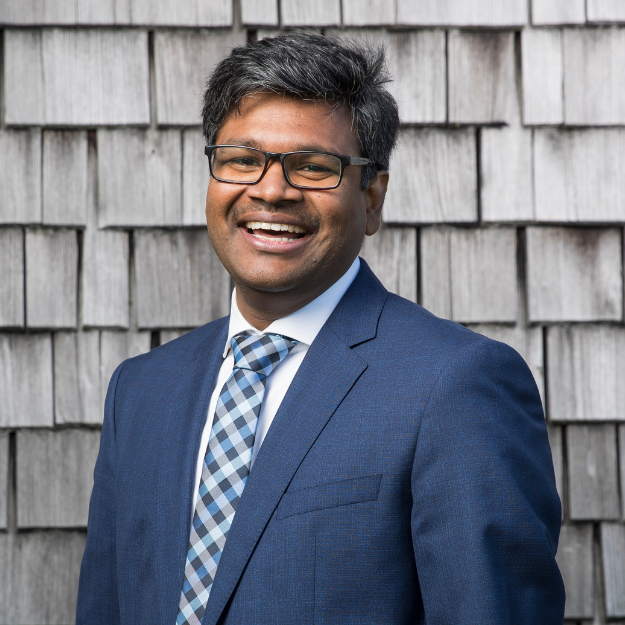
As part of a recurring series, Cascale details the involvement and vision of its Board members. Here, Krishna Manda, Vice President, Corporate Sustainability at Lenzing Group, shares his perspective.
Cascale: How long have you been involved with Cascale?
Krishna Manda: At Lenzing, we started working on product-related activities in early 2000 and not many companies are aware of this systemic approach. We were invited by Adidas and Patagonia to join Cascale as founding members. One of the reasons we joined is we wanted a unified language and measurement of sustainability in the industry. If you want to go fast, go alone. But if you want to go far – go together.
Cascale: What does it mean to be a bridge builder?
KM: When you’re talking to a customer, you don’t know the context they’re operating in and what kind of solutions they prefer and what barriers exist. All these things you need to understand by putting yourself into their shoes.
Cascale: Have you always considered yourself a sustainability advocate?
KM: have been working in the area for over 15 years across different sustainability topics and organizations. Sometimes those organizations are not yet on the forefront of sustainability, so I had to do a lot of advocacy work within the company as an intrapreneur. For example, I was consulting on introducing electronic waste policies (EPR) in Asia based on the extended producer responsibility principle almost 18 years ago. I also started working in the businesses to embed product sustainability thinking and integrate that into the core business, strategy, governance, and decision-making process. And I helped set up the first sustainability department for Lenzing Group with my colleagues and started embedding sustainability into strategy, targets, governance and in the core business and the day-to-day work of many business functions. So I would consider myself a sustainability advocate, and I keep learning and contributing in this way.
Cascale: How can governments, NGOs, and other affiliates support manufacturers in driving lasting change?
KM: We wanted to go far, and each of us have different competencies and understanding of the system. In the case of transformation, you need governments to fund innovations until they become scalable on their own. At the same time, NGOs need to create the urgency required in the society – whether it’s consumer awareness or to rally investors and other companies in the value chain. You also need NGOs to address the biggest problems we are facing, and sometimes the capital markets also need to be roped in. Effectively, we need to create an ecosystem of change. Without that ecosystem, we cannot bring that change. Every stakeholder has a role to play to bring a level playing field, and also create the urgency for the change that we need to see in the world.
Cascale: What do you make of the fiber funding space, at present?
KM: I believe industry and ecosystem has failed us; we are not supporting innovators enough and we are not changing our old ways. Every stakeholder needs to take responsibility. For example, brands need to design products for circularity, and translate their commitments into real buying of volumes from these innovators. Sometimes they are not at commercial scale, but you need to help them bring those innovations to market.
Investment plays a huge role. Companies like ours need to invest more in their mission to adapt to process these new innovative materials and this also takes a long time. The innovators themselves have to learn a lot to improve the quality of materials.
Unless you have good venture backing, you may not be able to operate. Investors most of the time have expectations, in the case of recent news, that innovators operate like mainstream businesses. I think we are missing the point that there is no level playing field for those sustainable materials. They need a lot of support for capital expenditure and operational expenditure to become commercially viable.
The policymakers also have a huge role to play in terms of funding. Policymakers need to design instruments and fund Innovators for both those capital and also operational expenditures in the long run, before they become commercially viable in the system.
Cascale: Why has Lenzing been so successful?
KM: As innovators, we faced the same challenges but we had a different scale and an existing conventional product which helps us survive in the market. Our Tencel-branded Lyocell fibers are a good example. They recently celebrated more than 30 years but it took over two decades to scale that Lyocell innovation to be commercially viable in the market.
To achieve the economies of scale, we also received EU funding to build a plant in Austria itself. When you introduce a new material in the market, the textile value chain is very long. You have spinning, knitting, weaving, dyeing, finishing, and garment making. Each process needs a lot of machinery, and all of those machines need to handle this new material.
You need to teach the whole value chain how to process your material. We had like 100 to 120 textile engineers traveling the world for more than two decades just teaching the value chain partners how to process our fibers in different settings. That took a lot of investment from Lenzing. We also work a lot with the end customers like brands and retailers, so we have our business development and application development with the designers. We have been working on developing those new products, new applications, and then creating the pull from the market from the end consumer and the customer. So it’s both the push in the textile value chain but also pull from the brands and retailers and the government funding. All those things came together. That’s why we could actually succeed. Without that, it was really difficult. This is one of the examples of why we need an ecosystem to help innovations succeed.
Cascale: How do we foster equal partnerships for the long term across the value chain?
KM: It all comes down to the mutual respect we have towards each other. We need to engage suppliers, seek feedback, and understand each other’s point of view. I think we have a long way to go because sometimes there are hierarchies in the value chain. We need to traverse those boundaries and come together on equal footing and be more like co-creators of the impact that we want rather than, ‘I tell you. You do it.’
For example, we have around 9,000 suppliers in Lenzing, and we have been working with 30 or 40 of them for a long time. We know that when we set our climate change target, we cannot actually reach that target ourselves because more than 50 percent of our emissions come from our upstream suppliers. So we have engaged them and shared our ambition asking what they can do differently. Where do we need to support them? Some of our relationships go for more than two to three decades. Because of that long term partnership, we also have long-term contracts with them. They know that there is a long-term business relationship so they can invest in a low-carbon footprint material, for our product, at the end of the day. Long-term commitments give a signal to them that they matter, and we would like to keep them as one of our partners to invest, work with us, and share expertise.
Sometimes you also need to advocate for them with the policymakers. You need to do all those things together, but it all comes down to having this equal partnership.
Cascale: What are your sustainability aims within your role, Cascale, and the broader industry?
KM: I think we are a role model for other industries, which is why we needed to expand our reach to adjacent categories. I consider myself as a learning leader, and I continue to learn from others. There are so many people who have been there and done that, so we need to learn from those people. I am always looking back from that angle to learn from situations and help others. The second one is to help people succeed by making well-being part of the change-making process. There are so many sustainability practitioners today facing burnout because it is overwhelming work and very complex. I don’t want to pretend it is a cakewalk.
So, how can you help these people succeed? That’s what I focus on when I lead my team. Whenever I work with people, I try to make it part of the conversation that their well-being is very important for our change making. There is no change without taking care of the people because the end goal is to improve the life for the people. So, people are the focus here.
Lastly, my aim for Cascale and the broader industry is to be a conduit and bridge builder between perspectives while bringing people together. Cascale has many stakeholders, and we need to learn from each other to put those pieces of the transformation puzzle together.
In pursuit of expanded pathways for sustainability impact, the global nonprofit alliance Cascale (formerly SAC) appoints Colin Browne as chief executive officer.
May 01, 2024
In pursuit of expanded pathways for sustainability impact, the global nonprofit alliance Cascale (formerly SAC) appoints Colin Browne as chief executive officer.
Amsterdam, Hong Kong, Oakland (CA) – May 1, 2024: Cascale, the global non-profit alliance for driving impact in consumer goods (formerly the Sustainable Apparel Coalition), is proud to announce Colin Browne as its new Chief Executive Officer, effective May 1, 2024.
With a wealth of global experience in supply chains and both brand and factory management, Browne will lead Cascale into a new era of proactive and impactful sustainability practices. His proven expertise in forging strategic partnerships and mobilizing a global network uniquely positions him to amplify Cascale’s mission, transforming the consumer goods sector into a beacon of restorative and equitable business practices that benefit people and the planet. Under his leadership, Cascale will leverage its unifying position to explore and develop true accountability measures alongside deeper commitments.
”It’s an honor to join Cascale at this pivotal juncture in its evolution. My career has been dedicated to not just participating in, but actively driving impact at, every facet of the consumer goods supply chain—from the boardroom to the factory floor. I am committed to harnessing this experience as we amplify Cascale’s data-driven programs, Higg Index tools, and core values of collaboration and equal partnership to achieve new heights for the greatest possible impact.” –Colin Browne, CEO, Cascale
Browne previously served as Interim CEO and Chief Operating Officer of Under Armour, a Cascale member. His business-oriented approach centers on sustainability, and with Cascale’s recent expansion into adjacent product categories he is well-positioned to scale the type of supplier-focused initiatives that he has championed throughout his career.
“Colin is the right leader for our transformative journey. His deep commitment to our strategic objectives, from combating climate change to fostering decent work and building a nature-positive future, combined with his extensive experience at top global companies, uniquely positions him to propel Cascale forward. With Colin at the helm, I am confident that we will achieve new levels of impact in the consumer goods industry.” –Tamar Hoek, Cascale Board Chair, and Senior Policy Director Sustainable Fashion, Solidaridad Network.
During his tenure at Under Armour, Browne oversaw sustainability efforts and, in addition, led significant transformations across supply chain, go-to-market and technology. In 2023, the company shared achievements related to its environmental footprint, product circularity, and renewable energy goals – some accomplished with Cascale’s Higg Index suite of tools.
Prior to joining Under Armour, Browne was managing director of Asia Sourcing for VF Corporation, a Cascale member that includes The North Face, Timberland, Vans, and Smartwool brands. In addition to his experience leading brands, Browne also spent four years running manufacturing plants in Thailand and began his career at Bally Shoe factories in the UK. He has lived and worked in the UK, South Korea, mainland China, the Philippines, Thailand, Hong Kong SAR, and the USA; his international experience and localized approach underscore his commitment to Diversity, Equity, and Inclusion (DEI) both in and outside of the workplace. Browne also served as the Chairman of the American Apparel and Footwear Association and was on the board of the World Federation of Sporting Goods Industries. As a member of the Worldly Board, the leader in environmental and social impact data for the apparel and footwear industry and the exclusive platform for Cascale’s Higg Index tools, Browne will ensure a unified approach to advancing sustainability initiatives across both organizations.
During his first 100 days with Cascale, Browne will connect with the organization’s 300+ members across the value chain, emphasizing manufacturer engagement and relationship building. He will also engage Cascale’s broader ecosystem of stakeholders including NGOs, governments, and academia. Browne is personally committed to Cascale’s vision to lead the consumer goods industry to combat climate change, foster decent work for all, and build a nature-positive future.
Browne will attend the upcoming Cascale Manufacturer Forum in Shanghai on June 28, emphasizing his immediate focus on further understanding the needs of manufacturers and Cascale’s role in supporting them to meet sustainability goals.
About Cascale
Cascale is the global nonprofit alliance empowering collaboration to drive equitable and restorative business practices in the consumer goods industry. Spanning over 300 retailers, brands, manufacturers, governments, academics, and NGO/nonprofit affiliates around the globe, we are united by a singular vision: To catalyze impact at scale and give back more than we take to the planet and its people. Formerly known as the Sustainable Apparel Coalition, Cascale owns and develops the Higg Index and a unified strategy for industry transformation.
Blogs /
Board Interview: Sean Cady on Building a Career of Purpose
Board Interview: Sean Cady on Building a Career of Purpose
Leadership
March 15, 2024
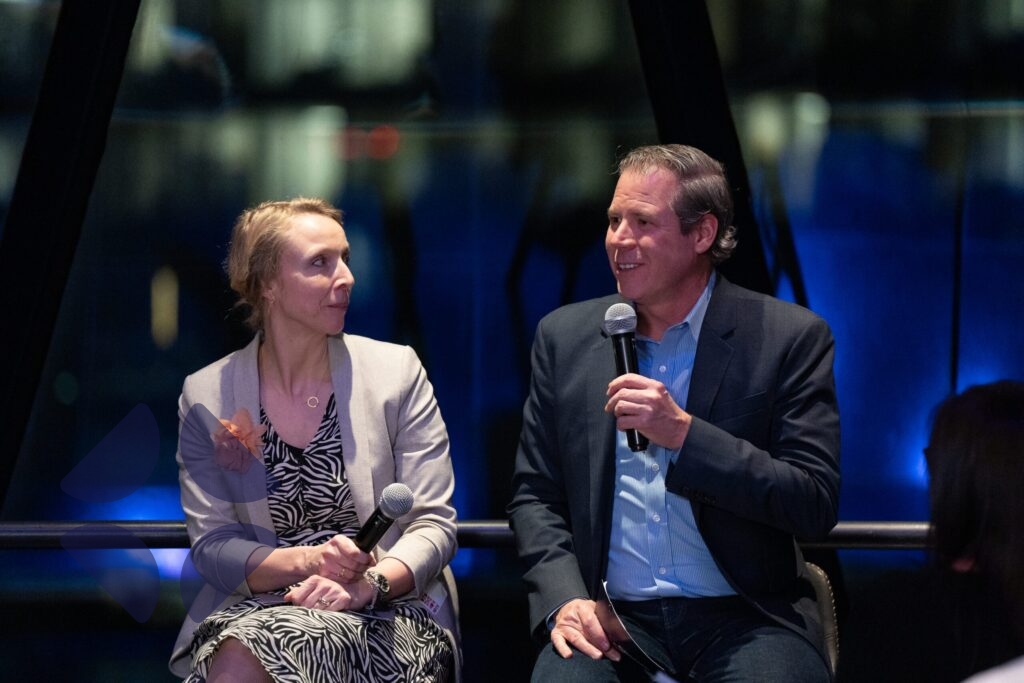
As part of a recurring series, Cascale details the involvement and vision of its Board members. Here, Sean Cady, VP Global Sustainability, Responsibility, Trade and Government Affairs, VF Corporation, and Interim CEO, Cascale, shares his perspective.
Cascale: Sean, you’ve been involved with Cascale from the start, beginning when you were at Levi’s. Why?
Sean Cady: Yes, from the beginning, I used the tools and implemented those throughout our supply chains.
I got involved because I believed in the vision and the mission of the organization. Just like today, I believe in the revised vision of Cascale to lead an industry that gives more than it takes to both people and the planet. That’s important to me and I am passionate about this work – about using business as a scale for good. We recognize the impact global businesses have around the world, both on the planet and people, which can be either positive or negative. Cascale brings us the tools that enable us to have a positive impact.
Cascale: You mentioned the name change, and the rebrand is certainly top of everyone’s mind. Why do you think the timing was important?
SC: We’re at a very pivotal point right now. There’s a sense of urgency, we all have to have a sense of urgency, because we see what’s happening around the world. It doesn’t take a rocket scientist to recognize the impacts of climate change on the planet – whether it’s rising sea levels, more extreme storms and weather events, or climate migration.
We see these impacts firsthand in our communities, in our countries, and around the world – from wars to supply chain disruptions. We all need to have a shared sense of urgency to create the change that we all want to see in this world.
We have to recognize also that Cascale has created a tremendous amount of value for the apparel and footwear industry, building convening power and bringing the industry together to harmonize on key assessment methodologies. Cascale built credibility in the tools by equal partnership and outreach to different stakeholder groups to align on where we need to prioritize our focus to drive change.
That credibility, that harmonizing power of Cascale, is now ready to be applied to new industries and adjacent product categories. This expansion enables us as an organization to drive impact far beyond what we could achieve previously.
What’s in the name? We wanted to honor the history and the legacy of the SAC. And so the first three letters of Cascale are SAC reversed. And then scale – that’s exactly the point we’re at right now. We’ve built the harmonized credible assessment methodologies that are ready to scale across not only apparel and footwear, but also adjacent product categories and adjacent industries to drive more positive change at that scale that we’re all hoping to see.
Cascale: Your role – as board director and interim CEO – is also about unifying. What is that like?
SC: I’m honored the board asked me to step into the interim CEO role as we’re searching for a new CEO of Cascale. The work is exciting. It enables me to participate in different situations and different roles to drive change that is continuously focused on improving the lives of people and the planet and reducing our industry’s environmental impact. So it is super exciting for me to be in multiple roles. One of the things I learned about Cascale coming into this interim CEO role is that the team is comprised of experts; the team is very, very strong. The strategy is solid, and now it’s all about how do we build for the future.
Cascale: What is the best part of your work? What are the highlights?
SC: I have had the fortune to lead a number of teams here at VF, and I’m proud that VF is a purpose-led organization. That’s why my VF colleagues and I come to work every day.
We have great brands like The North Face and Timberland, and we make great products that help people get outdoors and live active lifestyles, but at the core of all of it – why we show up at VF – is because of that purpose. This enables us to drive a positive impact, which also aligns with Cascale’s goals.
Why do I do it? Well, we know that if you don’t focus on people or the planet, you harm your brand reputation. We know consumers care. We know our stakeholders, our investors, NGOs, and governments care about this work. We know it’s the right thing to do. But really, the best part of my job is the people. It’s the people I get to work with and learn from every single day of my job, whether that’s my job as a board member or interim CEO of Cascale or my job at VF. I love people, and I love the opportunity to work with people all over this world and learn every step of the way.
Cascale: It’s so exciting to have that clear purpose. What has been the hardest part about balancing these roles at such a high level?
SC: The hardest part is the time I need to spend balancing the roles and delivering exceptional results for each organization. But because of my passion for this work, the time commitment is worth it.
This is the reason I’m here. And I’m willing to give, because I know that if I give today, in the future the value will come back to me and to my family and to others around the world. But the biggest challenge now is balancing the time commitments.
Cascale: You mentioned time, what are you doing with any free time outside of your day jobs?
SC: One of the things I’m really passionate about is my family – both my extended family all over the world in New York, Colorado, Hawaii, and Asia – but also my two kids. I am super passionate about raising amazing, global citizens in this challenging world. One of the things I’m focused on with my kids as they grow up is to give them the opportunities to see the world through other people’s eyes. So I bring them into our supplier factories to see what life is like outside of the developed world where they live.
Aside from family, we live in Denver, Colorado, and I can look out my window here and can see the Rocky Mountains with snow on top. I love getting into the mountains, whether that’s mountain biking, or hiking, or now in the winter, getting out and spending a whole day snowboarding. That’s where I get my energy, and it’s a passion that I hope never to lose.
Cascale: What is on the travel list?
SC: Well, we’ve gone all over the world; they’ve spent a lot of time in Asia and both of my children were born in Thailand. Our recent trip out of the country was to Tokyo, which was culturally an eye opener for them. This summer, I’m taking them to Kathmandu, and we’re going to do some trekking up in the Himalayas in Nepal.
So that’ll be a new country for them to go to, and it’ll be a different perspective. I have plans to bring them to Bangladesh, to go to my friend’s factories in Bangladesh, and that will also be eye opening to them.
Cascale: As we’re tracing the arc of your career, what is the best advice you’ve ever received?
SC: There are two pieces of advice that I continue to live by. One, I don’t know where I got it or who gave it to me, but it was to, “Say yes to everything.” And it’s truly benefited my career trajectory. Whenever a challenge was presented to me, I would always say yes. Even if I didn’t know how to get it done, I would go figure it out. And these types of challenges are always an opportunity for me to learn. When the board asked me if I would step in as Interim CEO of Cascale, my first reaction was, “Of course, I will – yes!”
The second piece of advice is to “plan your work, and work your plan.” I believe in that because the number of distractions there are today, the amount of people or technology apps or things on the computer, phone or text messages, just seeking our time distracts us all from delivering exceptional results.
I plan my work; I am very clear on the objectives and the goals of my work, and the work plan to achieve the desired objectives. Then, I work my plan – step by step by step without distraction. That’s one of the areas, I believe, that has made me successful in my career. It’s not just an objective that I set for myself. I build a plan to achieve it, and then I work on that plan step by step by step.
Cascale: Where do you see uncharted territory in your own career and for Cascale as it enters its new era?
SC: For me, personally and professionally, I’m very fulfilled. I feel extremely fortunate in where I am today. My career has taken me to different industries, it’s taken me to live on two different continents, and I’ve worked all over the world.
Because I’ve been able to engage and build friendships with experts around the world, I’ve been able to lead challenging work to deliver exceptional results. I feel as though the work that we’re trying to drive here takes a systems view. It’s not just one person, or one team that’s going to drive exceptional results anymore. We live in a connected world. And I enjoy being able to pull on many different levers to create outsized change. I know that we’ve achieved a great amount of success because of the work we’re all focused on, and I’m particularly honored that I get to play a small role in driving positive impact. I think for Cascale, the organization has an amazing opportunity right now. The tools we built are adding so much value to the apparel and footwear industry today, and I can only imagine how much more change the organization can drive with tools that have proven to be successful time and time again.
Cascale: Anything else to add?
SC: My last message is a huge sense of gratitude and thanks to the Cascale team. All of the staff, leaders, and managers are experts. I also give a huge thanks to all of the Cascale members today for offering your advice and sharing your perspectives and for leveraging the work that Cascale delivers throughout your own businesses.
I’m grateful to the Board of Directors of Cascale for their trust in me and their partnership in driving the entire organization forward, and lastly, I would say thanks to all of the stakeholders that Cascale touches – from the brands and retailers to the manufacturers. From the farmers and the raw material suppliers to the governments and the NGOs and the investors who care about how the tools deliver meaningful analysis of a company’s impact. I feel a huge sense of gratitude for all the people that have helped me become successful and have helped Cascsale become what it is today.
Press Releases /
Sustainable Apparel Coalition CEO Transition Announced
Sustainable Apparel Coalition CEO Transition Announced
Leadership
November 15, 2023
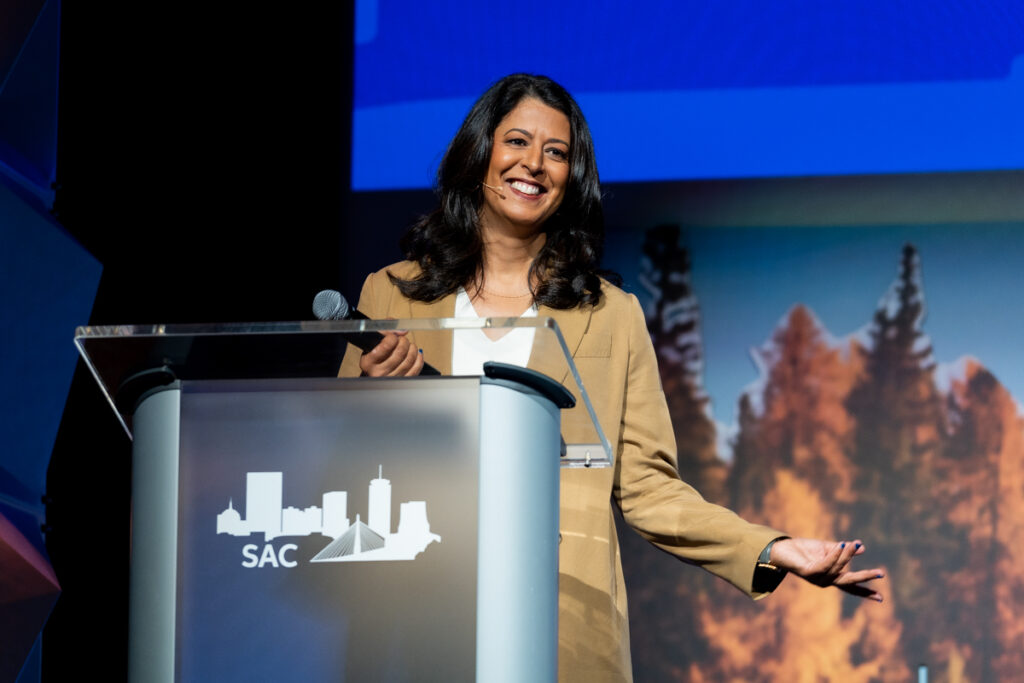
San Francisco, Amsterdam, Hong Kong – November 15, 2023: Today, the Sustainable Apparel Coalition (SAC) announced its CEO, Amina Razvi, will leave the organization as of December 29, 2023. As the organization enters a new phase of growth and expansion to adjacent product categories, she and the Board of Directors have mutually agreed the time is right for her to step away and for the Board to identify a successor. Razvi worked with the Board to lead the organization through significant growth and development of key strategic partnerships during her tenure, including but not limited to:
A new strategic plan in 2021, refocused in 2023 to prioritize sustainable impact at scale, providing clear direction for the SAC.
The doubling of SAC’s membership since 2019, exceeding 300 organizations, strengthening our collective influence for industry transformation.
The further evolution of the suite of Higg Index tools with over 24,000 organizations adopting the tools, facilitating standardized sustainability reporting worldwide.
A threefold increase in the SAC’s global team since 2019, bolstering its capacity, expertise and global presence to deliver on the SAC’s mission.
Successfully managing the Worldly spin-off in 2019 and overseeing plans for the Social & Labor Convergence Program spin-off in January 2024, creating a more robust ecosystem of partners and positioning the SAC as an agile, adaptable organization.
Establishing key strategic partnerships with organizations like Apparel Impact Institute, Textile Exchange, ZDHC Foundation, Worldly, The Industry We Want, and Global Fashion Agenda, driving deepened collaborative efforts to address industry challenges that are too big to solve alone.
Over the past decade, Razvi’s tireless commitment played a pivotal role in the SAC’s significant achievements and positive impact that it has had on the apparel industry, and the SAC Board and staff are grateful for her guidance. Through the end of December, Razvi will continue to work with the Board and the global team to support a smooth transition. During the transition, the SAC Executive Team will oversee day-to-day operations and key strategic initiatives, providing stability and guidance and ensuring that the organization’s ongoing commitments are maintained.
In addition, a dedicated Transition Taskforce will be overseen by Tamar Hoek, Chair of the SAC Board and Senior Policy Director of Sustainable Fashion at Solidaridad. There will be no changes to the organization’s mission, values, or direction, and members and partners – as well as the SAC’s global team – will be engaged at every step of the transition, reflecting the spirit of transparency that is an organizational hallmark. Finally, no staffing, Board, or leadership changes are anticipated as a result of this development.
Amina Razvi, outgoing CEO of the SAC, said:
“When I joined the SAC eight years ago, it was because I saw an incredible opportunity to drive positive industry transformation at scale. From the very beginning, it was clear what this organization and community were capable of, working as a catalyst for industry collaboration. In that time, we’ve come a long way together: We’ve doubled our membership, launched a new strategic plan and forged key partnerships, tripled the size of the SAC team, increased adoption of the Higg Index across the value chain, and achieved so much more.
“Partnership and community has been at the heart of our success. I wholeheartedly believe that partnership is the new leadership, and together, we’ve demonstrated what’s possible. I’m extremely proud of what we’ve accomplished together.
“But reflection is paramount, and as I step down from my role as CEO, I am excited about what lies ahead. The journey doesn’t end here; there are new opportunities and challenges on the horizon, and, while I will take some time to recharge and spend more time with my family, I’m eager to continue working on the issues I’m deeply passionate about. I look forward to the next opportunity to drive meaningful change, and positively impact people and the planet.”
Tamar Hoek, Senior Policy Director Sustainable Fashion, Solidaridad, and Chair of the SAC Board, said:
“The entire Board and I wish to express our gratitude to Amina for her contributions over the past eight years. As we bid her farewell, we take a moment to reflect on her outstanding achievements and those of her dedicated team. Their collective efforts have positioned the SAC for an exciting next chapter in its evolution.
“During her tenure, Amina played a pivotal role in uniting the industry and strategic partners, paving the way for a more sustainable and responsible future. Her accomplishments include the development of the SAC’s updated strategic plan, the establishment of new membership requirements, remarkable growth in both membership and the SAC team, and a host of other achievements. With great enthusiasm, we commend her dedication and the strong foundation she has laid, which will enable the SAC to expand its influence across the consumer goods industry.”
– ENDS –
About the Sustainable Apparel Coalition:
The Sustainable Apparel Coalition (SAC) is a global, non-profit alliance of over 300 organizations in the apparel, footwear, and textile industry. Initially formed to create standardized sustainability metrics, the SAC has sharpened its focus to driving pre-competitive, collective action across three foundational pillars. As an independent entity, the SAC brings together brands, retailers, manufacturers, NGOs, academics, and industry associations to combat climate change, ensure decent work, and contribute to a nature-positive future. Central to the SAC’s mission is the Higg Index, a suite of comprehensive tools that empower members to measure, evaluate, and improve sustainability performance across the supply chain.
LinkedIn | Twitter | Instagram | Facebook | YouTubeToday, the Sustainable Apparel Coalition (SAC) announced its CEO, Amina Razvi, will leave the organization as of December 29, 2023.
News Updates /
Sustainable Apparel Coalition Moderates Leadership Panel at WWD Apparel and Retail CEO Summit
Sustainable Apparel Coalition Moderates Leadership Panel at WWD Apparel and Retail CEO Summit
Leadership
November 07, 2023
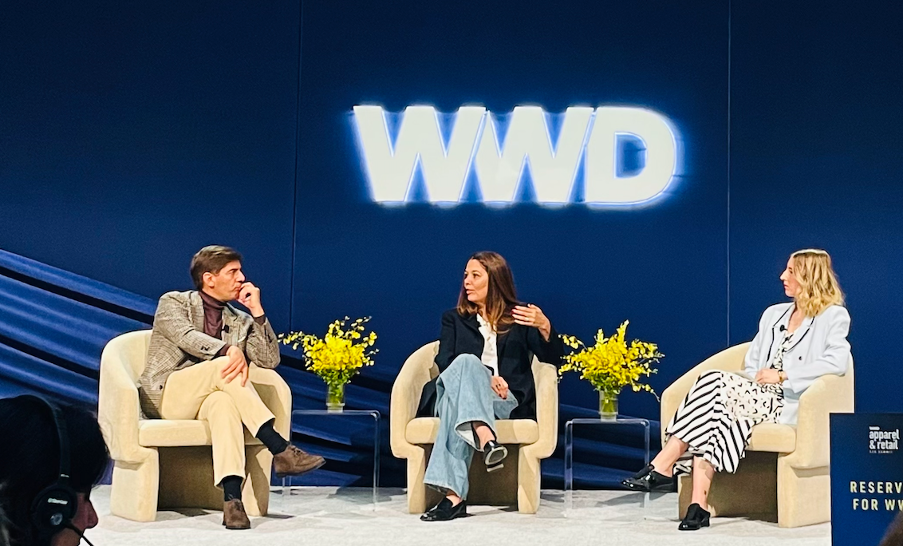
At WWD’s star-studded Apparel and Retail CEO Summit, the SAC’s new editorial director Kaley Roshitsh stepped into the role by moderating a discussion on balancing ethics with metrics in sustainability leadership. The “What Makes a Responsible (And Profitable) Brand,” panel included Amy Williams, CEO of Citizens of Humanity Group, and Stefano Canali, CEO of Canali. Each discussed their company’s approach to furthering sustainability while remaining committed to on-the-ground suppliers.
Williams detailed Citizens of Humanity Group’s commitment to regenerative agriculture — explaining how cotton transcends commodity to become a proving ground for the value of collaboration in advancing the fashion industry’s sustainability goals. The California-based company recently became involved in the “Kiss the Ground” documentary and partnered with the Erewhon grocery chain.
Canali shared his eponymous company’s metrics-first approach to business growth, which has been centrall to its nearly 90-year history. The Italian menswear brand is invested in a longstanding history of craftsmanship, and Canali considers durability as a testament to its values. The brand also embraces a progressive approach to measuring sustainability, which is demonstrated by Canali Care, which acts as an avenue for data-driven advancements. Over the past two years, Canali invested in life cycle assessments, beginning with a focus on product environmental footprint, and found that raw materials represent two-thirds of the company’s carbon footprint; it is working to decarbonize its supply chain and has committed to near-term targets with the Science Based Targets initiatives.
Roshitsh also attended the day-one closing ceremony, where presenter Jennifer Lawrence was among the A-list attendees and awards were given to Dior creative director Maria Grazia Chiuri, Macy’s Inc. CEO Jeff Gennette, and the Chloé brand.
News Updates /
Andrew Martin Calls on Academic Community to Be Active Influencers in Driving Change Across the Industry
Andrew Martin Calls on Academic Community to Be Active Influencers in Driving Change Across the Industry
Leadership
August 22, 2023
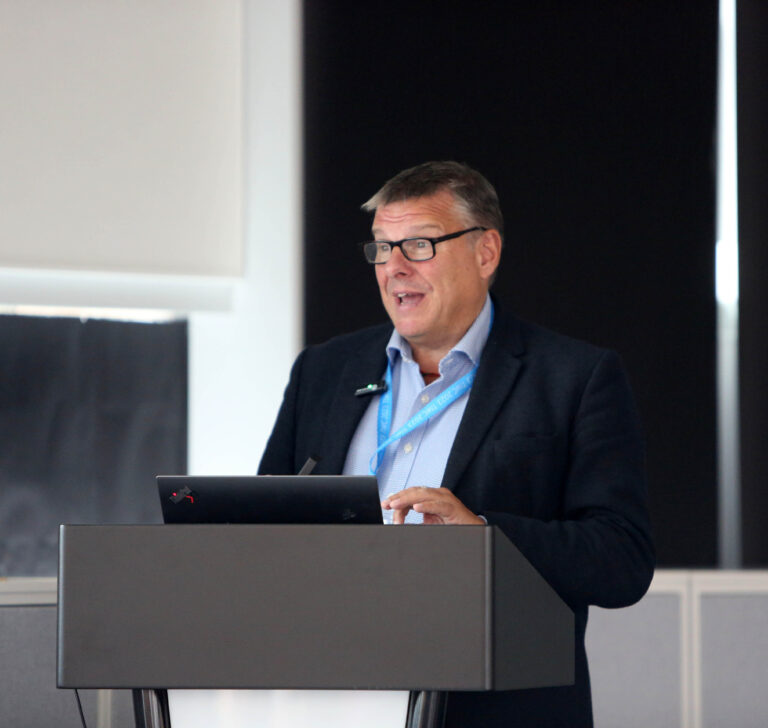
SAC Executive Vice President Andrew Martin recently gave a keynote speech at the 92nd Textile Institute World Conference (TIWC) 2023, which took place in Queensgate, Huddersfield at the University of Huddersfield on July 3-6, 2023.
Speaking on the topic titled, Vigilance and influence: The role of academia in transforming industry, Martin took to the stage to share specific challenges currently facing the industry in achieving effective and rapid change, which members of the academic community and professional experts have a great opportunity and important role in addressing.
Martin opened his keynote by giving a brief history of the SAC, including the challenges the industry faced while working in silos and the inspiring idea from two unlikely companies that brought the sector together around a universal approach to measuring sustainability performance. Launched as the Higg Index suite of tools, this approach set the industry on a collaborative path towards driving collective action. Reflecting on the progress achieved including in areas such as collaborating with data, insights, capacity building, and more, Martin noted there were still obstacles the industry was facing, which also presented an opportunity for motivating even deeper collaboration.
Martin highlighted persistent challenges in the increase of reports, campaigns, and media stories, based on poor science and unsubstantiated research, which sometimes lack transparency regarding funding or authorship. He explained that this often results in the creation of sustainability and circularity narratives that are not always scientifically sound and do not truly reflect the complexities and nuances of sustainability and circularity, while also lacking the integrity and accuracy critical to drive credible actions.
Acknowledging genuine efforts by stakeholders to contribute to and accelerate change in order to build a sustainable future for the industry and the world, Martin highlighted the risks of employing narratives that create division, pit industry players against each other, and influence civil society, stakeholders, policymakers, and consumers with flawed information.
As an example, Martin highlighted the challenges we face with oversimplification, leading to binary messaging – i.e. “this thing is good and this thing is bad” – and the threat that this poses to slowing or even halting the urgently-needed holistic progress needed across the whole industry.
“The world has reached a critical point in the climate crisis,” Martin said. He then shared three key areas in which we believe the academic community could contribute to solutions with the nuance and clarity that’s necessary to achieve effective progress: materials, policy, and processes, which ensure that rigor, transparency and credibility are upheld. He challenged academics to come together and collaborate on the development of a framework to help expose and eliminate flawed, counter-productive narratives in reports, campaigns, and the media. Finally, he called upon them to leverage their voice and expertise to become active influencers, calling out bad science, spotlighting the more nuanced work, and providing the insights needed to drive positive action.
“We can’t go on relying on shallow soundbites,” Martin said. “We need your knowledge, experience and credibility to drive the change we all want and need to see.” He completed his keynote speech with a clear call to action: Members of the academic community and experts should get involved and to share their knowledge, experience, and credibility to help drive collective change, support collaboration, and ultimately deliver real progress for a better future.
Podcasts /
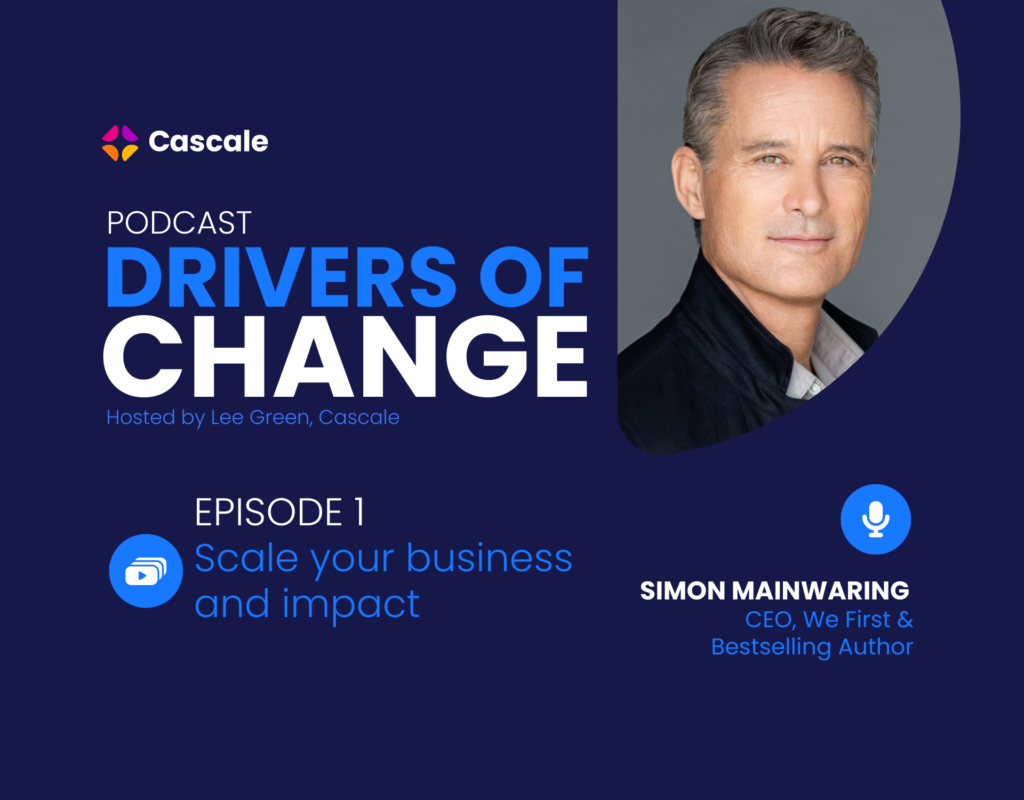
Episode 1: Scale Your Business and Impact
Episode 1: Scale Your Business and Impact
Leadership
How can you scale your purpose-driven business and drive greater impact? In this episode we tackle these questions with NY Times best-selling author, and CEO of We First, Simon Mainwaring. We also explore how to effectively communicate your sustainability story and Simon’s latest book, Lead With We.