Technical Review of the Higg MSI and Higg PM Tools
We are grateful to KPMG for their work in developing this report, which captures the invaluable insights and recommendations derived from the expert review of the Higg MSI and Higg PM tools.
We are grateful to KPMG for their work in developing this report, which captures the invaluable insights and recommendations derived from the expert review of the Higg MSI and Higg PM tools.


The SAC was founded on the idea of evolution. Through ongoing updates, our tools become more and more powerful at helping our members transform their businesses. Today, we continue to demonstrate that core concept with the publication of the first report from our Higg Index Review process, which is downloadable here. The report addresses the Higg Product Tools – the Higg Materials Sustainability Index (MSI) and the Higg Product Module (PM) – and plays an important role in helping us reassess and evolve our product life cycle tools in order to best serve the industry.
But change doesn’t happen in a vacuum: We had to listen and learn from you, our community. To do so, we engaged KPMG, which coordinated the creation of a panel of experts that represent a cross-section of the industry; KPMG led the process of generating the report, ensuring that it remained unbiased and independent. All who participated brought insightful perspectives that triggered powerful conversations about how we — the SAC, and the apparel and textile industry — can evolve the tools to drive greater impact. We were again reminded that our tools, while tailored to this industry, must respond to the global call to reduce social and environmental impacts as a whole and align with global industry standards.
With a broad range of representation from the expert panel, we welcomed the strengths that were acknowledged, including the tools’ alignment with ISO LCA phases to quantify and assess the environmental impacts of materials and products. But more importantly, the review process surfaced clear feedback and recommendations to improve these tools. We are taking these recommendations to heart and we have started evaluating how best to address each recommendation.
In some cases, the work is already underway.
We are re-working the Higg MSI data structure and leveraging the forthcoming Higg Facility Environmental Module (FEM) update, which will launch in September, to connect them and allow factory-specific data to inform Higg MSI data sets, and which will lead to improved geographical coverage and specificity within the Higg Product Tools. We’re also actively working to improve data quality within our background datasets (secondary data), specifically in cotton fiber and textile wet processing data. Through this effort, we’re working with supply chain stakeholders to determine the type of data that is available, outline data gaps, identify intrinsic differences due to geography, and build consistent LCA models that can show improvements over time. This is a process that we’ll continue to replicate with other materials and processing stages in the future.
The expert panel also recommended that our tools must align with EU Product Environmental Footprint (PEF) – an evolving LCA methodology, that aims to create a harmonized common framework for calculating and communicating impact — and we fully agree. We’ve long incorporated alignment to the Apparel & Footwear PEFCR into our strategy goals and methodologies. For example: Our requirement on including renewable energy is aligned with PEF, as is our methodology to calculate the water impacts.
In other cases, we believe we can implement changes in the next phase of regular tool updates.
For example, we will develop the recommended signals and warnings, as well as offering more education and training, to help users correctly and more effectively use the tools.
Finally, some recommendations will require a deeper process of stakeholder engagement and research to explore feasibility and practical application.
For example, the SAC is closely monitoring the progress made in ways to assess the full impacts of marine litter and microplastics in LCA data. Ultimately, the ongoing evolution of the tools means the SAC will continue to assess the recommendations over the coming months and how best to implement them in the tools’ development roadmap.
In 2024, we will be conducting independent reviews for the Higg Brand and Retail Module (BRM) and Higg Facility Environmental Module (FEM) tools. Due to the timing of these updates, the Higg Product Tools were reviewed first. The remaining Higg Index Review reports will be shared in full by the SAC once they have been finalized by the review panels.
Science isn’t static — and neither are we. We are committed to continued enhancement in order to arm the industry with the most robust, data-driven tools so that we can all stand behind decisions that are as socially responsible as they are environmentally sound. Finally, we are grateful for those who contributed their time and effort to the process of generating this report, as well as for the continued engagement of – and critical feedback from – our trusted members and partners.

Lee Green, the SAC’s Senior Director of Marketing & Communications, recently presented on intersection between emerging policies and packaging at the “Unlocking the Power of Packaging: From Supply Chain Efficiency to Improved Sustainability” dinner hosted by Billerud, a paper and packaging materials company based in Sweden. The presentation also included remarks from the company’s Business Relationship Manager, Adam Sarama, and Global Commercial Director, Robert Testa, as well as a case study in packaging optimization presented by Maja Midebo, Senior Packaging Designer, and Johan Matsson, Manager of the EMEA & US Account Management Team, followed by interactive roundtable discussions.
Green began his presentation with the caveat that, when it comes to packaging and policy, the SAC’s Higg tools should not be seen as compliance checklists. The tools, which measure and score a company’s sustainability performance, should instead be seen as analytical frameworks, designed to provide actionable insights for continuous improvement on sustainable practices across the supply chain — including packaging. “Imagine you’re a sailor navigating treacherous waters without a compass — that’s what sustainability efforts are like without the Higg Index,” Green said. “The Higg tools provide a high-resolution map of your environmental and social impacts, helping to guide the journey toward sustainability. They’re more than tools; they’re your sustainability North Star.”
With that idea in mind, Green shared that the Higg Product Module (PM) does request information on packaging — its materials, reusability, and overall lifecycle — which can aid in determining a product’s overall environmental footprint. SAC Member brands like ALDO used the Higg PM to help commit to reducing the environmental impact of packaging through the use of post-consumer recycled materials in mailers, redesigning shoeboxes with handles to eliminate the need for additional bags, and utilizing 100% recycled materials for e-commerce shipping bags; similarly, Nike used analysis from the PM in developing its One Box packaging concept, which ships shoes in a shoebox, eliminating the need for an additional outer box and reducing packaging waste by 50%, bringing the company closer to its target of cutting waste by 10% per unit by 2025. However, Green emphasized that the tool generates analysis, rather than a compliance checklist. “While it can indicate whether your packaging strategy aligns with your sustainability goals, the Higg PM does not provide a roadmap to phase out, for example, single-use plastics,” he said. “Those initiatives need to be separately formulated, often requiring in-depth lifecycle assessments and material flow analyses.”
Green noted that the SAC’s view on regulations is that more stringent regulations can incentivize collective action. “While regulations can be seen as challenges,” he said, “We see them as opportunities — a catalyst for change. They demand that industry leaders embrace sustainable innovation, which leads to collective action, which is critical to the SAC’s mission of transforming the global consumer goods industry into one that gives more than it takes — to the planet and its people.”
As Green shared, the evolution of this idea is that out of collective action comes an ethos of shared responsibility and innovation. When it comes to packaging, Green said, “Regulations might set the rules, but they also open up a realm of possibilities for sustainable advancements in material science, design, and circular economy models related to packaging. This is where your expertise and willingness to collaborate can create industry-transforming solutions.”
Green shared how the SAC’s collective action mandate focuses on impact, not just compliance, helping members to understand regulations and their business impacts. And he described how the Higg Index tools and frameworks go beyond minimum requirements, helping members contribute positively to societal and environmental changes and providing a space where companies can collaborate and pool resources.
Finally, he closed by describing how the SAC is in a state of evolution, moving from isolated tools to holistic programs that address sustainability at scale, built on pillars like combating climate change, ensuring decent work, and creating a nature-positive future — which are all extremely relevant to packaging, given its flow in product lifecycle and waste management. “Data isn’t just a tool; it’s a compass,” Green said. “It directs us towards actionable goals and validates our journey, allowing us to participate constructively in policy dialogues and to fine-tune our practices to meet and exceed regulatory guidelines — making systemic change not just possible but inevitable.”
The SAC is excited to launch the Higg FEM 4.0 in November, providing a transformative shift in sustainability reporting for manufacturing facilities, brands and retailers. This dynamic tool has the potential to significantly change how and why decisions are made within the industry, and we want to make sure you have everything you need ahead of November’s launch. In partnership with Worldly, the SAC is excited to share a dedicated Higg FEM 4.0 webpage to bring you all the latest resources, key dates and updated information —all in one place.
Higg FEM 4.0: Major Updates
Updating Higg FEM 4.0 was a highly collaborative effort among SAC members. Over the past two years, we’ve worked with over 100 members to collect feedback on tool framework, scoring methodology and content. Insights from key Member Engagement Teams and the Strategic Council helped us to identify gaps in regulations, industry standards and needs, and incorporate member insights in order to significantly evolve the tool.
We view Higg FEM 4.0 as a gamechanger — here’s why:
How to Prepare for Higg FEM 4.0
To help users prepare for Higg FEM 4.0, we’re thrilled to introduce a consolidated webpage where manufacturers, brands and supply chain partners can access important resources and critical information. In partnership with Worldly, we’ve developed a Higg FEM 4.0 webpage as a one-stop resource for all Higg FEM 4.0 announcements and training materials.
Visit https://go.worldly.io/learn-about-higg-fem-4.0 to learn more about the Higg FEM 4.0 update and explore need-to-know information ahead of the launch in November.
Key webpage features include:
With in-depth training and content tailored to best prepare you ahead of time, the SAC and Worldly are prepared to help you navigate all changes, big and small. We’re excited to launch a tool that will better shape how decisions are made within each facility, and also drive the industry forward as a whole. Together, we’re not just meeting sustainability standards; we’re setting them.
WHO WE ARE:
The Sustainable Apparel Coalition (SAC) is an industry-wide nonprofit alliance whose collective action efforts lead the consumer goods industry toward a more equitable and restorative future. The SAC owns and develops the Higg Index, a suite of tools that provides a standardized framework for organizations to assess sustainability impact throughout the product life cycle. Over the past decade, the SAC has focused on building and evolving the methodologies of the Higg Index using the latest scientific research, in collaboration with SAC members, consultants, stakeholders, industry experts, and ecosystem partners, such as Worldly. To learn more about the Higg Index, visit https://cascale.org/the-higg-index/.
Worldly is the planet’s most comprehensive impact intelligence platform, trusted by 40,000+ major brands, retailers, and manufacturers in fashion, outdoor, home goods, toys, and more. Worldly uniquely collects high-resolution primary data specific to companies’ value chains, operations, and products, providing insight into true impacts across carbon, water, chemistry, and labor. Featuring the most comprehensive source of ESG data for global manufacturers and the largest library of materials and product impacts, Worldly empowers businesses to scale responsibility into their global operations, faster and more accurately. Hosting, connecting with, and supporting the leading industry solutions and methodologies including ZDHC, Bluesign, and the Higg Index – the most widely-adopted measure of sustainability in the apparel industry – Worldly delivers the insights businesses need to reduce their impact, comply with emerging regulatory and financial disclosure requirements, and meet the expectations of a new generation of customers. www.worldly.io
Our reflections on driving positive progress, addressing challenges and fostering collective impact within the textile and apparel industry.

The Sustainable Apparel Coalition (SAC) today announces a media partnership with FashionUnited, the world’s largest business-to-business cross media fashion platform for fashion professionals and companies. This collaboration will see both organizations working in close partnership in the development and promotion of content highlighting the SAC’s initiatives and efforts to engage with stakeholders in the textile and apparel industry to drive positive change.
As part of this partnership, FashionUnited is partnering with the SAC on two upcoming training sessions, the Higg Facility Environmental Module (FEM) 4.0 Training and Science-Based Target (SBT) Training, both of which will be hosted on June 14 in Milan, Italy, following on from Planet Textiles on June 12-13.
Ahead of the launch of the updated Higg FEM 4.0 and following the recent launch of the SAC’s Decarbonization Program, the trainings will provide opportunities for business professionals from across the value chain to participate in a set of in-person trainings to optimize their knowledge on using the facility-dedicated tool and how to set and implement science-based targets.
Sponsored by Deutsche Gesellschaft für Internationale Zusammenarbeit (GIZ) GmbH and Fabric Asia, the trainings will be led by SAC’s Angela Ng, Director of Facility Tools; Joyce Tsoi, Director of Collective Action Programs; Yasotharan Manivel, Manager of Collective Action Programs; and Executive Director of The Circular Institute, Michael Sadowski.

Current fashion supply chains are highly polluting and wasteful, making the fashion industry one of the most unsustainable industries. In order to measure and quantify the sustainability impacts of a manufacturing facility, the SAC’s Higg Facility Environmental Module (FEM) is a valuable tool. The Higg FEM offers standardized measurements for sustainability and helps manufacturers, brands, and retailers identify and prioritize opportunities for performance improvements through the use of a common language.
However, acting on the data can sometimes be a financial challenge for manufacturers. Although sustainable technology solutions exist today, manufacturers often lack the knowledge or capital to invest in such machinery to improve their production processes. The Good Fashion Fund (GFF), a first-of-its-kind initiative by Laudes Foundation, was established to create systemic change in the textile and apparel industry by encouraging mainstream uptake of impactful and disruptive production technologies. The fund provides long-term USD loans to apparel and textile manufacturers in India and Bangladesh to enable them to implement innovative and sustainable technologies.
The first loan by the GFF was made to Pratibha Syntex in 2021. By the first monitoring visit in November 2022, the impact results surpassed the targets of a minimum of 50% savings. At the end of 2022, another loan was signed with Progress Apparels in Dhaka, and the GFF expects to close three more loans—one in Bangladesh and two in India—by the end of the quarter. The investments are diverse and relate to the enhancement of effluent treatment plants, the adaptation of state-of-the-art spinning and weaving equipment, the installation or replacement of washing unit equipment, and the expansion of unique waste-to-yarn recycling facilities.
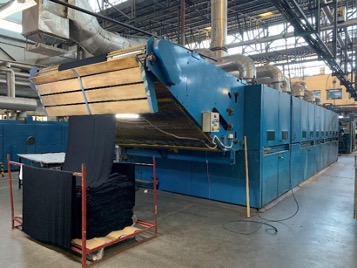
The technology we finance relates primarily to equipment for dyeing, washing, printing, and wastewater treatment and reduces the use of hazardous chemicals, water, or energy in the production process. Every GFF investment should lead to a minimum of 50% reduction in consumption of one of our three environmental goods: Good Energy, Good Water, or Good Materials (incl. chemicals).
The GFF is unique in its focus on sustainable and ethical fashion and we’re proud to be the first financial investor to join the SAC’s global membership, utilizing the Higg FEM as a key part of our environmental due diligence process. The Higg FEM measures the exact environmental impacts of a facility’s operations that we aim to improve, such as water use, energy consumption, greenhouse gas emissions, waste management, and chemical management. It aligns perfectly with the GFF’s objectives.
In particular, the Higg FEM assesses a facility’s overall Environmental Management Systems and specifically gathers data on energy use, greenhouse gas emissions, water use, wastewater, air emissions, waste management, and chemical management. The score not only reflects absolute levels but particularly focuses on encouraging improvements and setting baseline levels and targets.
Having a verified Higg FEM score allows us at the GFF to limit our environmental due diligence efforts to desktop research and interviews conducted by our advisors Sphera and TUV Rheinland. When a facility is new to the Higg Index, our due diligence is more extensive and includes a site visit, but, ultimately, the manufacturers and operators in which we invest must receive a verified Higg FEM score. This allows the company to create value from the exercise and publicly communicate the results.
It is a complex analysis and will require continuous development. We are confident the SAC will maintain and leverage its close partnership with its member retailers, brands, manufacturers, and other stakeholders to continue improving and increase levels of adoption.
Moreover, the GFF uses the Higg FEM score, not only for the initial investment decision but also to better monitor continuous performance over the lifetime of our partnership with the manufacturer. As the Higg Index becomes more widely recognized and adopted, we will be able to more effectively communicate the sustainability performance of the portfolio companies to our investors. More importantly, it will help the manufacturers communicate their improved sustainability performance to consumers. The investments funded by the GFF typically improve a facility’s Higg FEM score substantially.
Our partner at TUV Rheinland, Rakesh Vazirani, Global Head of Sustainability Services, Consumer Products, noted: “Every facility we encounter for environmental due diligence is eager to make improvements to positively impact its environmental performance KPIs/metrics to showcase its progress, to explore cost savings, to highlight its uniqueness to customers, and to prepare for future regulation. Relying on existing industry frameworks like Higg FEM allowed facilities’ performance to be measured based on a harmonized framework; and GFF’s approach to fund improvements to make an impact fit into the wider mission of factories, local governments, and brands. We look forward to the continuous evolution of the Enhanced Due Diligence (EDD) framework to add efficiency to the process, and further alignment with European Green Finance taxonomy.“
Of course, the assessment and improvement of working conditions and labour rights are equally important aspects of the GGF’s objectives. Currently, the social due diligence is being performed by Fairwear Foundation, and important topics such as labor policies, health and safety conditions, workers committees, adequate administration and execution of contracts, salary management and working hours, grievance mechanisms, and anti-discrimination policies are being reviewed on site. In one of the more recent transactions, for the first time, the social due diligence included assessing the company’s verified scores of the Higg Facility Social & Labor Module (FSLM). Given social audits are at least as intensive for a company to accommodate as the environmental due diligence, we are exploring the possibilities of the Higg FSLM verification as more brands and manufacturers adopt the standard.
The GFF is dedicated to creating systemic change in the fashion industry, not only by the direct impact of its investments but also by sharing experiences and lessons learned widely. We aim to create partnerships with other actors in the fashion industry and financial sector, drive awareness of opportunities for sustainable technologies, and catalyze finance. GFF will continue to report on its investee companies extensively, encouraging further use of standardized measurements including the Higg FEM and Higg FSLM scores.

San Francisco, Amsterdam, Hong Kong – March 01, 2023: The Sustainable Apparel Coalition (SAC), in collaboration with technology partner Higg, has today released the latest version of the Higg Brand & Retail Module (BRM), one of the five assessment tools in the Higg Index. The Higg BRM is a leading, holistic framework that creates an industry specific method for brands and retailers to evaluate, report on and improve Environmental, Social and Governance (ESG) performance along their global value chains. The SAC has invested in a major update of the tool which will feature a new assessment structure and updated methodology, underpinned by a due diligence approach. The update will encourage brands and retailers to focus on real action, impact and results.
Recent findings from The Industry We Want, in partnership with Fair Wear, the Ethical Trading Initiative (ETI) and the Sustainable Apparel Coalition (SAC), has revealed the apparel and footwear industry is not making fast enough progress on purchasing practices, supply chain wages and greenhouse gas (GHG) emissions. In order to drive the scale of transformation needed, brands and retailers need a clear and standardized picture of their environmental and social hotspots, to create a clear roadmap for transformation.
This new version of the assessment has been reorganized across 11 key areas, split across three pillars (environmental impacts, social impacts, governance) to be more relevant to where the industry needs to drive change, faster. The assessment has added biodiversity as a new impact area and now features more in depth questions on water and circularity as key impact areas and levers of change in the tool. The questions have also been revised to align with best in class standards; for example alignment with best practice guidance on responsible purchasing practices. Additionally, the scoring methodology has been simplified so it can be shared with users openly. The Higg BRM now provides one finite score out of 100, in addition to score breakdowns per pillar and impact area, making it easier to understand, communicate and benchmark against peers.
The assessment has been restructured to provide greater value for different organizations to prioritize our industry’s pressing ESG issues and focusing on impacts and results. Other benefits include the reduction of reporting burden through alignment with relevant frameworks and by eliminating the duplication across the entire questionnaire.
The update is based on research by the SAC’s Higg BRM team and is the result of one year of consultations and with over 75 stakeholders including members and industry experts to ensure close alignment with standard assessment protocols. It has been developed in collaboration with members, key partner organizations including Apparel Alliance members Textile Exchange and ZDHC who contributed to the development of specific content on materials, biodiversity, circularity and chemicals. The SAC also engaged STTI and the Multi-Stakeholder Initiatives Working Group of the Common Framework of Responsible Purchasing Practice (CFRPP), represented by Fair Wear, who provided input and feedback on the responsible purchasing practices section of the assessment. SAC members across all territories were also consulted and the SAC hosted three regional roundtables to ensure all geographies were represented.
Jeremy Lardeau, Vice President, Higg Index at the Sustainable Apparel Coalition, said: “We are excited to release the latest version of our Higg Brand & Retail Module, which marks a major milestone for the SAC. This update is the result of an incredible level of engagement with experts and stakeholders from across the industry, to whom we are truly grateful for the time and input provided. This process has allowed us to better align with existing industry assessment frameworks, and make sure we are addressing the needs and expectations of our members and the industry at large. Our tools must evolve to continuously improve, and while this update is a step in that direction, we will continue to iterate the BRM as the industry progresses, legislation evolves and we continue to gather insights and feedback from BRM users and other stakeholders.”
Maravillas Rodriguez Zarco, Director, Higg Brand & Retail, at the Sustainable Apparel Coalition, said: “The release of the latest version of our Higg Brand & Retail Module is a clear reflection of our mission at the SAC to transform business for exponential impact through groundbreaking tools, collaborative partnerships, and trusted leadership for industry sustainability. From the new assessment structure, to the updated methodology, we are proud of the work we have done to get to this point, we believe the latest version will provide deeper insights and value for brands and retailers and we look forward to continuing supporting them on their sustainability journeys.”
Magnus Dorsch, Head of Corporate Sustainability, About You said:
“The launch of the updated Higg BRM marks a major milestone for the SAC, its members, and the industry at large. We are honored to have contributed to the work that went into the development of the new version. Since joining the SAC in January 2021 and adopting the Higg BRM, we have supported our brand partners in aligning on a unified approach towards sustainable practices, helping them understand where they stand regarding their sustainability journeys and how to continue to support them to improve and drive progress. We believe the updated Higg BRM will serve to help us continue calibrating our ESG strategy to ensure consistency in our progress and reporting and look forward to seeing how it continues to evolve to meet the needs of the industry.”
Sarah Needham, Director of Stakeholder Engagement, Textile Exchange said:
“It is exciting to see the Sustainable Apparel Coalition’s investment to move the Higg Brand & Retail Module in this direction, adding crucial updates including biodiversity as a new impact area and moving to closer alignment with our Materials Benchmark program (formally known as Corporate Fiber and Material Benchmark). We are pleased that as a part of the apparel alliance, we can continue to support on progressing our shared goal of moving the industry towards 45% GHG reduction by 2030 by providing a source for raw materials uptake information, and collaborate to streamline reporting across the fashion, apparel and textile industry.”
Klaas Nuttbohm, ZDHC Implementation Director said:
“We are excited for the opportunity to collaborate with the SAC and create greater alignment between the two organizations. The integration of the ZDHC Brands to Zero Assessment (BtZ) into the Higg BRM means a big step forward for both our organizations. This is a major advance for the apparel alliance partners to align the programmes and tools which will lead to the opportunity for our Contributor Brands to benefit from utilizing the BtZ results in the BRM reporting.”
Margreet Vrieling Fair Wear, chair of the Multi-Stakeholder Initiatives Working Group on the CFRPP, said: “We welcome the efforts of the Sustainable Apparel Coalition to seek closer alignment to the Common Framework for Responsible Purchasing Practices, developed by the MSI working group, within its Higg Brand & Retail Module. Identifying and assessing the risks and negative impacts of purchasing practices in the buyer-supplier relationship is key to mitigate negative effects on suppliers and workers. By using the responsible purchasing practices as they have been laid down in the Common Framework as input for the BRM responsible purchasing practices questions, the SAC reinforces the importance of collaboration and convergence to drive progress within our industry.”
Karin Ekberg GmbH, Founder & CEO Leadership & Sustainability said:
“The launch of the new BRM module is a great step forward for SAC and its members. It has been a pleasure for us at Leadership & Sustainability to be part of the process to develop the new BRM. As it is now aligned with international ESG standards and expectations, we believe this version will meet market demands, will support brands and retailers to measure and improve their ESG performance as well as communicate their efforts in a transparent and trustworthy manner. Congratulations to the SAC team and all contributing members!”
Brands and retailers can use the Higg BRM to understand their performance in these areas: Environment: climate, water, waste, biodiversity and chemicals; Social: workers, employees, consumers and communities; Governance: structure and management, ethics and behavior.
The updated Higg BRM is now available for brands and retailers to measure and report on their ESG impacts to understand their progress and identify areas for improvement with clarity and transparency. If your organization is interested in using the Higg BRM, please find more information here.
– ENDS –
About the Sustainable Apparel Coalition:
The Sustainable Apparel Coalition (SAC) is an independent and impact-creating organization that aims to lead the industry toward a shared vision of sustainability based upon a joint approach for measuring, evaluating, and improving performance.
As a non-profit organization, it has members from across the apparel, footwear and textile sector, but exists independently outside any one company so that it can drive progress. The SAC’s collective action efforts bring more than 280 global brands, retailers, manufacturers, NGOs, academics and industry associations together. They represent about half of the apparel and footwear industry along the whole supply chain – from sustainability pioneers to organizations just getting started.
Before the SAC existed, companies worked in a siloed way, using their own programs and measurements that lacked standardization and an ability to drive collective action. In 2009, Walmart and Patagonia identified this as a serious problem. Joining forces, they brought together peers and competitors from across the sector, to develop a universal approach to measuring sustainability performance and founded the Sustainable Apparel Coalition.
The purpose of this Technical Paper is for Higg FEM users to start understanding and preparing for the next version of the Higg FEM (“Higg FEM 4.0”), which will officially be released on the Higg platform in November 2023. Facilities will start reporting their 2023 performance using the FEM 4.0 framework.
Learn more about the business value and benefits of the Higg Index.