New Cascale Better Buying Partnership Index Survey Opens

  • Better Buying
  • Responsible Purchasing Practices

Cascale Better Buying has opened the fall rating cycle for the Better Buying Partnership Index (BBPI), inviting suppliers and manufacturers to submit feedback to help accelerate responsible purchasing practices across the consumer goods industry.

October 01, 2025

Supplier and manufacturer data is critical to accelerating responsible purchasing practices in the consumer goods industry

Amsterdam, Hong Kong, Oakland (CA) – October 1, 2025: Cascale Better Buying today opened the fall rating cycle for the Better Buying Partnership Index (BBPI), calling on suppliers and manufacturers worldwide to submit feedback to help accelerate responsible purchasing practices across the consumer goods industry. The survey’s unique methodology helps buyers – both Cascale brand and retail members and non-members – better understand how their purchasing practices impact suppliers and manufacturers.

“As a global manufacturer, we firmly believe that the responsibility of improving working conditions and maintaining sustainable practices lies with both buyers and suppliers and manufacturers,” said Michael Cai, Director of Operations & Supply Chain, Décor Global.

“We have been working with Better Buying for over seven years and its vision strongly resonates with us. We see its unique value – providing a safe, confidential platform for suppliers to give candid feedback and co-create solutions. Over the years we have seen positive changes as buyers became more open to our suggestions, with real improvements in forecasting, planning and business management practices. We strongly encourage our peer suppliers to take part and rate their buyers’ purchasing practices.”

Now in its fifth rating cycle, the BBPI is a concise, 12-question, five-minute confidential survey that gathers input into the quality of buyer-supplier relationships. It is aligned with Better Buying’s Five Principles of Responsible Purchasing: time, visibility, stability, fair financials, and shared responsibility, which are reflected in Cascale’s mission to support decent work for all. The BBPI is moving the needle on buyer purchasing practices. Scores for partnership quality have increased every year since the BBPI first launched, with the highest to date, 52, recorded in the last BBPI cycle, a four-point increase from the previous year, reflecting notable improvements in buyer-supplier relationships.

This cycle marks the first BBPI launch since Better Buying joined Cascale earlier this year. All responses are fully anonymized and aggregated, ensuring business relationships are protected and enabling candid, unfiltered feedback. Findings are shared with brands and retailers that subscribe to Cascale Better Buying, equipping them with actionable insights to strengthen purchasing practices. Cascale is encouraging broad participation to strengthen the evidence base, elevate supplier voices, and scale collective progress toward more responsible purchasing.

“Every day, suppliers and manufacturers are impacted by brand and retailer buyer decisions. As such, they are the only true arbiters of where we stand as an industry on responsible purchasing practices,” said Katie Hess, Head of Product at Cascale Better Buying. “To drive transformation at scale, we must expand supplier participation, elevate their voices, and build a robust evidence base. This not only helps brands and retailers improve, but also brings more companies into the journey towards responsible purchasing.”

Through October 31, suppliers and manufacturers can use this link to take the BBPI survey. Brands and retailers, including Cascale members, are also encouraged to share the survey with their suppliers and invite them to rate the quality of their partnership.

Responsible Purchasing Practices as a Tool to Promote Ethical Behavior – An Update!

  • Better Buying

In this guest blog, Chana Rosenthal, principal and founder, reDesign Consulting, a sustainable business advisory firm, and consultant with the Ethical Denim  Council (EDC), and NYU Stern Center for Sustainable Business, offers an update on responsible purchasing practices.

Headshot of Chana Rosenthal
Chana Rosenthal
September 23, 2025

Almost exactly a year ago, I wrote a blog for Better Buying Institute in my capacity as consultant for the  Ethical Denim Council (EDC), about the role of responsible purchasing practices in promoting ethical behavior in the denim industry.

I highlighted that the post-Covid-19 acceleration of collaboration by multi-stakeholder initiatives and other industry stakeholders in seeking solutions  marked a new era in which profit maximization at the expense of workers is no longer accepted. Today, organizations are increasingly expected to embed ethical values at their core.

I lauded the progress made across the industry to achieve an agreed, industry-wide definition of responsible purchasing practices, but cautioned that the real foundation for promoting ethical behavior required embedding responsible purchasing within companies’ business operations.

“There is opportunity for brands to simultaneously profit and remain ethical,” I said at the time,  “but it requires a shift in behavior centered around responsible purchasing practices.”

In the year since I wrote those words, Better Buying has become part of Cascale, the global nonprofit alliance representing 300+ of the biggest brands and retailers operating in the apparel industry today, and has placed responsible purchasing practices at the center of achieving its strategic goal of Supporting Decent Work for All.

This development presents brands and retailers, including Cascale’s members, with broader access to existing tools such as the Better Buying Purchasing Practices and Partnership Indexes which may help advance responsible purchasing practices at scale and hopefully eliminate the need for the Ethical Denim Council.

In June, I had the pleasure to speak at the Innovation Forum’s Sustainable Apparel and Textiles Conference in New York, alongside Joleen Ong, Cascale’s senior director of brand and retailer membership, and Annie Agle, vice president of impact and sustainability at Cotopaxi. We discussed how brands can navigate responsible sourcing within a global trade and sourcing that’s evolving at an unprecedented rate.

Similarly, Joleen and I will convene again at Climate Week NYC for a Cascale organized session at the “The Climate and Nature Studio” (a first-ever convening with apparel alliance and fashion industry collaborators). The session also includes Nim Deshpande, managing director, Good Business Lab (which spun out of India-based Shahi Exports) and Evre Kaynak, sustainability specialist, human rights due diligence subject matter expert, W.L. Gore & Associates. This panel conversation will unpack the intersections of climate change, adaptation efforts, and the ripple effects on social and labor rights. I’ll assert that the climate disasters, disruptions, and ongoing tariff battles reshaping the environment actually provide procurement teams with a unique opportunity to craft strategies that streamline supply chains to build resilience, and drive sustainability with responsible purchasing practices integral to this new paradigm.

Interestingly, Better Buying’s research has shown us that, even amid global shocks such as the Covid-19 Pandemic, brands and retailers that had been collecting supplier data via its surveys for at least two consecutive ratings cycles continued to improve their purchasing practices throughout the pandemic, because they had begun to build the strong, two-way buyer-supplier partnerships required to build in the necessary resilience.

The shifts over the past year, from expanding collaborations to growing research and dialogue, show that responsible purchasing practices are becoming more visible as a part of the industry’s toolkit. Yet, there is still work to do with embedding these practices deep enough to impact the day-to-day business operations. As brands move in this direction, they reduce the risk of unethical behavior and the need for the EDC to exist but achieving lasting change will require consistent efforts, transparency, and accountability. Progress has been made, yet responsible purchasing practices are not yet the norm presenting a challenge and an opportunity to define the industry’s next chapter in a more positive direction.

About the Ethical Denim Council (EDC)

The Ethical Denim Council is a non-profit organization established in 2022 to address the power imbalance and unethical purchasing practices in the denim supply chain. Through the promotion of their 8 ethical practices and accountability of brands, retailers,  importers, and all members of the jeans and denim supply chains’ actions,the EDC aims to make the world of denim a better place. Refer to the EDC website to learn more.

About the Author

Chana Rosenthal is the principal and founder of reDesign Consulting, an apparel focused sustainable business advisory firm. She works with clients on thoughtfully created strategies and frameworks that shift internal business operations to be more sustainable and drive impact across the supply chain. She’s done extensive work with the NYU Stern Center for Business and Human Rights and the NYU Stern Center for Sustainable Business, as well as other organizations and businesses. Prior to consulting, she had an established career in apparel design holding positions at Ralph Lauren, Michael Kors, American Eagle/AEO, and more.

She also serves on the associate council for Delivering Good, a non-profit that distributes excess inventory to those in need through a network of community partners. Chana has an Executive MBA from NYU Stern, specializing in Sustainable Business and Innovation, and Supply Chain Management, and is based out of Brooklyn, NY.

Sneak Peek: What This Year’s Better Buying Garment Scorecard Tells Us About Industry Progress (and What Still Needs Fixing)

  • Better Buying

Lindsay Wright breaks down the 2025 Garment Industry Scorecard, highlighting where brands’ purchasing practices are improving, where they’re falling short, and the opportunities for industry-wide change.

August 20, 2025

The BBPPI Garment Industry Scorecard, the first since Better Buying joined Cascale in February, was released earlier this month.

The Garment Scorecard provides a quick snapshot of how brands and retailers are performing on purchasing practices compared to previous years.

Before we release the full Better Buying Purchasing Practices Index (BBPPI) report and once all participating brands have received their individual company reports, we share topline, aggregated scores. These scores reveal where progress has improved, stalled, or declined.

This year’s results show a slight decline in both the overall score and in most individual category scores, which is perhaps to be expected with all the ongoing uncertainty around the imposition of trade tariffs by the United States. Also, experience teaches us that headline numbers rarely tell the full story. Last year, scores were also fairly static, but deeper analysis revealed that some buyer companies had achieved significant improvements in key purchasing practices categories.

These topline figures present us with a baseline picture of where we stand — six months into Better Buying’s new home within Cascale — and signal an unprecedented opportunity to accelerate industry action. With Cascale’s wider membership, networks, and convening power, we mean to drive collective, systemic change on purchasing practices at scale.

Because every year that progress stalls is another year that suppliers struggle to operate sustainability and profitably. Another year where suppliers have had to deal with aggressive cost negotiation strategies, order cancellations, last-minute changes, poor forecasting, and duplicative audit requests. And where brands and retailers — the vast majority of whom still don’t participate in Better Buying rating cycles — miss out on the strategic benefits of partnering with their suppliers to improve purchasing practices.

The full BBPPI report will be published later this year.  That report will go beyond the numbers — sharing supplier stories, highlighting best practices, surfacing persistent challenges, and offering supplier-driven insights on how brands can improve and innovate.

Those stories and insights will inform critical discussions on what we need to do as an industry to make responsible purchasing practices the norm, not the exception, to Support Decent Work for All.

Stay tuned!


Stay informed about the latest insights, tools, and updates from Better Buying. Subscribe to our newsletter to get news delivered straight to your inbox.

How Fairer, More Accurate Costing Models Can Support Decent Work for All

  • Better Buying

In her latest blog, Lindsay Wright explores how fairer, more accurate costing models can drive responsible purchasing practices and support decent work across global supply chains.

August 13, 2025

There is a lot of good work being done by global brands and retailers in relation to improving their costing practices, but some buyers’ practices continue to place financial pressures on suppliers, and could actually be making things worse.

Cascale’s flagship Annual Meeting, which takes place in Hong Kong from September 15 to 17 under the theme “A Movement for All,” will consider how we can come together as an industry to create tangible, and sustainable, business for all. A key focus of the event will be determining next steps to establish responsible purchasing practices – including fairer costing practices – as the norm in global supply chains..

Under Cascale, Better Buying recently issued the “Suppliers’ Perspectives on Solutions for Better Costing.” The report is based on data collected from suppliers by Better Buying through tailored interviews and surveys. It focuses on the costing solutions being deployed, and promoted by brands, multistakeholder initiatives, and other key stakeholders.

The report’s findings and insights reinforce why it’s so important for all of us involved in solution-finding for worker livelihoods to have a seat at the table at every stage to ensure better outcomes. With core competencies in manufacturing and first-hand experience of the importance of fair costing to their businesses, suppliers are critical stakeholders whose expertise and concerns must be brought to the table.

The Reality Check

There’s been a lot of talk around purchasing practices over the past few years, but real change has been slow, patchy, and frustrating. With Better Buying now part of Cascale, there is an unprecedented opportunity to scale up action and create the urgency needed to mainstream responsible purchasing practices across the industry. This year’s Annual Meeting will aim to shift the conversation from intention to action, secure commitment from key players who can bring about the change needed, and ensure suppliers’ and manufacturers’ voices are center stage.

The costing report published today tells us in no uncertain terms that, as far as suppliers are concerned, their brand and retailer customers’ costing prices simply aren’t cutting it. Fewer than half of suppliers report that they are being paid prices that cover fully compliant production. Of those in the majority whose total costs are not covered, more than eight out of 10 (81.9 percent) say that the prices they were getting don’t even cover basic costs, like raw materials, component parts, and labor.

Ring-Fencing Labor Costs – A Waste of Time?

Suppliers tell us that cost models that fail to include accurate information on all cost variables will inevitably lead to far too low estimates of the costs of the final product. But when they do provide detailed information about their costs, it is sometimes used in nefarious ways by buyers to pit them against other suppliers in order to drive down prices. And interestingly, the practice of “ring-fencing” labor costs within cost models is seen by suppliers as unnecessary and not connected to the payment of better living wages, which chiefly depends on the total FOB price being paid. This practice is currently popular with and required by some buyers and multi-stakeholder initiatives.

This is welcome fodder to forthcoming discussions in Hong Kong about how we root out these poor practices once and for all, and act collaboratively to embed responsible purchasing practices.

In the long run, everyone in the supply chain can benefit from reducing costing pressures, fostering good communication and dialogue, promoting better forecasting methods, embracing a willingness to compare suppliers fairly, and costing in the context of forming long-term business relationships.

Cascale Shares First Better Buying Garment Scorecard on Industry Purchasing Practices

  • Better Buying

Cascale has released the Better Buying 2025 Garment Industry Scorecard, tracking brands’ purchasing practices based on input from over 1,200 suppliers.

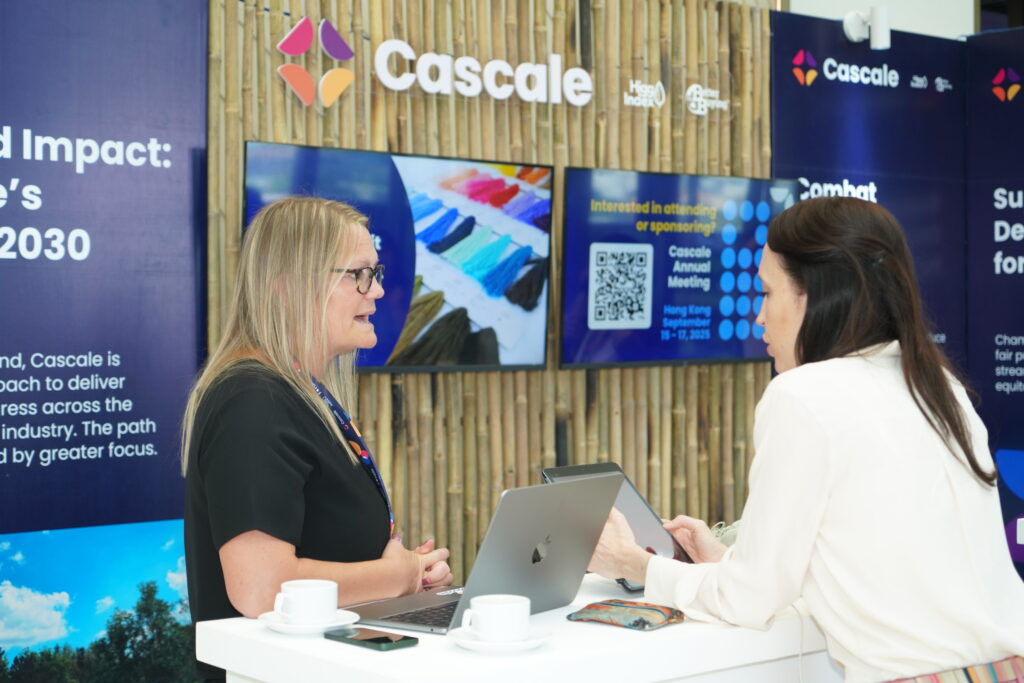
Katie Hess chats to a woman about Better Buying at the Cascale booth at the Cascale Forum: Ho Chi Minh City
August 05, 2025

Data from 1,200 suppliers representing 10 million workers spurs call for urgent industry-wide action as progress stalls

Amsterdam, Hong Kong, Oakland (CA) – August 5, 2025: Cascale today released the Better Buying 2025 Garment Industry Scorecard, a benchmark tool that tracks year-over-year progress in brand and retailer purchasing practices across the global apparel sector. Based on anonymous input from over 1,200 suppliers during the 2025 Better Buying Purchasing Practices Index (BBPPI) ratings cycle, the Scorecard measures performance across seven key purchasing practices categories that directly impact suppliers’ ability to provide decent work and wages.

These suppliers represent over 10 million workers, or roughly one in six of the estimated 60 million workers employed in the global apparel value chain.

Insights include:

  • Most category scores declined by one or two points, signaling stalled progress.
  • The steepest drop was in Planning and Forecasting, which fell from 59 to 56 points. More than 37 percent of suppliers identified this category as the most critical area for improvement.
  • The overall purchasing practices score declined slightly, from 67 to 66.

This Better Buying Garment Industry Scorecard is the first to be published since Better Buying joined Cascale in February 2025, and offers topline data ahead of the full Better Buying Purchasing Practices Index (BBPPI) Report. This will combine the Scorecard with deeper commentary and analysis of what lies behind the scores,  and will be published during Cascale’s Annual Meeting in Hong Kong on 15-17 September.

Companies that subscribe to Better Buying’s surveys have already received individual scorecards. Cascale encourages them to share their scorecards with suppliers, and work with them, as true partners, to co-create solutions to the challenges that are identified.

“The BBPPI scores provide us with a critical baseline on where we are, as an industry, on purchasing practices,” said Katie Hess, Head of Product at Cascale Better Buying. “I’m pleased to see that brand and retailer progress has been broadly maintained, even during a period of unprecedented global and geopolitical turbulence as a result of the ongoing trade tariffs uncertainty, but at this late stage in the game, stagnation is not good enough. The urgent need for collective, committed, whole-industry action on purchasing practices is starkly clear.”

“With Better Buying now part of Cascale, we have an unprecedented opportunity to drive up action at scale, by bringing together all key stakeholders to embed fair purchasing principles as the norm in global supply chains, and achieve our mission of Decent Work for All,” said Fiona Sadler, global head of responsible sourcing at Marks and Spencer and Cascale board director representing brands and retailers.

Cascale Highlights Collaboration & Risk-Based Due Diligence at SLCP Stakeholder Meeting

  • Better Buying
  • Decent Work

Joleen Ong joined a panel of industry experts to share insights on key issues impacting the apparel industry at the SCLP Stakeholder Meeting in New York.

July 23, 2025

At the Social Labor & Convergence Program’s (SLCP) recent Stakeholder Meeting in New York, Joleen Ong, Cascale’s senior director of brand and retailer membership, joined a panel of industry experts to share insights on key issues impacting the apparel industry.

The “Data Insights and Industry Perspectives” panel was moderated by Anna Burger, SLCP board member, and included Robert Reid, senior manager, corporate social responsibility at Randa Accessories, and Ana Chiu, senior director at PVH Corp.

Ong highlighted the collaboration between Cascale and SLCP and its pivotal role in laying the foundation for an even more targeted, deeper, and impact-driven approach to improving social performance in global supply chains. Delving deeper into Cascale’s collaborative work with SLCP, Ong highlighted the Higg Facility Social & Labor Module (Higg FSLM), which is built on SLCP’s Converged Assessment Framework (CAF), underpinning Cascale’s Support Decent Work for All strategic pillar and reflecting its commitment to champion workers’ rights, ensure fair purchasing practices, and streamline audits to foster safe and equitable workplaces.

Ong shared insights from the recent update to the Higg FSLM and CAF v1.7, noting that the update enhances risk assessment and regulatory alignment to deliver greater transparency through credible, actionable social and labor compliance data, driving decent working conditions across global supply chains. She noted that the CAF, which is available in 60 countries, forms the backbone of the Higg FSLM, making it Cascale’s preferred tool for streamlining assessments, reducing audit duplication, and obtaining credible and actionable data.

Highlighting the benefits of convergence, Ong referenced Cascale’s Better Buying Purchasing Practices Index (BBPPI) survey, which features a “Win-Win Sustainable Partnership” section that gathers manufacturers’ insights on how convergence supports outcomes such as a living wage and health and safety investments. Now, with Better Buying under Cascale, we can link purchasing practice feedback directly to SLCP data patterns. For example, the BBPPI found that:

  • 60% of suppliers reported monetary savings from CAF adoption
  • 24% used those savings to increase wages—a direct indication that reduced audit fatigue is helping to unlock resources for remediation and improvement.

She observed the growing momentum toward convergence: the average SLCP assessment is now shared 2.96 times—a 16% increase from last year—signaling a shift from proprietary tools toward shared trust in the Converged Assessment Framework (CAF). Tools like the Higg FSLM enable multi-brand recognition of a single verified assessment, reducing duplication, building facility ownership of data, and fostering collaboration.

At the same time, social compliance professionals must assess factory risk before production begins—but existing data from converged assessments can often provide these insights without requiring additional questionnaires. Key factors include the number of migrant or contract workers, gender ratios, factory location, and the presence of other buyers—all evaluated against internal codes of conduct and issue criticality.

Common “showstopper” risks include fire safety and forced labor issues. Pre-audit questions can help flag concerns, such as:

  • Do factories in China built before 1998 have automatic fire sprinklers installed, in line with the updated fire code introduced that year?
  • In countries where migrant labor is common such as Taiwan, Malaysia or Japan, have migrant workers paid recruitment fees?
  • In Southern India, are wages paid regularly rather than in lump sums, given known risks of Sumangali schemes?

Converged assessments make this type of pre-screening possible, helping teams prioritize due diligence and focus more time on meaningful remediation—especially when paired with the FSLM’s risk-based prioritization logic.

Ong concluded by sharing how human rights due diligence enhances long-term business resilience by fostering stable and reliable supplier relationships. She advocated for a collective, risk-based approach across industry initiatives to reduce audit fatigue and enable more meaningful resource allocation, thereby achieving lasting improvements.

The Path Forward on Tariffs Starts with Better Buying

  • Better Buying

Fair purchasing practices are never a ‘nice to have’ – they are the glue that holds the fragile global economy together, and as Trump’s tariffs imperil the lives and livelihoods of millions of the world’s poorest workers, we need them more than ever.

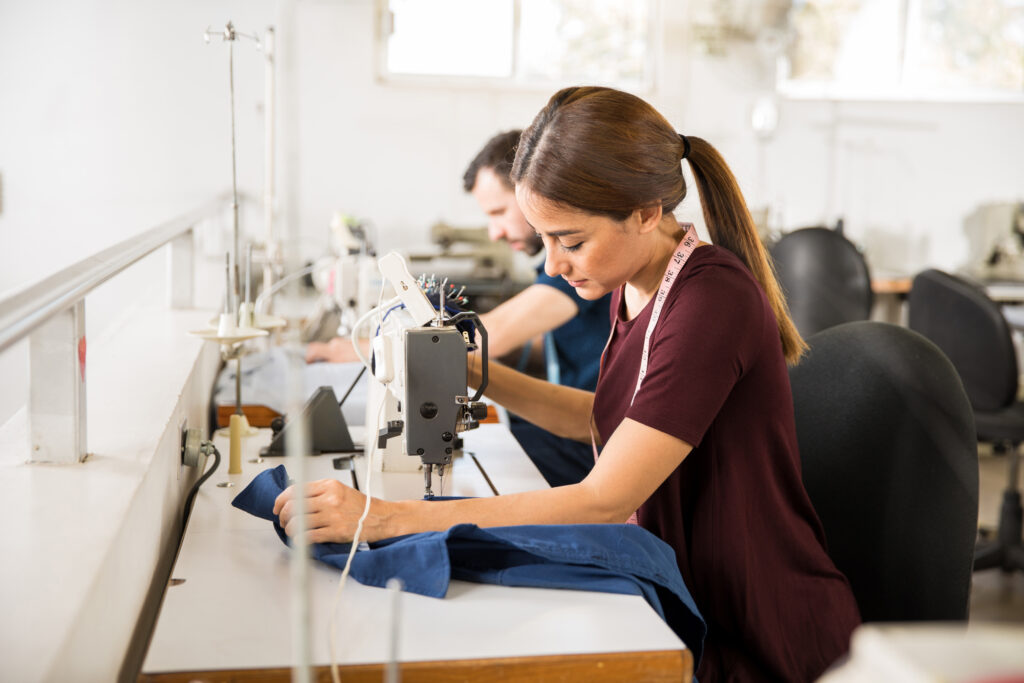
Workshop for the production of clothing, sewing machine on fabric. Dressmaking industry, Equipment on dress factory, professional tailoring
April 11, 2025

These are turbulent times.

At the time of writing, stock markets are rebounding, after a few days of shock, with tariffs frozen at 10 percent for 90 days, except for China, which now faces a 125 percent levy.

China’s exports to the U.S. are only around two percent of its total economic activity, so it can afford to hold its nerve. But Vietnam and Cambodia, whose exports to the U.S. make up around 30 percent and 38 percent respectively, are still dealing with a 10 percent levy. Less horrifying than the 46 percent and 49 percent they were initially faced with, but punishing nonetheless and deeply alarming for a country like Cambodia whose garment industry provides incomes and livelihoods for an estimated 750,000 people. We also don’t know yet what tomorrow will bring or what will happen once the 90-day pause concludes.

We haven’t seen a tariff war of this nature in any of our lifetimes, but the nearest approximation we can turn to is the recent pandemic. Better Buying’s 2020 Spring ratings cycle opened on April 1, right in the eye of the storm of Covid-19. We were expecting some bad news from the data, and for progress to have stalled, or gone into reverse. But while the story wasn’t 100-percent positive, we were surprised to find that the brands and retailers that had been subscribed with Better Buying for two or more consecutive ratings cycles actually improved their scores in several areas, even while facing one of the most challenging business environments in recent memory.

Although the pandemic and today’s tariff conflict are very different in cause, they share a common feature: sudden, destabilizing shocks to global trade. Back then, we learned a few things about what companies got right — and we’d be wise to apply those lessons now.

Here are some suggestions as to what brands, retailers and suppliers can do now, based on what we learned back in 2020:

Brands and Retailers

Follow the Five Principles of Responsible Purchasing: Visibility; Stability; Time; Financials; Shared Responsibility.

Talk to your suppliers. Establish regular, transparent dialogue with your suppliers andshare what you learn about tariff-related impacts and challenges in real time. Then discuss how they may affect pricing, delivery times, and production schedules.

Be a true partner. Work with your suppliers to co-create solutions and strategies to minimize the impact of tariffs, such as adjusting order volumes, or timelines.

Think long-term. Avoid knee-jerk reactions such as demanding price reductions or adopting aggressive cost negotiation strategies. Instead, focus on establishing long-term commitments and contracts with suppliers to provide stability and predictability for both parties. This will make it easier to manage costs and investments, including adjustments due to tariffs.

Advocate for suppliers. Include your suppliers in trade policy conversations, and include them in your lobbying efforts. Push for suppliers to be included in trade policy discussions, such as through trade associations or business councils.

Don’t cancel orders. Pay for all the orders already placed. In full.

Invite your suppliers to rate your purchasing practices. The Cascale Better Buying Spring ratings cycle, the BBPPI, is open for supplier ratings now. Encourage your suppliers to rate your purchasing practices before May 31. It’s free, and anonymous, for suppliers to participate, and the data we collect will help identify key issues and impacts of the tariffs, and inform recommendations and next steps for the industry.

Suppliers and Manufacturers

Participate in the Cascale Better Buying spring ratings cycle. The BBPPI runs until May 31. Tell us about the impacts of this tariff turmoil on your buyer customers’ purchasing practices. With strong data and insights, we can better understand what is happening and make recommendations as to what to do next. This link takes you straight to the survey.

“What can you do right now?”

→ Brands: Encourage your suppliers to participate in BBPPI.

→ Suppliers: Tell your side of the story by submitting your anonymous ratings before May 31.

Rate Your Buyers? Better Buying Ratings Cycle Opens for Suppliers

  • Better Buying

Relationships fuel the consumer goods industry. Through Better Buying, now helmed under Cascale, suppliers can use their voices to elevate and improve purchasing practices. Here’s how it benefits suppliers.

April 02, 2025

Why Suppliers Participate in Better Buying’s Rating Cycle

Relationships fuel the consumer goods industry. Through Better Buying, now helmed under Cascale, suppliers can use their voices to elevate and improve relationships and purchasing practices. Here’s how it benefits suppliers.

It’s Free & Anonymous 

Participating in Better Buying’s rating cycles is free – and totally anonymous. Neither your identity, nor the data and insights you provide, are ever shared with your buyer customers. Raw data is never released, and multiple supplier ratings are averaged and anonymized so buyers cannot identify which specific suppliers rated them.

It’s Focused 

Better Buying runs two annual rating cycles, the Better Buying Purchasing Practices Index (BBPPI) in the Spring (opening April 1) and the Better Buying Partnership Index (BBPI) in the Fall (anticipated in October).

You may receive a direct invitation from one of your customers to participate in one or both of the rating cycles, after which the Better Buying team will reach out to you, with support and guidance on how to take part. You can also rate any buyer with whom you have had a direct business relationship within the last 12 months. They don’t have to be a Better Buying subscriber.

It’s Proven

The data and insights you provide help your buyer customers to understand how their purchasing practices are impacting you, while you, in turn, can use the ratings to determine potential future customers to work with and to leverage more favorable contracts with existing customers that support improved factory working conditions.

Buyer companies that subscribe with Better Buying, and invite their suppliers to participate in the rating cycle, receive reports which include their company’s overall and category scores against an industry benchmark. This includes anonymized suggestions from suppliers on how they can improve and support from the Better Buying team as they begin the process of improving their purchasing practices.

In fact, while industry progress is typically slow and uneven when it comes to decent work, over 70 percent of Better Buying repeat subscribers saw score improvements in BBPPI 2024.

For Suppliers, Improved Relationships Help You: 

  • Meet your social and environment goals while still earning reasonable profits
  • Improve your workforce and facility utilization (via mutually beneficial costing)
  • Improve your workforce stability (via more predictable and consistent workflow)
  • Reduce unexpected finance charges in the procurement and settlement process
  • Improve product quality products (as buyers better understand the supply-demand cycle)

Cascale Launches Better Buying Purchasing Practices Index (BBPPI) Ratings Cycle, Furthers Fair Purchasing Legacy

  • Better Buying

Now in its ninth rating cycle, the BBPPI delivers actionable insights to drive responsible purchasing practices and support decent work.

April 01, 2025

Now in its ninth rating cycle, the BBPPI delivers actionable insights to drive responsible purchasing practices and support decent work.

Amsterdam, Hong Kong, Oakland (CA) – April 1, 2025: Today, Cascale launched the ninth annual Better Buying Purchasing Practices Index (BBPPI) ratings cycle, a significant milestone in the organization’s integration of key Better Buying Institute (BBI) assets and confirmation that BBI’s positive impact on purchasing practices continues to thrive.

A cornerstone of Cascale’s Support Decent Work for All strategic pillar, the BBPPI is a comprehensive deep dive into purchasing practices across the apparel industry. The survey’s unique methodology enables suppliers – Cascale members and non-members alike – to feed back on their customers’ purchasing practices anonymously and deliver actionable insights. Widely recognized for its credibility, the BBPPI is a trusted benchmark for purchasing practice transparency. In 2024, the BBPPI showed that 70% of participants improved their purchasing practices scores.

“Gone are the days when buyer companies can claim ignorance of responsible purchasing practices or excuse inaction by asserting that there is no way to measure progress on decent work for all,” said Colin Browne, Cascale CEO. “Cascale‘s Better Buying tools are a tried-and-tested, safe way for companies to measure their purchasing practices and track progress, year over year. And we know they work.”

By championing fair purchasing practices, Better Buying tools like the BBPPI help address challenges such as last-minute order changes, delayed payments, and pricing practices that undermine supply chain resilience. These efforts ultimately contribute to improved labor conditions and more sustainable supply chains.

“BBPPI is a secure and anonymous feedback channel, allowing us to share insights that drive meaningful industry improvements,” said Nikhil Hirdaramani, Director, Hirdaramani Group. “This collective input fosters better manufacturing practices and empowers us to build a fairer, more sustainable future together. As a manufacturer, we have experienced how BBPPI supports us, and it is great to see our customers engage constructively and take result-driven actions based on the surveys we have participated in.”

“VF Corporation has long recognized the value of Better Buying’s ratings cycles,” said Sean Cady, VP Global Sustainability, Responsibility, Trade and Government Affairs at VF Corporation, and Cascale Board Director. “The enhanced supply chain, visibility, ability to improve purchasing practices, and tangible business benefits make it a powerful tool for advancing our responsible sourcing efforts.”

Suppliers can submit ratings and access step-by-step guides, supplier testimonials, and FAQs on the Better Buying website. All ratings must be submitted by the deadline of May 31, 2025.

Cascale Issues 2025 Better Buying Partnership Index Report

  • Better Buying

Anonymous survey of consumer goods buyer-supplier relationships reveals improvement in softgoods category.

Dry cleaning ironing clothes. Female workers clean cloth chemical process. Laundry industrial factory dry-cleaning.
February 10, 2025

Anonymous survey of consumer goods buyer-supplier relationships reveals improvement in softgoods category.

Amsterdam, Hong Kong, Oakland (CA) – February 10, 2025: After acquiring key assets of the Better Buying Institute (BBI) earlier this month, Cascale has published the 2025 Better Buying Partnership Index (BBPI) Report—the first Better Buying report to be issued by Cascale. Since 2022, the BBPI has used anonymous surveys that assess buyer-supplier relationships across 12 interconnected areas of partnership performance. Annual data from the BBPI report helps buyers assess and improve business relationships with suppliers.

“Integrating the Better Buying tools into our strategy isn’t just about adding another metric—it’s a catalyst for rethinking how we build supply chain relationships,” said Colin Browne, CEO at Cascale. “This year’s Better Buying Partnership Index report proves that when buyers and suppliers engage on equal footing with clear, actionable insights, we can dismantle outdated practices and work toward creating a framework for equitable and sustainable progress. We aim to drive systemic change that can empower every partner in the value chain to achieve lasting impact.”

Key highlights from the report include:

  • A 50% increase in participating brands, rising to 25 from the previous cycle.
  • Notable improvements in 10 out of the 12 performance areas measured—including enhanced solicitation of supplier input on product and process innovation, improved business stability, and increased perception of buyers as “preferred partners” by suppliers. (Preferred partners are buyers that suppliers view as highly reliable, transparent, and committed to mutually beneficial, sustainable practices.)
  • The global softgoods sector (including apparel, footwear, and home goods) achieved its highest-ever partnership score of 52 (on a scale from -100 to +100), a four-point improvement from the previous year.

The report also notes that buyers’ operational efficiency was the only area to show a decline (by 2.3%), suggesting that suppliers may be experiencing resource allocation issues, redundancies, and bottlenecks. Buyers who allocated sufficient time for planning and process management were more likely to have efficient operational systems, reflecting better organized and well-planned collaboration practices. Suppliers have called on buyers to review and improve their operational processes to eliminate inefficiencies.

“In today’s challenging climate, our industry must embrace true partnership and collective action,” said Dr. Delman Lee, vice chair at TAL Apparel and Cascale board director. “The latest BBPI report shows that when buyers and suppliers engage transparently and equally, innovation and more sustainable practices can follow naturally. At Cascale, we believe every value chain partner must be empowered and motivated to work together—because only through genuine collaboration can we drive the urgent changes needed for a resilient and responsible future.”

History shows that participating in the Better Buying Partnership Index can help shift the needle. Buyers that subscribed to the BBPI for at least two consecutive years showed continued improvement, with six out of nine companies reporting improved scores compared to the previous cycle. Participating companies are encouraged to share their BBPI scores with internal and external stakeholders – including executives, investors, regulators, benchmarkers, and verifiers—to demonstrate progress in responsible purchasing practices.

Cascale is currently accepting participants for this year’s BBPI rating cycle, which opens on October 1, 2025.