Cascale Brings Global Environmental Policy Insights to Yale

  • Academia

Howard Kwong, senior manager, public affairs, APAC, gave graduate students an insider look at global policy advocacy, APAC supply chain realities and takeaways from Cascale’s 2026 Annual Meeting.
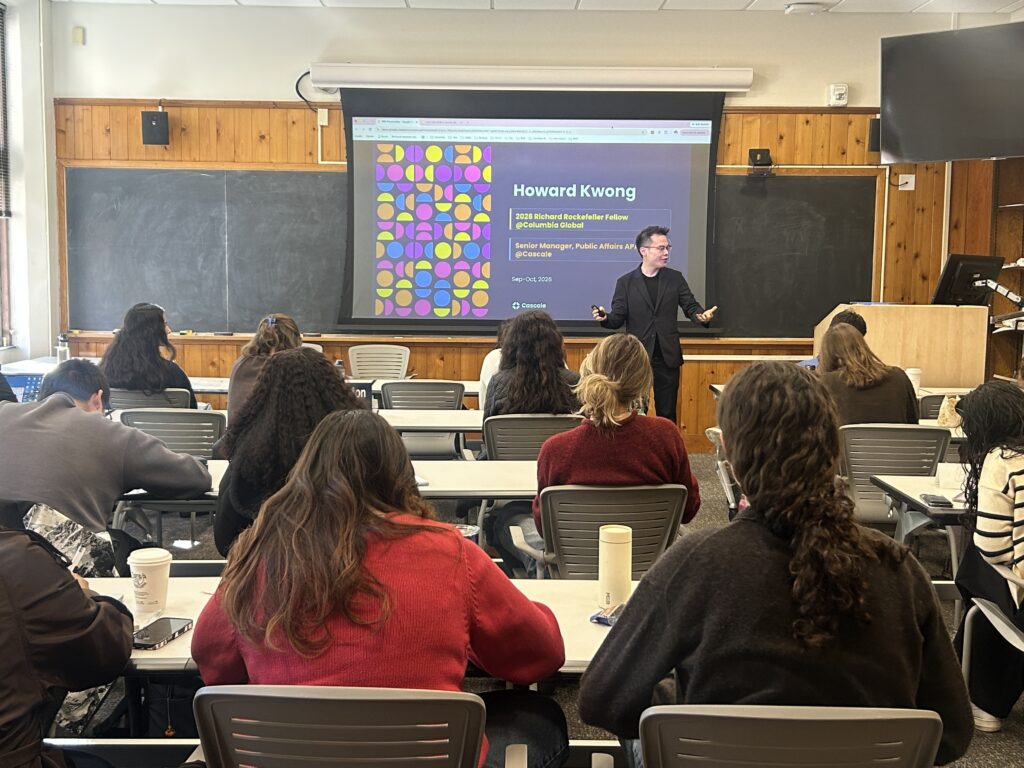
Cascale's Howard Kwong instructs students at the Yale School of the Environment
October 13, 2026

Howard Kwong, senior manager, public affairs, APAC, at Cascale, joined graduate students at the Yale School of the Environment (YSE) on Oct. 6 for a guest lecture.

About 25 students attended the session, part of the “Transforming Global Value Chains for Sustainability: The Case of Fashion and Textiles” course. Michelle Gabriel, resident fellow at the Yale Center for Business and the Environment, teaches the course.

The lecture builds on Cascale and Worldly’s recently announced collaboration on  the YSE course, which brings the Higg Index and industry insights into the classroom.

From Theory to Practice

Kwong’s presentation grounded sustainability frameworks in the commercial and regulatory realities of global supply chains. He walked students through Cascale’s policy framework, which spans global policy intelligence, capacity building and advocacy with industry associations, stakeholders, and policymakers.

Ahead of class, students received several Cascale public affairs reports as pre-reads. These included the Cascale APAC Policy Priorities Paper; The New Trade Landscape: What Global Trade Fragmentation Means for Consumer Goods Supply Chains  policy deep dive, and the 2026 Global Due Diligence and Sustainability Reporting Legislation Report.

Drawing on those findings, Kwong explored the gaps between corporate boardrooms, factory floors and global regulators. Discussion covered C-suite trade-offs, regulatory fragmentation across the EU, U.S. and APAC, and climate and labor vulnerabilities at the factory level.

He also brought the central question of Cascale’s 2026 Annual Meeting in Athens into the classroom: Who pays, who profits and what actually changes? Sharing lessons from site visits, Cascale Forums and Annual Meetings, Kwong urged students to look past basic compliance. Instead, he encouraged them to consider how capital, incentives and risk-sharing can be aligned across the value chain.

From Ego-System to Ecosystem

Kwong closed by encouraging students to adopt an “ecosystem” mindset, moving away from isolated “ego-system” solutions toward pre-competitive collaboration. Lasting supply chain resilience, he said, depends on shared data, harmonized standards and collective action.

Students shared how approachable and generous the conversation felt. “I’m genuinely interested in the work Cascale is doing, and hoping to work in supply chain related management,” one student said after class.

For more about Cascale’s policy work and additional member benefits, explore Cascale membership.
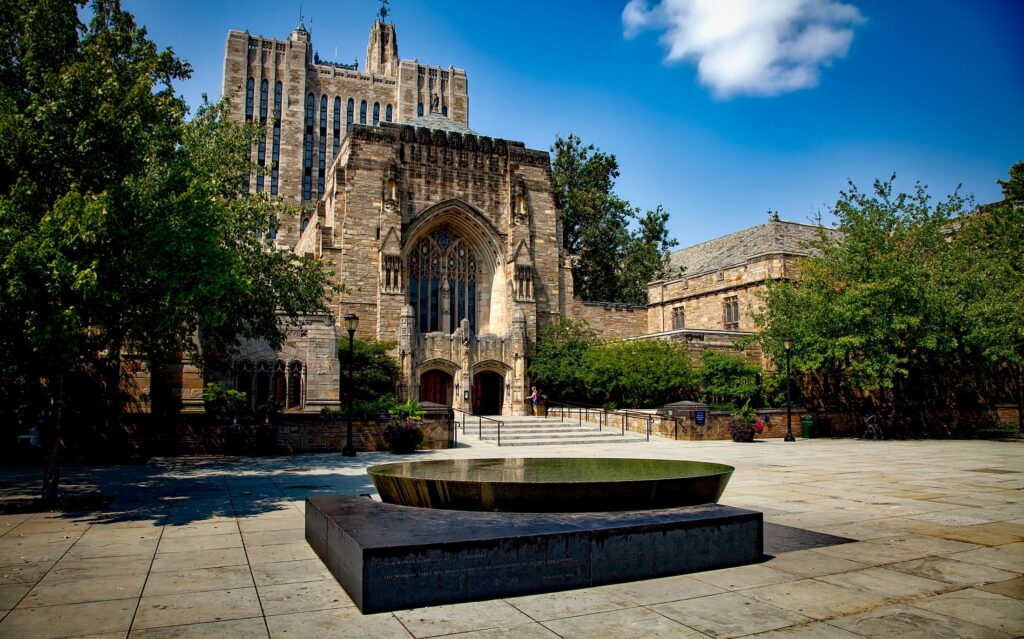
Cascale, Worldly Bring Real Industry Data to Fashion Value Chain Course at the Yale School of the Environment

  • Academia

Yale students will work directly with the Higg Index, the sustainability impact measurement framework used across 45,000+ facilities worldwide, before entering the workforce.

September 25, 2026

New Haven (CT), Amsterdam, Hong Kong, Oakland (CA) – September 25, 2026: Cascale and Worldly will collaborate directly with a Yale instructor to bring the Higg Index and real-world case studies to a fashion value chain course at the Yale School of the Environment.

The collaboration centers on three industry-informed case studies for the semester commencing in September 2026, as part of a broader curriculum, and brings interdisciplinary real-world examples to the classroom across subject areas for more in-depth learning. The course is titled “Transforming Global Value Chains for Sustainability: The Case of Fashion and Textiles’” at the Yale School of the Environment. Yale will also be joining Cascale’s membership base.

“Yale is where I learned how to analyze complex systems where there were no clear answers. In the years since, mentoring students who want to work at the intersection of business and sustainability, I’ve seen how a lack of access to the tools and data the industry actually runs on holds back brilliant students’ abilities to understand the whole picture,” said J.R. Siegel, vice president of sustainability at Worldly, who is also a Yale alumni and mentor. “This course closes that gap. Last year alone, facilities shared verified data with brands through Worldly more than 100,000 times. Students who work with the same platform and data will start their careers understanding how the work gets done, not just in theory but in practice.”

“Students want real industry experience in sustainability fields, but they rarely get access to the leaders, frameworks, and real-world context shaping global value chains,” said Lee Green, vice president of marketing, communications, and public affairs at Cascale. “Convening that expertise is what Cascale does. Bringing it into a Yale classroom is simply how we put it to work preparing the next generation. ”


Students will dive deeper into how environmental factors such as water use, chemical management, greenhouse gases, land use, waste, and more influence sustainability progress. They will also examine the social impact of the industry and how it addresses human rights. Uniquely, the course is open to Yale students across disciplines.

“Complex industries like consumer goods and fashion offer an incredibly rare opportunity for multi-disciplinary engagement and discoveries,” said Michelle Gabriel, lecturer at Yale School of the Environment (YSE) and resident fellow at the Yale Center for Business and the Environment (CBEY) . “Known for its significant environmental footprint, deeply entwined social implications, and historic underregulation, the subject matter is prime for students across Yale to engage in real-world problem solving. There is immense value that emerges when academia mingles with industry. In collaborating directly with reputable organizations like Cascale and Worldly, I’m confident that we will lay the groundwork for closer collaboration between academia and industry.”

Brands, retailers, and manufacturers came together 15 years ago to develop the Higg Index and continue to shape its impact today. It is one of the most widely adopted impact measurement frameworks in consumer goods. Organizations worldwide rely on the Higg Index to identify, understand, measure, and act to improve social and environmental performance. It is exclusively available on the Worldly platform, with methodology shaped by Cascale and its members. Consumer goods companies and their suppliers use Worldly to prove how their products are made so they can report, comply, and act.

The contributed case studies will explore the role and value of multi-stakeholder initiatives (MSIs) and unique stakeholder perspectives and the value of responsible purchasing practices using Cascale Better Buying survey insights.

Academia is a valued part of Cascale membership and Worldly’s platform user base. For more information on Cascale membership, explore membership. Learn about the Higg Index and explore Worldly’s current offerings.

This partnership signals a broader shift in how the industry develops talent. By embedding real tools and real data into academia, Worldly and Cascale are raising the bar for the next generation of sustainability professionals.

Media Contact: Forster Communications, cascaleforster@forster.co.uk

Columbia University Examines Sustainability Communications and the Higg Index

  • Academia
  • Higg Index Tools

Cascale engages next generation of sustainability leaders through guest lecture at Columbia University.

A blue sky and tree-lined Columbia University
March 11, 2026

Cascale recently engaged the next generation of sustainability leaders through a guest lecture at Columbia University in New York City.

The session was delivered as part of the university’s “Consumerism and Sustainability” course and brought together 37 graduate students from across Columbia’s sustainability management, international relations, human rights, and business programs.

Invited by lecturer Michelle Gabriel, Cascale’s editorial director Kaley Roshitsh explored how effective communication plays a critical role in advancing systems change across the sustainability landscape. The lecture highlighted how clear, credible messaging supports collaboration and progress not only within Cascale but across the broader industry ecosystem.

During the presentation, students received an introduction to the Higg Index, exclusively available on Worldly, which is the leading framework for measuring environmental and social performance across the consumer goods value chain. The interactive presentation covered the breadth of Cascale’s work, including decarbonization efforts, public affairs engagement, stakeholder collaboration, and initiatives such as Better Buying that support responsible purchasing practices.

The lecture also connected these industry topics with practical career insights. Drawing on experience in sustainable fashion journalism and communications, Roshitsh addressed how emerging professionals can pursue purpose-driven careers while avoiding common challenges in sustainability storytelling and reporting. Using her past experiences covering sustainability at WWD, she highlighted common greenwashing risks including a lack of public-facing commitments, fleeting supplier relations, and flagrant claims on materials and performance, among others.

Students showed strong interest in accessing Cascale resources and learning how the Higg Index tools can support academic work, particularly in lifecycle assessment (LCA) coursework. Several questions focused on industry challenges such as overproduction, the role of artificial intelligence, and how students and early-career professionals can engage more directly with sustainability tools and data.

Following the lecture, Cascale representatives also discussed opportunities for deeper collaboration with academic institutions. Conversations included the potential for integrating the Higg Index and related sustainability frameworks into university curricula, as well as helping equip students with practical knowledge and tools relevant to industry needs.

As with recent Cascale speaking engagements at Parsons (part of the New School), the University of Oregon, Berkeley College, ASU FIDM, and Ohio State University, this latest engagement reflects a growing demand from universities and young professionals for standardized tools, data, and collaboration. By connecting academia with practical industry frameworks, Cascale continues to support the development of future leaders.

Engaging Next Generation Leaders at University of Oregon

  • Academia
  • Responsible Purchasing Practices
  • Supply Chain

Cascale brings real-world insight to sports-product management students on aligning sourcing strategies with climate action and decent work.

Eugene, Oregon – Showcasing a sunny day at the University of Oregon.
March 06, 2026

Cascale brings real-world insight to sports-product management students on aligning sourcing strategies with climate action and decent work.

This week, Cascale’s Joleen Ong, senior director, brand and retailer membership, joined the University of Oregon Sports Product Management (SPM) graduate program to explore how sustainability is operationalized across global supply chains — and why sourcing and costing decisions matter for both climate and decent work outcomes.

Ong was a guest lecturer at  the sourcing and costing strategies course led by instructor Eric Goldner, where 48 graduate students explored the intersection of purchasing practices, environmental performance, and the impacts of tariffs. Goldner is a seasoned supply chain executive with over 25 years of experience at major brands including Nike, Coach, and Columbia Sportswear, while Ong worked in the outdoor and sporting goods industry – first at Columbia Sportswear, then Fanatics – before joining and leading Cascale’s brand and retailer membership. She gave a compelling lecture on the sourcing challenges faced by sustainability professionals.

A Deeper Dive on Sourcing Challenges

Following an overview of recent U.S. tariff developments, Ong’s session explored Cascale’s role in convening brands, manufacturers, and stakeholders to align on credible tools and shared standards. She also uncovered real-world sourcing and costing case examples from industry experience at Columbia Sportswear and Fanatics. Using a factory audit walkthrough, Ong highlighted how common social and environmental violations are often symptoms of poor purchasing and planning decisions. Finally, she touched on the role of responsible purchasing and Better Buying approaches in addressing root causes and strengthening decent work across supply chains.

Throughout the session, students demonstrated strong engagement and thoughtful questions about how collective action can move the industry from compliance to measurable impact.

Importance to Industry

The University of Oregon Sports Product Management Program was co-founded by former Nike leader Ellen Schmidt-Devlin and prepares talent for the sports and outdoor industry. The specialized, industry-partnered program teaches the full product creation lifecycle, supported by advisory board participation from brands, manufacturers, and organizations such as Cascale, where Ong has served as an advisory board member since 2024.The curriculum emphasizes hands-on learning through its Portland-based innovation lab, located in a city widely recognized as a global hub for the footwear and athletic apparel industry, often referred to as the “sneaker capital of America.” Approximately 90 percent of alumni work within the industry.

Engaging with academia helps connect Cascale’s work to the next generation of sourcing, product, and sustainability leaders. It also reinforces a key message: decisions made upstream – across areas like planning, costing, and purchasing – directly shape environmental performance, worker outcomes, and long-term business resilience.

Several students expressed interest in future internship opportunities, signaling strong alignment between emerging talent and the industry’s growing focus on credible, collective sustainability solutions.

The lecture follows a series of Cascale student engagements including speaking opportunities at Parsons, the Ohio State University (via the Educators for Socially-Responsible Apparel Practices (ESRAP)), and more this quarter.

Next-Generation Designers at Parsons School of Design Advance Sustainable Design

  • Academia

Foundational course connects sustainability systems, traceability, and sourcing realities for over 1,000 first-year students.

fashion sketch
February 19, 2026

Cascale recently joined a first-year course at the Parsons School of Design, part of The New School, to engage the next generation of designers on sustainability systems and supply chain realities.

The February 12 session took place within “Sustainable Systems,” a foundational course reaching all first-year Parsons students, approximately 1,300 students annually. Joleen Ong, Cascale’s senior director of brand and retailer membership, presented to the class. She introduced Cascale’s role as a global alliance convening brands, retailers, manufacturers, and stakeholders to drive measurable progress across the consumer goods value chain.

Students then presented findings from a traceability assignment that challenged them to map an item back to its factory and material origins.

The exchange underscored the growing interest among emerging designers in advancing sustainable design approaches in the existing and future sustainability landscape. Questions from students covered topics related to systems change, Cascale membership, NGO stakeholder engagement, and access to the Higg Index.

Since 2014, Parsons has required students to take sustainable design curriculum. As part of this focus, Parsons faculty is exploring ways to embed more sustainability coursework into the core and advanced curriculum. As a starting point, Cascale has been invited to participate as a recurring guest contributor in this required course, as well as others.

Shaping upstream talent entering the apparel and footwear industry is a powerful opportunity to embed systems-level sustainability from day one. Today’s students are tomorrow’s sustainability leads, sourcing managers, and Higg Index users. By connecting early with future practitioners, Cascale looks to strengthen the foundation for credible measurement, aligned standards, and collective action across the industry.

Fashion Educators Engage Industry in ESRAP Workshop Series

  • Academia
  • Higg Index Tools
  • Partnership and Collaboration

The ESRAP Educates session connected students and faculty with Cascale, the Higg Index, and Worldly to build career-ready sustainability skills.

Yellow flowers blooming in foreground with an image of Berkeley College, a Cascale member, located at E 43rd Street Campus NYC. The blue awning depicts the college's branding.
February 18, 2026

Cascale recently joined a new educational workshop series led by Educators for Socially-Responsible Apparel Practices (ESRAP), creating a direct connection between industry tools and the next generation of fashion and sustainability professionals.

Facilitated by Andrea Kennedy, fashion department lead at Berkeley College, a Cascale member, and Tasha Lewis, a fashion and retail studies professor at The Ohio State University, the session marked an early installment of ESRAP Educates. The speaker-panel series is designed to equip fashion faculty with practical insights and resources they can bring back to their classrooms. More than 45 students and educators participated, representing programs in sustainable fashion, apparel, and footwear.

Speakers from Cascale and Worldly explained how the two organizations work together to support credible sustainability education and real-world application. Cascale’s communications director Rachel Lincoln Sarnoff shared an overview of Cascale’s mission as a global nonprofit alliance and steward of the Higg Index, which is exclusively available on Worldly. Then, Charlie Gustafson, product marketing manager at Worldly, shared the organization’s role as the comprehensive data and analytics platform that helps scale the Higg Index tools.

Together, the directors illustrated how industry-aligned standards, trusted data, and scalable platforms work in tandem to turn sustainability goals into measurable action. The discussion focused on how educators and students can use these tools to develop practical, career-ready skills aligned with current industry expectations.

The workshop also explored opportunities for students and academic institutions to engage with Cascale and Worldly, including access to resources, learning pathways, and membership benefits that support teaching, research, and workforce development.

By participating in ESRAP Educates, Cascale continues to expand its engagement with the academic community, supporting educators as they prepare students to navigate sustainability challenges with clarity, consistency, and credible data.