Executive Summary: Cascale Annual Meeting 2026
Relive the highlights and explore key takeaways from the Cascale Annual Meeting 2026, held in Athens, Greece on September 15-17, 2026.
Relive the highlights and explore key takeaways from the Cascale Annual Meeting 2026, held in Athens, Greece on September 15-17, 2026.
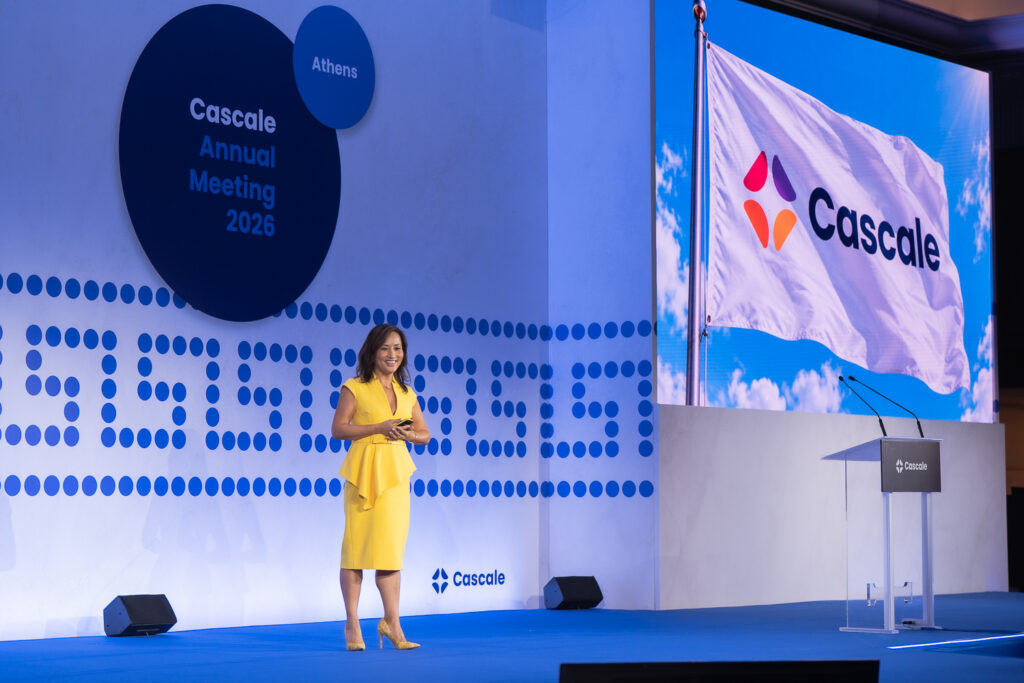
In her first Annual Meeting as CEO, Ying McGuire casts Cascale as the “passage” for industry collective action — and commits to turning the sector’s shared measurement into action.
VF, TAL Group co-chair Cascale’s 2026 Annual Meeting this September.

Amsterdam, Hong Kong, Oakland (CA) – August 11, 2026: The 2026 Cascale Annual Meeting, taking place September 15–17 in Athens, Greece, will convene leaders from across the global consumer goods value chain to tackle one of the industry’s defining questions: how to accelerate meaningful, system-wide transformation. Guiding those conversations as this year’s co-chairs are Sean Cady, vice president, global sustainability, responsibility, trade, and government affairs at VF Corporation, and Dr. Delman Lee, vice chair at TAL Apparel Limited.
“At VF Corporation, we believe reducing the environmental impact of global supply chains requires robust measurement and analysis followed by collective action by all actors. At this year’s Cascale Annual Meeting we will continue to use our voice and scale to help align decision-makers across the industry to drive focused, systemic interventions for the betterment of the planet and its people.” — Sean Cady, VP, Global Sustainability, Responsibility, Trade, and Government Affairs at VF Corporation
“True transformation in consumer goods depends on deep collaboration across the value chain. We are committed to building a program that addresses the realities of the broader system and also helps scale the innovation and financing models needed to support a resilient and sustainable system for all.” — Dr. Delman Lee, Vice Chair at TAL Apparel Limited
This year’s program will move beyond historical discussions to identify and drive solutions that reduce the industry’s social and environmental impact while supporting those that work throughout global supply chains. Guided by the event co-chairs, sessions will examine the structural barriers that continue to slow progress on sustainability and emerging practical solutions to overcome them, as well as future opportunities that can help organizations scale impact together.
Attendees will have opportunities to engage with global brands, manufacturers, retailers, policymakers, investors, and solution providers through keynote presentations, interactive discussions, networking events, and collaborative working sessions designed to spark new ideas and accelerate action beyond the meeting itself.
Highlighting the fact that Greece is the European Union’s largest cotton producer – accounting for roughly 80 percent of EU cotton production – an optional field trip, hosted by the European Cotton Alliance, will showcase sustainable sourcing, regenerative farming, and collaborative approaches to building more resilient supply chains. The limited-capacity field trip is open to all Annual Meeting attendees, including interested media.
The 2026 Cascale Annual Meeting is proudly supported by lead sponsor, Worldly; additional sponsors include VF Corporation, TAL Apparel Limited, Better Cotton, Cotton Council International, Fair Wear Foundation, GSCS International, HQTS, Inspectorio, Lenzing AG, and many more.
Learn more and register for the Cascale Annual Meeting 2026!
To learn more about sponsorship packages, please contact Cascale’s events team.
Media Contact: Forster Communications, cascaleforster@forster.co.uk
Sandrine Dixson-Declève will deliver opening keynote; European Cotton Alliance will host a field trip at Cascale’s 2026 Annual Meeting in Athens this September.
Amsterdam, Hong Kong, Oakland (CA) – July 15, 2026: International climate action advocate Sandrine Dixson-Declève will keynote Cascale’s 2026 Annual Meeting on September 15–17 in Athens. The anticipated program foregrounds hard truths, including the gap between sustainability and commercial decision-making and structural misalignments that slow progress, while highlighting solutions, such as financing and partnership models, that help organizations strategically align to scale impact.
Key Takeaways
September 15 will offer a half-day of programming, beginning at 1 p.m. After an address by new Cascale CEO Ying McGuire, Sandrine Dixson-Declève will deliver the opening keynote, an internationally recognized sustainability and systems leader, Executive Chair of the Earth4All initiative and the Systems Transformation Hub, as well as Honorary President of the Club of Rome.
“Business is operating in a world defined by converging environmental, economic, and geopolitical challenges. Resilience will not come from optimizing the status quo, but from rethinking the systems that shape how value is created and shared. We need to move beyond short-term decision-making and embrace long-term collaboration, innovation, and investment that enables businesses and society to thrive within planetary boundaries. I’m looking forward to exploring how leaders can turn today’s disruptions into catalysts for lasting transformation.” – Sandrine Dixson-Declève, international climate action advocate
On September 16 and 17, Main Stage panels will also be viewable virtually, showcasing keynotes and discussions such as the “From Commitment to Capital Allocation: How Organizations Are Prioritizing Sustainability Investments Under Pressure” panel, which will include representatives from EY (formerly Ernst & Young), H&M, and the Hongkong and Shanghai Banking Corporation (HSBC).
“The challenge our industry is facing is no longer a lack of ambition; it is creating the conditions to deliver at scale. Many of the solutions needed already exist but progress is often slowed by fragmented approaches, misaligned incentives, and limited access to capital. As sustainability moves from ambition to implementation, we need financing models and partnerships that connect resilience, business value, and climate action. The next step is to translate shared ambition into shared investment, shared accountability, and measurable progress.” – Hampus Starre Friberg, Head of Sustainability Strategy & Controlling, H&M
“Organizations are under increasing pressure to balance financial performance with long-term resilience. The conversation has shifted from whether sustainability creates value to how leaders integrate it into capital allocation, risk management, and business strategy. The companies making the greatest progress are those that embed sustainability into core decision-making rather than treating it as a separate initiative. I’m looking forward to discussing how collaboration, data, and financing can help organizations make investment decisions that deliver both commercial and sustainability outcomes.” – Anna Ryott, EY Partner & Nordic Chief Impact Officer
European Cotton Alliance Field Trip
An optional field trip, hosted by the European Cotton Alliance and open to media, will offer a firsthand look at the cotton value chain, connecting production with manufacturing and revealing insights into sustainable sourcing, regenerative farming, and more.
“The future of cotton depends on stronger connections across the value chain – from the farm to the finished product. This field trip offers participants the opportunity to see firsthand how farmers, manufacturers, brands, and policymakers are working together to advance more resilient and sustainable cotton production. Europe has its own cotton and by bringing industry leaders directly into the field, we can move beyond discussion to a deeper understanding of the importance of nearshoring and transparency. This is where it all begins: farmers’ expertise and land management secure soil health and biodiversity. Then, scaling is possible with innovation, partnerships, and investments. We look forward to welcoming participants and sharing the work taking place across Europe’s cotton sector.” – Dimitris Polychronos, president, European Cotton Alliance (ECA)
Sponsorship
The event is proudly supported by lead sponsor, Worldly, alongside an outstanding group of industry partners, including TAL Apparel Limited, Inspectorio, GSCS International, TUV Rheinland, Better Cotton, and many more.
Learn more and register for the Cascale Annual Meeting 2026!
Organizations interested in elevating their presence and engaging directly with industry leaders can explore sponsorship opportunities. To learn more about sponsorship packages or to express interest, please contact Cascale’s events team through this page.
Media Contact: Forster Communications, cascaleforster@forster.co.uk
Cascale will convene leaders in Athens this September to address cost, accountability, and scalable business value across supply chains.

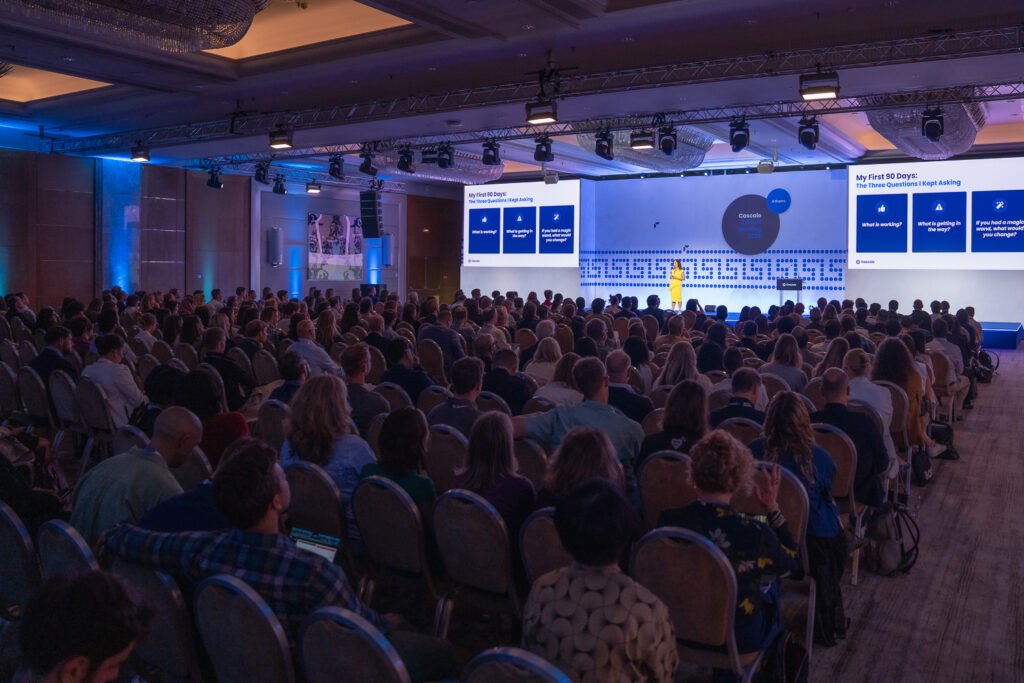
Amsterdam, Hong Kong, Oakland (CA) – May 14, 2026: Cascale’s 2026 Annual Meeting will take place September 15–17 in Athens, Greece. Marking the 15th flagship gathering, the hybrid event will convene more than 700 leaders from across the global consumer goods value chain to tackle the real cost of supply chain transformation — and how it is shared.
Held at the InterContinental Athenaeum Athens, the 2026 Annual Meeting will convene brands, retailers, manufacturers, policymakers, NGOs, and service providers to focus on a critical industry challenge: how responsibility, investment, risk, and value are distributed across the value chain, and what must change to make transformation commercially viable, operationally achievable, and scalable.
Speakers will include Cascale’s incoming CEO, Ying McGuire, who will assume the role in June 2026, bringing extensive global leadership experience in supply chains and nonprofit transformation. Curated C-suite engagement will include roundtables, confidential discussions, dedicated networking opportunities, and more.
“The next phase of transformation requires more than ambition — it demands clear decisions on how costs, responsibilities, and value are shared across the supply chain,” said Harsh Saini, interim CEO at Cascale. “This year’s Annual Meeting is focused on bringing the industry together to align on smarter investment models, stronger partnerships, and practical ways to turn sustainability into a driver of business performance, resilience, and long-term growth.”
The Cascale Annual Meeting program is shaped by the guidance and expertise of an Advisory Group that includes:
This dedicated group supports the development of a solution-focused, high-impact agenda that reflects diverse perspectives and deep industry insight.
Worldly, the sustainability and supply chain intelligence platform for consumer goods, is the event’s lead sponsor and will host a stage, sharing deep expertise on the Higg Index frameworks, modules, and methodologies. These standards, stewarded and governed by Cascale and powered globally by Worldly, are reshaping how companies measure and manage their impact. Worldly will also highlight its latest innovations to help consumer goods businesses use data to make strategic decisions, uncover hidden risks, surface new opportunities, and build resilient supply chains.
Registration is now open and early bird pricing is available through May 30, offering discounted rates for members who register in advance.
Organizations interested in elevating their presence and engaging directly with industry leaders are invited to explore sponsorship opportunities. To learn more about sponsorship packages or to express interest, please contact Cascale’s events team through this page.
Media Contact: Forster Communications, cascaleforster@forster.co.uk
The Cascale Annual Meeting brings together senior leaders from across the value chain to align on the real challenges shaping the industry — from decarbonization and data to policy, capital, and buyer–supplier dynamics — and the models needed to solve them at scale.
Thank you for joining us in Athens, September 15-17, 2026.
In his latest blog, Lee Green shares key takeaways from the Cascale Annual Meeting 2025, from bold CEO insights to urgent calls for climate action and responsible purchasing practices.
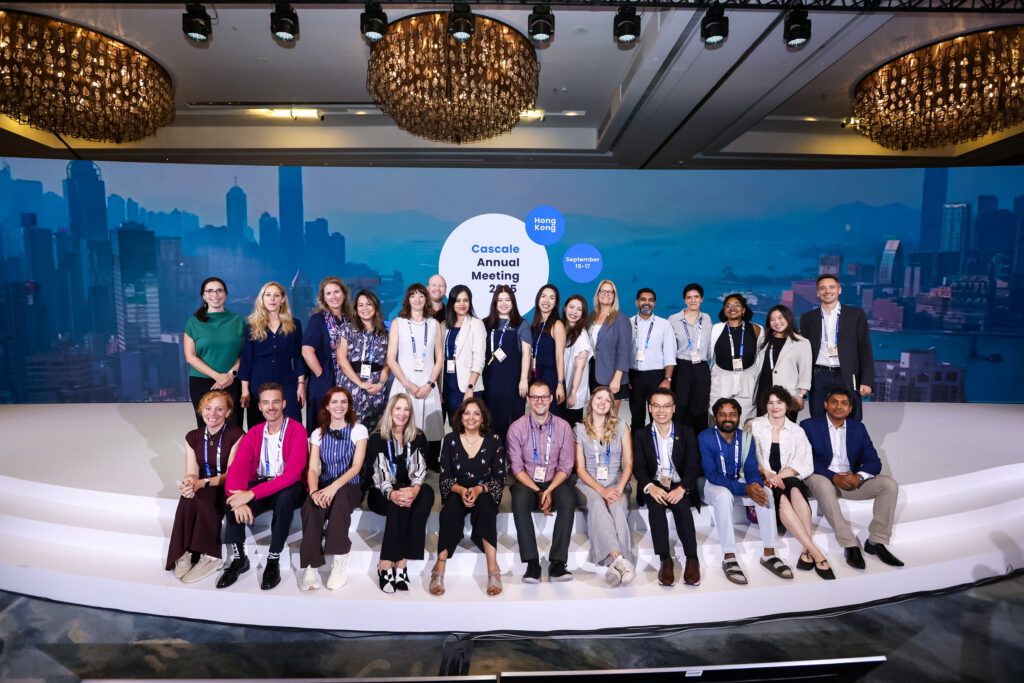
After a 16-hour flight, several hours of entertaining my three-year-old, and despite the jet-lag, I’m putting pen to paper on my reflections while my little one takes her afternoon nap. It feels like the right moment to reflect — because our Annual Meeting 2025 in Hong Kong was nothing short of extraordinary.
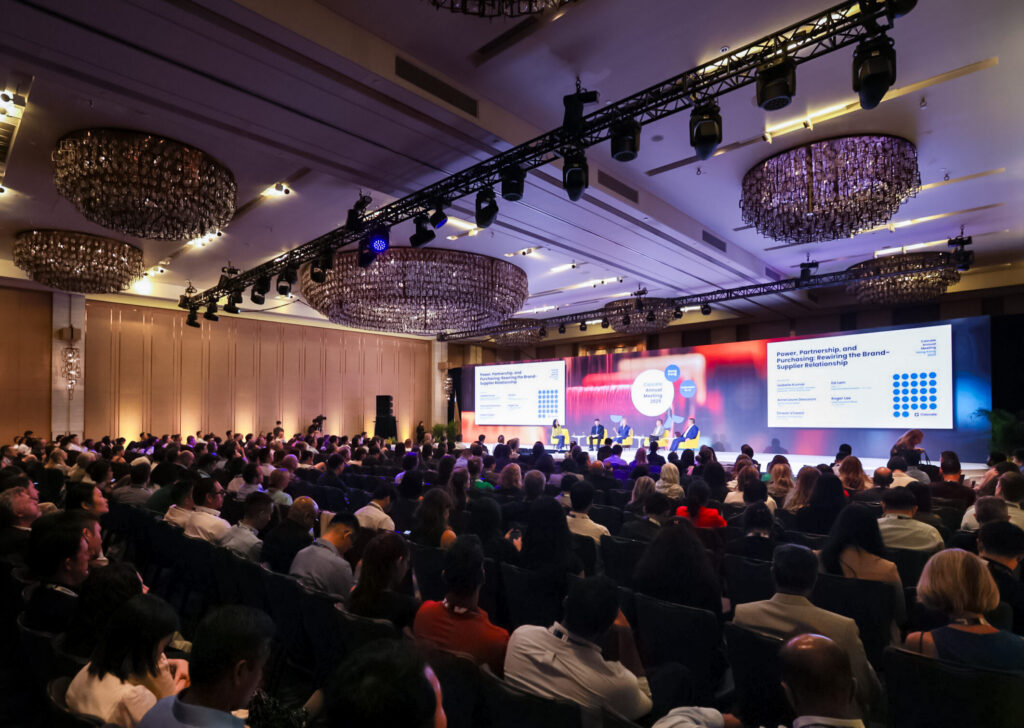
This was our biggest and best yet: over 700 attendees, 100+ speakers, and 33 sponsors came together under the theme “A Movement for All.” It was the first time our programming centered outright on two problem statements, including unpacking how to make responsible purchasing practices the norm and trouble-shooting more effective buyer-supplier engagement models. The energy in every room made it clear: this is a movement that’s only gaining momentum.
What stood out most this year was the engagement of manufacturers. Their presence and voice were felt across every stage, roundtable, and networking moment. It was noticed by everyone. And rightly so, because accelerating climate action and embedding responsible purchasing practices can only happen if manufacturers are at the center of the conversation.
The content and dialogue across the two days were outstanding. From urgent discussions on climate risks and adaptation, to bold ideas for rewiring buyer–supplier relationships, to practical steps on responsible purchasing practices, every session pushed us forward. The honesty from C-suite leaders (we also had more CEOs joining the event than ever before) was refreshing, the insights from practitioners were invaluable, and the collective sense of responsibility was inspiring.
Of course, none of this would have been possible without the remarkable effort of the Cascale team. From content planning to logistics, from sponsorship to media, from speaker support to production — you brought passion, professionalism, and determination at every step. I am deeply proud of what we accomplished together. So, thank you again for your collective efforts.
As I look back, here are a few personal takeaways from Hong Kong:
This event has set a new bar. We broke records, built new connections, and sparked ideas that will shape our industry in the months and years ahead. And we’re not stopping here. We’re already excited for what’s next: the Cascale Annual Meeting 2026 in Greece.
Thank you to everyone who joined us in Hong Kong, in person and virtually. Together, we’re proving that sustainability is not just a goal, but a business imperative. And together, we are building a movement for all.
— Lee GreenVP, Marketing & Communications