

Better Buying
Cascale’s acquisition of Better Buying tools and methodologies reflects our commitment to advancing responsible purchasing practices and promoting fair, accountable, and socially just supply chains.
Responsible purchasing practices are essential to climate progress. Learn why supplier resilience and fair purchasing are key to achieving long-term decarbonization.


Responsible purchasing practices (RPP) are not just a “nice to have” in the textile industry — they are where climate ambition succeeds or fails in practice.
When buyers cancel orders, push down prices, change timelines, or create volatility, the impacts ripple through supply chains in ways that undermine labor rights and environmental outcomes.
Recent U.S. tariff disruptions show what happens when commercial risk is pushed down the supply chain.
An investigation earlier this year found that paused orders and cancelled purchases following new U.S. import tariffs contributed to labor risks in garment factories, as suppliers operating on already low margins struggled to absorb sudden cost shocks. These are not isolated side effects of market disruption — they are predictable outcomes when commercial risk is pushed down the supply chain.
Volatility is not the issue. Risk transfer is.
Commercial strain weakens supplier resilience — and resilience is essential to climate action. Better Buying’s supplier-reported data consistently shows that when pressures build, suppliers have less room to absorb shocks, less ability to plan, and less capacity to invest in the operational improvements that climate progress requires.
But here’s the good news: where there’s an impact, there is potential to influence.
This is the part often missing from climate conversations: suppliers cannot decarbonize in unstable commercial environments. Commercial predictability changes the game. Because when factories are managing last-minute changes, reduced margins, delayed payments, or unpredictable order volumes, they are not operating from a position of resilience. That’s a position of reactivity. And resilience is what makes long-term investments in cleaner production, efficiency, and emissions reductions possible.
The problem is not disruption itself, but how buyers anticipate it. When buyers respond to uncertainty by changing terms, cutting prices, or cancelling orders at short notice, the burden of adaptation falls on suppliers and workers, and climate progress becomes harder to sustain.
RPP challenges the characteristic race to the bottom that has long shaped the apparel industry.
It links climate ambition to real economic decisions. Climate strategies are harder to deliver if purchasing teams are incentivized to prioritize short-term cost savings over long-term stability. Fair terms, predictable planning, realistic timelines, and consistent communication are not sustainability add-ons — they are the commercial conditions that make decarbonization possible.
Tariff uncertainty makes the case even clearer. As further trade disruption looks likely, buyers will either reinforce or undermine supplier resilience. Embedding RPP now is one of the most direct ways companies can protect workers, stabilize supply chains, and support long-term climate goals.
Responsible purchasing practices are a critical part of building more resilient supply chains — and supplier feedback is essential to understanding where change is needed.
Explore Cascale’s Better Buying to learn how supplier insights are helping companies strengthen purchasing practices and support more resilient supply chains.
Cascale’s acquisition of Better Buying tools and methodologies reflects our commitment to advancing responsible purchasing practices and promoting fair, accountable, and socially just supply chains.


As a globally recognized apparel manufacturer with over a century of industry leadership, Hirdaramani Group continues to play a defining role in advancing sustainable and responsible practices across the apparel value chain. A Cascale member since 2013, the Group operates vertically integrated facilities across Sri Lanka, Bangladesh, Vietnam, and Africa, partnering with leading global brands to deliver end-to-end apparel solutions and enable more transparent, future-ready supply chains.
Guided by its Future First Sustainability Roadmap, Hirdaramani integrates environmental stewardship, social impact, and responsible governance across its operations. Within this broader strategy, participation in Cascale’s Better Buying Purchasing Practices Index (BBPPI) serves as a strategic platform to strengthen buyer-supplier partnerships and support the evolution of responsible purchasing practices across the industry.
Manufacturers are expected to keep advancing climate and social priorities while managing the daily realities of sourcing and production. Purchasing practices play a direct role in shaping that environment. Planning changes, delayed payments, and pricing pressure can affect how suppliers manage resources, schedule production, and sustain longer-term efforts.
Better Buying brings those conditions into view through structured supplier feedback on buyer purchasing practices. For Hirdaramani Group, this creates a practical opportunity to contribute insight from the manufacturing side of the value chain. A consistent feedback process can bring alignment for day-to-day operations and open stronger conversations with buyers about how to improve together.
Aligning the Group’s sustainability progress with accountability, transparency, and stronger working relationships throughout the supply chain, Better Buying supports a more consistent and constructive dialogue between suppliers and buyers.
Hirdaramani approaches Better Buying not only as a reporting mechanism but also as a practical tool for engagement and industry advancement. Across its Future First Roadmap, the company has connected sustainability progress with clearer structures, stronger reporting standards, and greater transparency and accountability. Better Buying fits within that approach by offering the Hirdaramani team a confidential way to share supplier experience and help inform more effective purchasing practices over time.
As noted by Nikhil Hirdaramani, Director at the Hirdaramani Group, the tool offers a “secure and anonymous feedback channel” that has supported more constructive and action-oriented engagement with customers. Better Buying has also driven stronger, more transparent conversations that contribute to continuous improvements over time.
Better Buying complements Hirdaramani’s broader sustainability efforts by strengthening accountability and more closely linking operational performance to buyer relationships.
Collaboration is central to Hirdaramani Group’s approach to sustainability. Through its Future First Roadmap, the Group works closely with global brands, industry platforms, and stakeholders to advance progress across climate action, social impact, traceability, and innovation.
Participation in Better Buying strengthens this collaborative approach by:
In this way, the partnership becomes part of how progress is shaped and sustained across the value chain.
Hirdaramani’s experience shows how structured supplier feedback can strengthen partnerships and support more effective purchasing practices. By connecting operational insights with strategic buyer engagement, Better Buying helps bridge critical gaps in the apparel value chain.
As expectations on sustainability continue to grow, aligning purchasing practices with these ambitions will remain essential. For Hirdaramani Group, Better Buying strengthens this effort by connecting day-to-day operational realities with buyer relationships, helping ensure that progress across the value chain is both practical and sustained.
For more on Hirdaramani’s broader sustainability journey, listen to Nikhil Hirdaramani on Cascale’s Source of Good podcast episode, “From Tailors to Global Trailblazers: Talking Climate Action with Hirdaramani and ASICS.”
Participate in the BBPPI
First-time participants can access it here, while returning participants can simply log in.

In 2026, workplace safety standards and protections are essential, but they are not enough on their own. Fairness in purchasing must be part of the conversation.

Key Takeaways
For those with careers in fashion and consumer goods, the name Rana Plaza is unforgettable.
Just 13 years ago, this devastating factory collapse claimed 1,134 lives and injured several thousand in Dhaka, Bangladesh. Out of it came a new vision of garment worker protections in the form of the landmark Bangladesh Accord.
A turning point for the industry, the Accord paved the way for brand accountability and responsibility never before seen. It helped establish a stronger foundation for worker safety, well-being, and protections for the most vulnerable. This remains especially important because women of color make up the majority of the garment workforce.
After the Bangladesh Accord’s expiry came the binding International Accord and successor agreements like the Pakistan Accord (renewed in January) with over 100 global brand and trade union signatories, many of whom are Cascale members and Better Buying subscribers.
Like its predecessor, the Pakistan Accord supports continued progress on fire, electrical, structural, and boiler safety in factories, while also strengthening worker awareness, complaint mechanisms, and other protections. The International Accord has also continued to evolve in response to emerging risks, including the growing urgency of heat stress in production environments.
Today – as always, workplace safety standards and protections are essential. And when we talk about protecting workers, we also need to talk about the purchasing decisions that shape conditions throughout global supply chains.
When it comes to purchasing practices, Cascale’s Better Buying captures this information directly from the source: suppliers.
Now in our 10th survey cycle for Better Buying Purchasing Practices Index (BBPPI), we’ve captured how the seven categories of purchasing practices influence supply chains in reality. Last year’s survey, again, reaffirmed that repeat Better Buying brand subscribers outperform the benchmark. Across areas like planning and forecasting, design and development, cost and cost negotiation, sourcing and order placement, payment and terms, and buyer-supplier management, Better Buying continues to show that commercial decisions directly influence stability, trust, and working conditions in supply chains.
That is why responsible purchasing practices are a core part of decent work.
Through confidential, anonymized supplier feedback, 1,360 suppliers participated in Better Buying last year. Their input helps create a clearer picture of how purchasing practices are experienced in reality and where change is still needed.
Because to truly honor the past and the improvements made, we must continue to take an active role in driving accountability for our collective future. If we want supply chains that are safer, more stable, and more equitable, factory safety protections must continue, and so must the work to improve the purchasing practices that shape outcomes every day. Thirteen years after Rana Plaza, that responsibility remains with all of us.
As we reflect on this anniversary, supplier voice remains essential to continued progress. If you are a supplier that has worked with a buyer in the past 12 months, we encourage you to share your experience (entirely for free and anonymously) through the Better Buying Purchasing Practices Index (BBPPI). First-time participants can submit here. And if you are returning to Better Buying, please proceed to this gateway.
Only together can we ensure that fairness in this industry extends to every stakeholder.
Cascale brings real-world insight to sports-product management students on aligning sourcing strategies with climate action and decent work.

Cascale brings real-world insight to sports-product management students on aligning sourcing strategies with climate action and decent work.
This week, Cascale’s Joleen Ong, senior director, brand and retailer membership, joined the University of Oregon Sports Product Management (SPM) graduate program to explore how sustainability is operationalized across global supply chains — and why sourcing and costing decisions matter for both climate and decent work outcomes.
Ong was a guest lecturer at the sourcing and costing strategies course led by instructor Eric Goldner, where 48 graduate students explored the intersection of purchasing practices, environmental performance, and the impacts of tariffs. Goldner is a seasoned supply chain executive with over 25 years of experience at major brands including Nike, Coach, and Columbia Sportswear, while Ong worked in the outdoor and sporting goods industry – first at Columbia Sportswear, then Fanatics – before joining and leading Cascale’s brand and retailer membership. She gave a compelling lecture on the sourcing challenges faced by sustainability professionals.
A Deeper Dive on Sourcing Challenges
Following an overview of recent U.S. tariff developments, Ong’s session explored Cascale’s role in convening brands, manufacturers, and stakeholders to align on credible tools and shared standards. She also uncovered real-world sourcing and costing case examples from industry experience at Columbia Sportswear and Fanatics. Using a factory audit walkthrough, Ong highlighted how common social and environmental violations are often symptoms of poor purchasing and planning decisions. Finally, she touched on the role of responsible purchasing and Better Buying approaches in addressing root causes and strengthening decent work across supply chains.
Throughout the session, students demonstrated strong engagement and thoughtful questions about how collective action can move the industry from compliance to measurable impact.
Importance to Industry
The University of Oregon Sports Product Management Program was co-founded by former Nike leader Ellen Schmidt-Devlin and prepares talent for the sports and outdoor industry. The specialized, industry-partnered program teaches the full product creation lifecycle, supported by advisory board participation from brands, manufacturers, and organizations such as Cascale, where Ong has served as an advisory board member since 2024.The curriculum emphasizes hands-on learning through its Portland-based innovation lab, located in a city widely recognized as a global hub for the footwear and athletic apparel industry, often referred to as the “sneaker capital of America.” Approximately 90 percent of alumni work within the industry.
Engaging with academia helps connect Cascale’s work to the next generation of sourcing, product, and sustainability leaders. It also reinforces a key message: decisions made upstream – across areas like planning, costing, and purchasing – directly shape environmental performance, worker outcomes, and long-term business resilience.
Several students expressed interest in future internship opportunities, signaling strong alignment between emerging talent and the industry’s growing focus on credible, collective sustainability solutions.
The lecture follows a series of Cascale student engagements including speaking opportunities at Parsons, the Ohio State University (via the Educators for Socially-Responsible Apparel Practices (ESRAP)), and more this quarter.
Time is running out. Subscribe to Cascale’s Better Buying by March 31 to manage supply chain risk, strengthen supplier relationships, and advance responsible purchasing practices.

The industry is not short of pressure right now: margins are tight, climate expectations are rising, regulation is getting sharper, and geopolitical uncertainty hasn’t exactly calmed down.
Through it all, brands have asked suppliers to move faster, invest more, and absorb volatility. Yet many overlook one simple but powerful step: providing an opportunity for suppliers to share how those purchasing decisions are experienced in practice. This is what Cascale’s Better Buying provides – and now is the perfect time to get involved.
Brands that subscribe to Better Buying empower their suppliers to provide valuable information that can strengthen how they manage risk. It starts with becoming a Better Buying subscriber today – not tomorrow. The Better Buying Purchasing Practices Index (BBPPI) survey is now open to suppliers April 1–May 31.
Purchasing practices are no longer just an operational nicety tucked away in sourcing teams. No, they are a strategic lever deployed across organizations that can either stabilize performance or quietly undermine it. With sign-ups closing next month for brand and retailer subscribers, the BBPPI, a comprehensive, anonymized survey, exists to shine a light on how buying practices are working in reality for suppliers. It’s not polished policy statements or investor slide decks, it’s the quantitative truth of a company’s day-to-day commercial relationships. And it’s all sourced confidentially and securely – providing a safe, credible way to understand what is happening on the ground across your supply chains. As we know in consumer goods, when supply chains span dozens of countries and hundreds or thousands of suppliers, being everywhere is an impossible feat.
Here are five reasons why relationships matter more than ever in 2026, and why Better Buying needs to be part of your supply chain strategy.
When lead times shrink without warning, when orders shift late in the process, or when payments are delayed – the impact is immediate. It shows up in production schedules, workforce stability, cash flow, and long-term planning. That instability does not just affect suppliers; it increases risk across the value chain and makes disruption more likely at the worst possible moment. For years, Better Buying surveys have captured these knock-on effects, drawing on confidential supplier insights to hold a mirror up to industry practices.
More companies are starting to treat purchasing discipline as part of their broader risk management framework. The BBPPI provides structured feedback on where friction exists and where improvements are taking hold. That visibility is not about blame – but rather about mutual accountability. It is about reducing surprises, strengthening relationships, and understanding where commercial practices may be creating unintended exposure.
In volatile markets, predictability becomes a competitive advantage.
We talk a lot about decarbonization targets: Scope 3 reductions, supplier-level investments in cleaner energy, and efficiency improvements. But suppliers cannot invest in emissions reduction if margins are constantly under pressure or planning cycles are unstable. In reality, both capital and innovation follow confidence.
There is a direct connection between decent work and climate action, which is at the heart of Cascale’s work. In fact, last year’s BBPPI report noted that 2025 was “marked more by setbacks and emerging risks than by advancement.”
We know the phrase, “it’s not rocket science.” With commercial predictability comes space to invest in long-term decarbonization. If climate ambition sits on one side of the table and purchasing pressure sits on the other, something eventually gives.
The BBPPI helps highlight where those tensions exist and where they are being resolved. It provides a clearer picture of whether commercial models are reinforcing sustainability goals or quietly working against them.
Across key markets, due diligence expectations are expanding.
It is no longer enough to have a policy in place; companies are increasingly expected to demonstrate how commercial practices align with social and environmental commitments. Make no mistake, that is a governance question.
Structured feedback mechanisms, credible benchmarking, and documented improvement plans are becoming part of the toolkit for demonstrating oversight. Participation in the BBPPI can support those internal conversations by providing comparable quantitative data and a clearer evidence base. Evidence travels well to Boards, investors, and regulators alike.
This is not about optics. It is about being able to show how commitments translate into day-to-day practice, especially when external scrutiny intensifies.
Many organizations have ambitious sustainability strategies, while sourcing teams operate under intense cost and speed pressure. Those tensions are real, and they do not disappear simply because a strategy has been approved.
Essential for any executive dealing with material sustainability and operational risks, BBPPI data pinpoints where misalignment exists and where collaboration is improving. It gives sustainability leaders and procurement leaders a common reference point built on real supplier feedback, not anecdotes or assumptions.
As well, it sharpens and flags potential risks for operations and finance leaders. That shared visibility can shift conversations internally, moving them from “who is responsible?” toward “what can we improve together?”
That is usually where meaningful change begins.
The 2025 BBPPI results showed something important: even in a disrupted market, progress is possible. Some practices improved, while other areas remain stubbornly challenging. That is the reality of systemic change.
Improvement, however, only happens when feedback is structured, comparable, and acted upon. Supplier voices matter, as does the willingness of brands and retailers to listen and respond. The stronger the dataset, the clearer the signal for the industry as a whole.
But brands and retailers have to take that first courageous leap to subscribe by March 31 (now closed).
Resilience is not built on good intentions alone. It is built on disciplined feedback loops that allow companies to course-correct before pressure turns into crisis.
Participation is not about ticking a box. It is about understanding how commercial practices are performing under pressure and where there is room to strengthen them. In 2026, responsible purchasing is not a values debate; it is a business continuity strategy.
Brands and retailers, do not miss your chance to learn more and subscribe. You will gain structured, confidential supplier feedback in a customized report detailing how your purchasing practices are performing in practice.
Better Buying Subscription Form for Buyers
At 2026 OECD Forum, apparel stakeholders address challenges and opportunities in upstream due diligence.
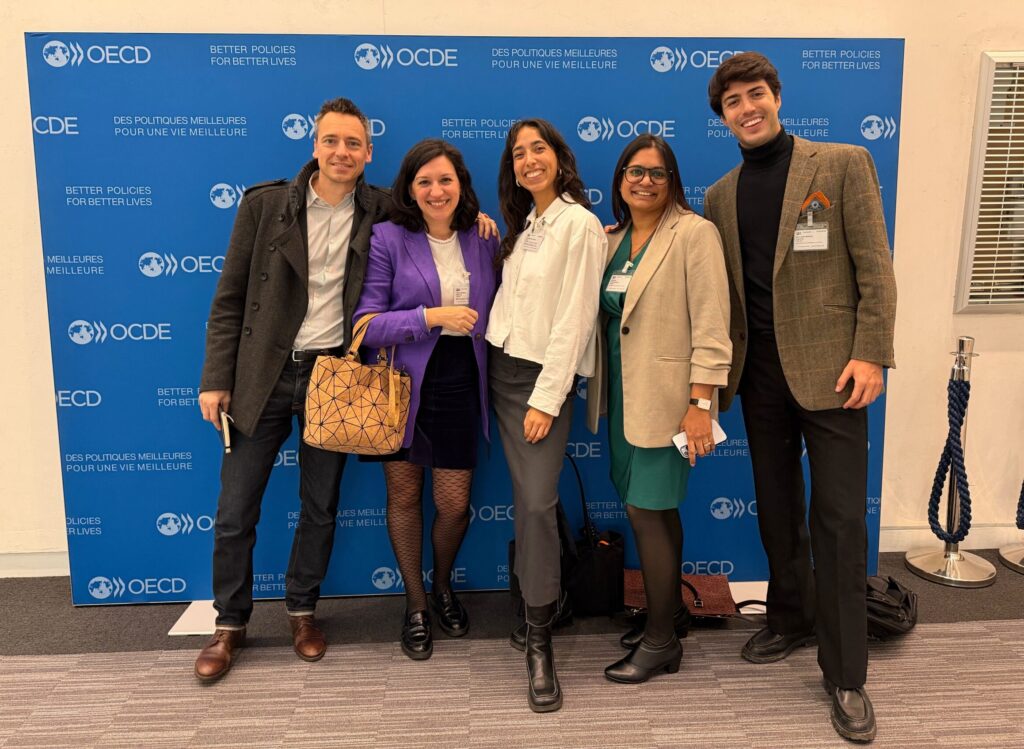
At the recent 2026 OECD Forum on Due Diligence in the Garment and Footwear Sector held in Paris, responsible purchasing practices, upstream due diligence, and the industry’s role came into focus.
The Cascale team was privileged to contribute this year, participating in four formal sessions.
Interim chief executive officer Harsh Saini spoke at a mainstage workshop on upstream due diligence titled “Moving Beyond Direct Business Relationships” led by the OECD Centre for Responsible Business Conduct’s garment and footwear program manager Peter Higgins, and Lauren Shields, lead of sustainability initiatives. Setting the scene for the workshop, fellow speakers included Clare Woodford, Alpine Group’s vice president of impact and sustainability and Ines Kaempfer, CEO of The Center for Child Rights and Business.
During the session, Cascale’s Saini highlighted the need for greater alignment across the sector to make due diligence workable in practice. She emphasized that focusing only on Tier-1 suppliers is insufficient and risks perpetuating fragmentation and audit fatigue for manufacturers.
“For more than 30 years we’ve been asking suppliers for more and more information, yet we keep duplicating efforts instead of coordinating them,” said Saini. “If we want due diligence to work upstream, we have to move beyond Tier-1, align expectations, and stop overburdening suppliers with fragmented requests.”
She noted that collaboration between initiatives, including Fair Wear, the Social and Labor Convergence Program (SLCP), Better Buying and others, together with shared data from tools such as the Higg Index, is essential to support upstream due diligence and credible decent-work outcomes across supply chains.
The workshop featured a discussion-style format with attendees divided into groups after initial firestarter prompts on upstream due diligence. Groups included brands, manufacturers, sustainability initiatives, and trade unions, CSOs, and policymakers.
Cascale also hosted a virtual side session drawing on insights from the Better Buying Purchasing Practices Index (BBPPI) 2025, “Sustainable Supply Chains in Turbulent Times: Regional Differences in Suppliers’ Experiences of Buyer Purchasing Practices in the Age of Tariffs.”
Katie Hess, head of product at Cascale’s Better Buying, and Orsolya Janossy, senior sustainability manager at Recover, guided the conversation. The virtual session underscored Cascale’s Better Buying data, collected confidentially from suppliers in Spring 2025. It unpacked regional challenges faced by suppliers, the impact of local contexts and business environments on buyer purchasing practices, and how buyer companies can adapt to volatility – while upholding responsible practices during turbulent times.
“This isn’t just a pricing conversation,” said Hess. “It comes down to a stability and feasibility issue. When costing isn’t realistic, it becomes a due diligence issue. Compliance and decent work are what gets squeezed first.”
“What we learned is that responsible sourcing isn’t just about auditing compliance or sourcing compliance, it’s about building a win-win sustainable partnership,” said Janossy.
She showcased a case study from Recover’s suppliers in Bangladesh, where fire safety often lags. Together, they prioritized long-term stability through shared risk management and improved grievance mechanisms and training.
In a separate virtual side session, Cascale’s Jeremy Lardeau, senior vice president of the Higg Index, moderated a discussion hosted by The Industry We Want as part of a Retailer Roundtable (RRT). Representatives from Fair Wear, retailers Zalando and Boozt, and brand member Ecco also joined the conversation. The session explored the essential and often overlooked role of third-party retailers in implementing and upholding effective Human Rights and Environmental Due Diligence (HREDD). Using the RRT to foster a pre-competitive space for retailers, the session examined the role of Multi-Stakeholder Initiatives (MSIs) to share and promote best practices. Together, these efforts aim to develop aligned solutions grounded in the OECD Due Diligence for Responsible Business Conduct framework.
In addition, Gabriele Ballero, public affairs manager at Cascale participated in a multi-stakeholder roundtable co-organized by Policy Hub and SLCP, focused on the implementation of the Corporate Sustainability Due Diligence Directive (CSDDD) in the textile sector. The discussion gathered brands, manufacturers, policymakers and civil society representatives to assess the practical implications of the Omnibus changes and priorities for upcoming guidance.
Participants emphasized that the sector is not starting from scratch and that implementation should recognize credible existing tools and initiatives rather than create parallel systems. The discussion also highlighted the need for clarity around “reasonably available information,” warning that without guidance companies may over-collect data or face legal uncertainty. Stakeholders broadly supported a progressive, risk-based approach, greater interoperability across instruments, and collaboration to address deeper tiers of the supply chain while reducing audit fatigue.
Also in attendance were Cascale’s Carolina van Loenen, director of stakeholder engagement; Orine Dsouza, senior manager, Higg Facility Tools; and Hanna Griesbeck Garcia, Manager, stakeholder engagement, EMEA. As in years past, the stakeholder engagement team played a leading role in event preparation.
New analysis shows over 60 percent alignment between Cascale Better Buying survey data and leading due diligence frameworks.

Amsterdam, Hong Kong, Oakland (CA) – February 11, 2026: Cascale Better Buying has released Mapping Cascale Better Buying Responsible Purchasing Practices Survey Questions to the CFRPP and PP-DD Frameworks analyzing how its Responsible Purchasing Practices surveys align with two widely used industry due diligence frameworks: the Common Framework for Responsible Purchasing Practices (CFRPP) and the Purchasing Practices Human Rights Due Diligence (PP-DD) Framework.
The analysis maps supplier feedback captured through Better Buying tools against each framework’s requirements to better understand where responsible purchasing and human rights due diligence expectations are already reflected, where additional coverage can be achieved through existing services, and where targeted refinements could further strengthen alignment. The report also identifies areas that fall outside Better Buying’s core focus or practices that suppliers cannot reasonably observe.
“Our goal was to bring greater clarity to how supplier-reported data can support responsible purchasing and human rights due diligence efforts,” said Katie Hess, head of product at Cascale Better Buying. “This mapping shows that supplier feedback already provides meaningful insight into many core practices, and it highlights practical ways companies can strengthen alignment without adding unnecessary complexity.”
Mapping to the CFRPP
The CFRPP was developed in 2022 by a working group of multi-stakeholder initiatives as a shared reference point for companies and supporting organizations to understand and improve responsible purchasing practices in supply chains. Better Buying Institute, whose assets were acquired by Cascale in 2025, was consulted during the development process and contributed input as part of the broader stakeholder consultation and benchmarking process.
Mapping the Cascale Better Buying survey questions to the CFRPP revealed:
Mapping to the PP-DD Framework
The PP-DD Framework was developed by the Responsible Purchasing Practices Working Group, a coalition of multi-stakeholder organizations working to advance responsible purchasing and human rights due diligence in global supply chains. The PP-DD Framework defines the core actions companies should be accountable for when aligning purchasing practices with human rights due diligence expectations.
Mapping the Cascale Better Buying survey questions to the PP-DD Framework revealed:
Summary
Together, the findings demonstrate how supplier voice data can support responsible purchasing practices and human rights due diligence when used alongside established frameworks. The report reinforces Cascale Better Buying’s role in helping companies understand where they are today and where practical improvements can be made to support decent work through more responsible purchasing.
Media Contact: Forster Communications, cascaleforster@forster.co.uk
New softgoods data from Cascale’s Better Buying 2025 survey shows gains in buyer-supplier partnerships, plus areas for improvement.

Amsterdam, Hong Kong, Oakland (CA) – January 30, 2026: Cascale today released the Better Buying Responsible Purchasing Practices Snapshot Survey 2025 Report (formerly the Better Buying Partnership Index), offering a data-driven view of how suppliers experience buyers’ purchasing practices across the apparel supply chain. The report draws on findings from the fifth annual Better Buying Partnership Index (BBPI) rating cycle and amplifies anonymized supplier feedback to highlight what is working and where improvement is still needed.
The report focuses exclusively on softgoods, reflecting 974 supplier ratings collected from 51 countries and regions between October 1 and November 7, 2025. China, Bangladesh, and India accounted for the largest share of softgoods ratings, with 920 softgoods responses included in the analysis.
“This report shows that responsible purchasing practices are improving, but also that progress depends on listening closely to suppliers and acting on what they tell us,” said Katie Hess, Head of Product at Cascale’s Better Buying. “Suppliers are clear about what enables strong partnerships: predictable planning, fair terms, and consistent communication. When buyers embed these practices, they create more resilient supply chains and better outcomes for workers, businesses, and the environment.”
Based on anonymized, open-ended responses from the 2025 survey, suppliers consistently highlighted the following themes as critical to strong, mutually beneficial buyer–supplier relationships.
Cascale encourages brands and retailers to use the findings as a practical benchmark to assess their own purchasing practices and identify areas for targeted improvement.
The Better Buying Snapshot Survey is part of Cascale’s broader commitment to advancing responsible purchasing practices as a foundational lever for decent work, environmental performance, and long-term supply chain resilience. Cascale will continue to support brands and manufacturers in using Better Buying data alongside other tools and programs to drive measurable, collaborative progress.
This report offers a data-driven view of how suppliers experience buyers’ purchasing practices across the apparel supply chain. It draws on findings from the fifth annual Better Buying Partnership Index (BBPI) rating cycle and amplifies anonymized supplier feedback to highlight what is working and where improvement is still needed.

During the era of tariffs, BBPPI 2025 data shows repeat subscribers see greater resilience, yet progress is still uneven across a range of criteria. See how supplier regions weigh in.

This year’s Better Buying Purchasing Practices Index (BBPPI) collected data from suppliers in the 12 months leading up to April 2025, the latter part of which coincided with the introduction of the U.S. trade tariffs.
The findings reveal notable variations in how suppliers are experiencing purchasing practices across the value chain, portraying uneven progress on responsible purchasing on the part of global brands and retailers.
Suppliers in North America are struggling to get paid for orders, which is negatively affecting their cash flow and sustainability. But on the plus side, they are reporting better, more accurate and timely forecasts from their suppliers.
In the APAC region, suppliers reported fewer issues with payment and terms but reported weaker design and development practices on the part of their buyer customers. This is in part because of too few samples being converted into orders – wasting valuable time and resources.
These mixed experiences suggest that progress on responsible purchasing is uneven. They are likely due to a combination of factors – they may be as much about the types of product buyers are sourcing and the partnership models they adopt with their suppliers as they are to geography and geopolitical unrest. But they underscore the need for companies to take a more consistent, systems-based approach to improving purchasing practices and embedding fair and predictable working relationships throughout their supply chains.
Companies benefit hugely from understanding how suppliers’ experiences of their purchasing practices are shaped by local contexts and business environments, and can learn from higher-performing regions. Thus, they can act accordingly, directing support to those facing persistent challenges for a more balanced and sustainable global supply chain. Those that actively subscribe with Better Buying receive confidential scores and reports, with detailed, granular data specific to their own business, and recommendations as to how they can make improvements, working with their suppliers to co-create solutions to shared business challenges.
Back in 2021, Better Buying collected data from suppliers during the Covid-19 pandemic, and expected to see big falls in the scores awarded to buyers. We were surprised to see that companies that had subscribed with the surveys year over year had still managed to make some improvements, even during this difficult time. The BBPPI data shows that the same is largely true during the era of tariffs. While both the overall and category scores have fallen slightly, those companies that have subscribed with Better Buying year over year have continued to make improvements. Three companies in particular have made big improvements, including one that increased its overall score by 10 points between 2023 and 2025.
Companies that are serious about human rights due diligence have a platform that enables their suppliers to share their experiences anonymously, giving buyer companies access to deep, granular insights that they can use, in partnership with their suppliers, to build region-specific, targeted strategies for future-proofing their supply chains.
To find out about how to subscribe for the 2026 BBPI, contact Leonie Abraham, vice president of business development, Cascale Better Buying. For a deeper dive on this data, join us for the “Better Buying 2025 Insights: Navigating global volatility and defining the next steps for better purchasing practices” webinar on December 9 with Innovation Forum.