What Earth Month Asks of Us Now

  • Earth Month
  • Sustainable Furnishings Council

Rick Ridgeway reflects on a momentous year for Cascale, after taking Sustainable Furnishings Council (SFC) under its wing.

Rick Ridgeway on stage at the Cascale Annual Meeting 2024
Headshot of Rick Ridgeway
Rick Ridgeway
April 28, 2026

I’ve been thinking about how Cascale began.

It started with a question from two fed-up sustainability outcasts at major companies.

How do we take responsibility for the impact we’re having in this industry?

For some of us, that question first showed up decades ago, in factories, in boardrooms, in places where the connection between business and the natural world was impossible to ignore. It wasn’t always clear what to do next. But it was clear that doing nothing was no longer an option.

That realization brought people together, and from it came the Higg Index as a way to unify the tides, yes – but still a myriad of other possibilities.

The Cascale today is a bridge of different companies, different roles, even different industries (with the acquisition of Sustainable Furnishings Council key assets signaling an expanding mission).

Why This Moment Feels Familiar

Now, as I look at the home furnishings sector, I see something familiar. There are a different set of materials and acronyms but many of the same challenges.

There’s the same complexity, nuance, and fragmentation. As with fast fashion, so with fast furniture. It’s an insane pressure crunch to move with lightning speed, while still promising the world a greater sense of transparency and accountability.

And yet, I revisit the same underlying question: how do we do this in a way that actually works?

Because we can’t afford to let another rotation go by without diving deeper. Through my engagement with Cascale, I still believe the answer is not going to come from any one organization or sector. It’s going to come from working together.

Extending the Work

The collaboration between Cascale and the Sustainable Furnishings Council is part of that next step. Not an attempt to replicate what’s been done before, but to build on it.

To take what we’ve learned and apply it in new contexts. To recognize that while every supply chain is different, the need for alignment, credible data, and shared responsibility is the same. This is how progress scales.

By creating a common foundation, we make it easier for companies to understand their impact, to act on it, and to improve over time. And by doing it together, we move faster than we would on our own.

What Earth Month Reminds Us

Earth Month has always been a moment to step back and reflect. But reflection only matters if it leads to action. The challenges we’re facing today — climate change, resource constraints, the need for decent work — are not new. What’s changed is the urgency. And, in many ways, the opportunity.

The work is far from finished. If anything, it’s just beginning again, in new sectors, with new partners, and with a clearer understanding of what it takes to make real progress.

For home furnishings, greening supply chains will require the same things that got us here: honesty about where we are, alignment on where we need to go, and a willingness to work together to get there.

That’s what Earth Month asks of us. Not perfection. Not quick wins. But commitment. And the understanding that the only way forward is together.

At ASU FIDM Event, Cascale Enlightens Students on Higg Index

  • Earth Month

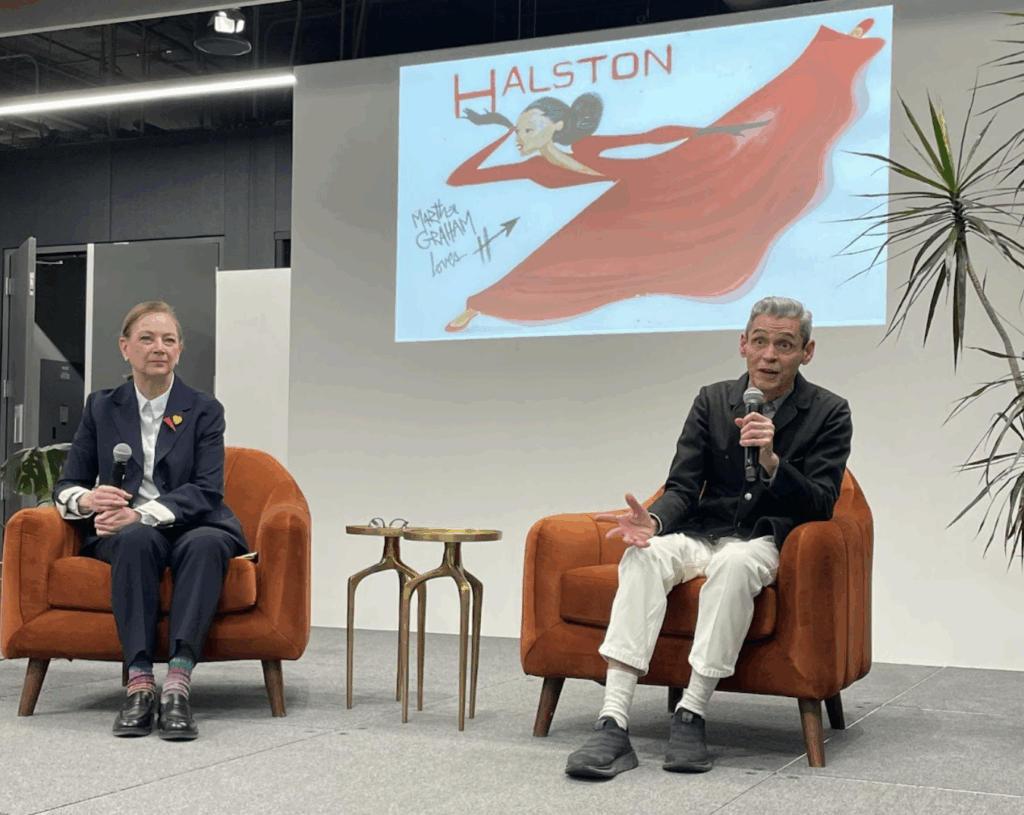
Among fashion luminaries, Rachel Lincoln Sarnoff, director of communications at Cascale, presented insights at the Arizona State University Fashion Institute of Design and Merchandising (ASU FIDM) Fashion Symposium 2025.

Cascale joins luminaries at ASU FIDM event in April 2025. Two speakers onstage with a Halston backdrop.
April 25, 2025

Recently, Cascale engaged fashion students on utilizing the Higg Index to scale sustainability.

Among fashion luminaries, Rachel Lincoln Sarnoff, director of communications at Cascale, presented insights at the Arizona State University Fashion Institute of Design and Merchandising (ASU FIDM) Fashion Symposium 2025. Directed by Dennita Sewell, ASU FIDM reaches nearly 900 students across two campuses, incubating leaders with a full range of synchronous programming. The university also boasts opportunities at the Wearable Technology Lab in Phoenix, AZ, and the Fashion Futures Research Lab and ASU FIDM Museum in Los Angeles, CA.

At the Fashion Symposium 2025 event, which took place at the university’s cutting edge Fusion on First housing and workplace complex in Phoenix, industry leaders inspired a full house of students, including newly recognized recipients of the 2025 Fashion Scholarship Fund. Sarnoff shared her journey at Cascale and then detailed how the organization’s Higg Index tools can be used to Combat Climate Change and Support Decent Work for All.

In addition to Sarnoff, speakers included Jill Hub, senior design manager of women’s apparel at The Walt Disney Company, and Marrisa Wilson, creative director and founder of MARRISA WILSON New York, who took the stage to talk about their paths from art school to career. Beth Forsberg, VP and chief sustainability officer at Goodwill of Central and Northern Arizona, explained what Goodwill is doing to close the loop on waste, and Sharleen Ernster, CEO and founder of We Are HAH, detailed her journey from Victoria’s Secret to founding the We Are HAH eco luxury swim and intimates line.

In conversation with Christina Frank, curator of the ASU FIDM Museum in Los Angeles, Jess Cuevas, art director for WILLY CHAVARRIA, shared how he ended up working with clients like Madonna. Later, Sewell was joined onstage by the legendary artist Ruben Toledo, who also collaborated with his late wife, the fashion designer Isabel Toledo. After her presentation, Sarnoff joined Ernster onstage to discuss sustainability in fashion with Danielle Testa, assistant professor and fashion business management track lead at Arizona State University.

The conversations were especially relevant to students when contextualized as part of a wider narrative. In conclusion, Cuevas said: “Fashion is what time looks like, it is the fingerprint of time. Love is the compass to determine what you do in life… Who would have thought that two Cuban refugees would go on to dress the First Lady of the United States? That’s proof the American Dream exists.”

Cascale Joins Fashion Professionals at the 2024 Sustainable Fashion Forum

  • Higg Index Tools
  • Earth Month
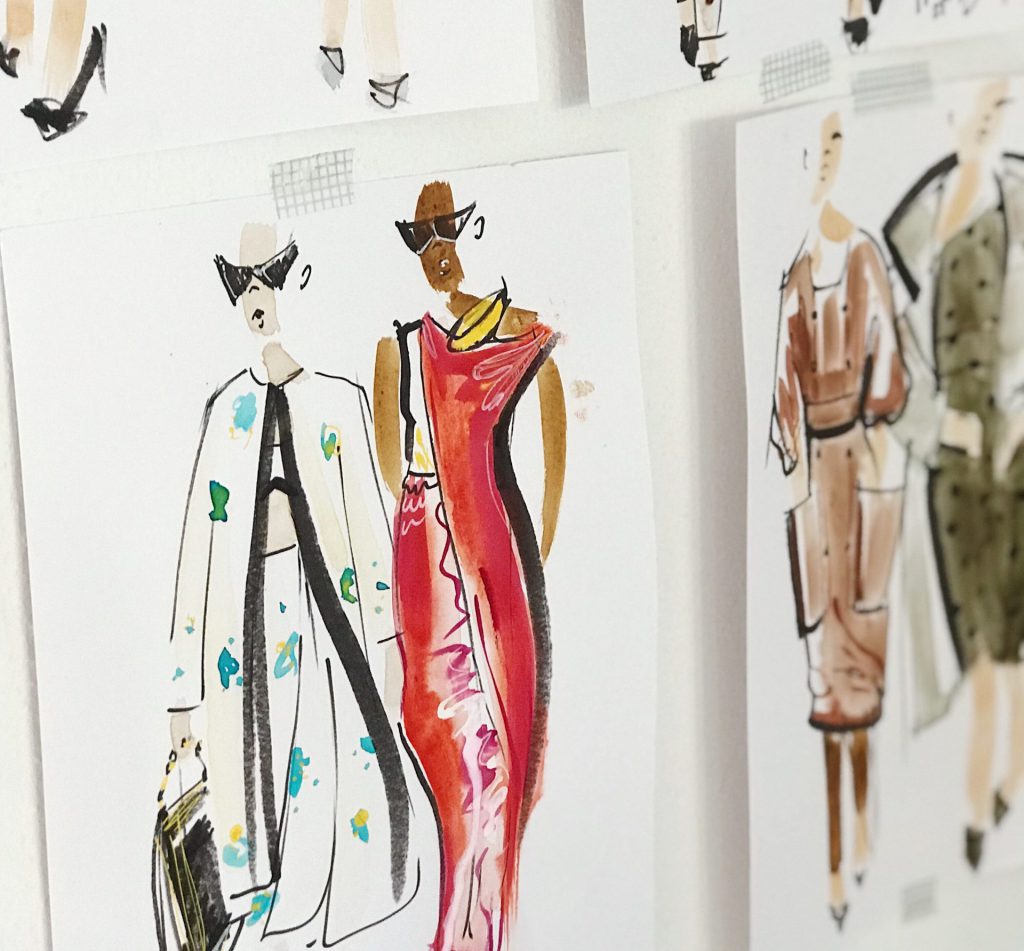
fashion sketch
May 02, 2024

The Sustainable Fashion Forum 2024 took place April 17 to 19 in Austin, Texas, convening a number of sustainable fashion professionals.

Topics spanned everything from labor rights to regulatory changes. The event began with workshops on policy and circularity, including an immersive upcycling activity featuring Cascale members Everlane and Eastman, as well as two full days of programming. Networking opportunities were plentiful, hosted at venues throughout the city.

Cascale’s editorial director Kaley Roshitsh and Melissa Ortuño de León, senior manager, Higg Product Tools, both participated in the event and moderated conversations.

In one conversation, “Achieving Profitability as a Small Brand,” Jan Lo,  co-founder and chief executive officer at Lo&Sons spoke of the trade-offs of owning a small business. He detailed the aims of his growing business which includes strategic decision-making across his value chain, be it recycled materials or flat-packing products.

The co-founder also treated the audience to samples of Lo&Sons’ “Catalina Deluxe” tote made of recycled polyester, with utility uniquely inspired by his former New York City DJ career.

Lo is also on the board of Yale University’s Center for Business and the Environment, offering support to entrepreneurs. His advice to early-career professionals is to be willing to pursue the “not-so-glamorous job title,” often found in supply chain or operations roles.

In another panel conversation titled “Who’s at the Table: Embracing Global Voices in Fashion’s Circular Future,” experts Charles Oyamo, co-founder and CEO, Rethread Africa; Yayra Agbofah, founder at The Revival and consultancy AfroDistrict; and Sandra Gonza, senior sustainability strategist, Quantis International; traced the arc of circularity.

The panelists discussed the urgency to fundamentally transform the existing fashion system and embrace circularity while calling for major funding inroads to support their work. A former clothing market trader in Ghana’s Kantamanto Market, Agbofah shared how his community-led initiative The Revival is turning consumer textile waste exported into West Africa – into art. Meanwhile, Oyamo spoke of the reality of scaling his agrowaste fiber. Throughout the conversation, Gonza offered her strategic perspective including how she is working with brands to develop transformational sustainability programs.

In another panel conversation, Sanchita Saxena, senior advisor of supply chain at Article One, and Sheela Ahluwalia, director of policy and advocacy at Transparentem, spoke of the audit-dodging practices that persist in the apparel and textile industry.

“Many suppliers are saying, ‘I don’t think it’s ever possible there’s a true partnerships… We have to think of beyond just doing the minimum,” said Saxena, calling for the reframing of “rightsholders over stakeholders.”

In a separate policy presentation, Michelle Gabriel, graduate program director of sustainable fashion at Glasgow Caledonian College New York City said being a consumer is a “disempowered identity,” arguing for a citizen-first approach. She championed regulatory changes adding, “Businesses today face a competitive disadvantage for engaging in sustainability.”

Fiber Farmers, Clothing Makers Need More than ‘Maybe’

  • Earth Month
Black and white headshot of Kaley Roshitsh
Kaley Roshitsh
April 12, 2024

Preferred fibers are better in theory but how do they become reality?

At Theory’s showroom in New York City on Tuesday, guests learned just how farmers, mill owners, brands, and more align on fiber development for the brand’s “Good Talk” educational series kick off in April.

The Council of Fashion Designers of America (CFDA) and the United Nations’ Fashion and Lifestyle Network co-hosted the event alongside Fast Retailing-owned Theory. Both the CFDA and Fast Retailing are Cascale members, while U.N. Environment is a collaborator with Cascale on past reports. The panel included La Rhea Pepper, co-founder of Textile Exchange and senior advisor of Fashion Makes Change; Wendy Waugh, Theory’s senior vice president of sustainability; and Riccardo and Francesco Marini, owners of Marini and Cecconi Mills. Vogue’s sustainability editor Tonne Goodman moderated the conversation.

Values and partnership were leading points. “We can’t grow it on a maybe. We need strong market partners,” said Pepper. “We have to break away from a price paradigm to a value paradigm.”

“When you start a sustainability journey, you never go back,” added Riccardo Marini, president of Marini Industrie. Marini collaborates closely with Theory for the brand’s signature “Good Linen” made with fine flax fiber sourced from the company’s farm partners in France’s Normandy region. The company also produces stretch linen, the environmental and performance qualities of which were detailed by Francesco Marini. Marini also brought up incoming French legislation including qualities of “emotional durability,” though that is a less tangible measurement for fabric makers today.

Still, the sustainability agenda is progressing with policymakers and impacting the industry. “Brands are under more pressure than they’ve ever been because of the regulatory issues,” stressed Pepper.

In her view, echoed by panelists, legislation is greater leverage to justify the right decisions. Pepper encouraged the audience to find their kindred spirits in pre-competitive spaces and work towards decisions together that align with policy, a value shared by Cascale.

Collective action was one such solution. “The more questions you ask the stronger the relationships grow,” said Waugh. “We have to do it because of the regulation but because it’s the values of who we are at Theory.”

Theory’s event is one of many on the Earth Month events calendar in the sustainable fashion world.

Sustainable Apparel Events, Happenings this Earth Month 2024

  • Earth Month
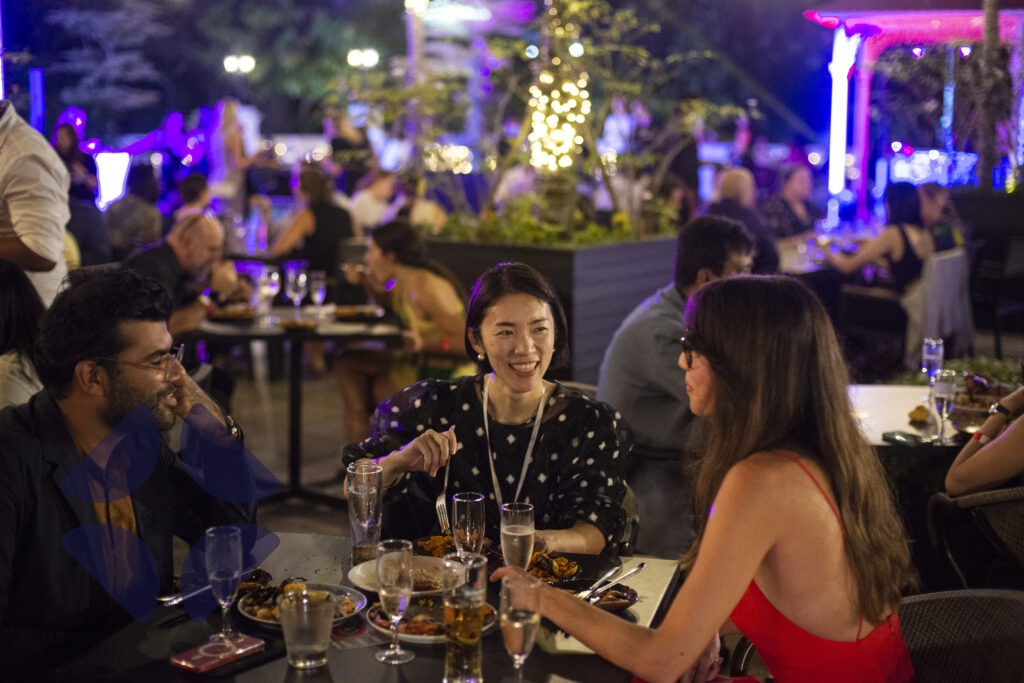
A past Cascale dinner reception with green and purple-hued lighting.
Black and white headshot of Kaley Roshitsh
Kaley Roshitsh
March 29, 2024

What to do and view in April

About Earth Month

Experts say dialogue must come with sustainable investment. The 2030 Agenda, a United Nations climate-aligned progress roadmap, is one strategy for evolving business with people and planet in mind. Though this roadmap was adopted later on by member states, environmentalists first celebrated Earth Day on April 22, 1970. One billion people have mobilized annually since then, per EarthDay.org organizers.

With Earth Month, comes the run of events, pledges, announcements, and eco-themed products. For wherever one stands in their sustainability journey, community remains a motivator for many.

Live Events this April 

Major cities from New York, London, to Tokyo will play host to Earth Month festivities including everything from trail conservation to beach cleanups, as well as industry-focused events. The following roundup highlights events where Cascale executives, members, and wider collaborators will be (or previously were) involved.

On April 16, Cascale affiliate member American Apparel & Footwear Association (AAFA) will host its annual American Image Awards in New York highlighting industry leadership and excellence. Cascale members are notably represented including Global Fashion Agenda’s chief executive officer Federica Marchionni accepting the “Eco-Steward of the Year” award; and Carhartt’s Danilo Amoretty, senior vice president of global product supply and operations, accepting the “Company of the Year” award.

Meanwhile, Fashion World Tokyo is hosting its Sustainable Fashion Expo in Tokyo April 17 to 19. TED will host its TED2024: “The Brave and the Brilliant” in Vancouver, Canada focusing on visionary philanthropy April 15 to 19. On April 25, Bloomberg will convene its Sustainable Business Summit in London. At the end of the month, the “Sustainable Apparel and Textiles” conference from Innovation Forum returns with two events, one in Amsterdam April 23 to 24, and the second in New York June 25 to 26. Also in New York City, Ethics-focused retailer Olivela will host a “Conservation Couture” talk at Fotografiska on April 18, while Davines Group, B Local NYC and eco-influencer Marina Testino will host a regenerative agriculture panel talk “Our Home Planet” April 24 in Brooklyn.

Instead of its usual Portland, Ore. setting, Sustainable Fashion Forum 2024 (SFF24) will take place April 17 to 18 in Austin, Texas. Cascale executives will be speaking at both Innovation Forum and SFF events for this circuit.

Virtual Learning: Sustainable Apparel 

If traveling is out of the question or a conscious refusal, virtual educational opportunities abound. For one, the International Textile Machinery Exhibition (ITMA) will be convening an educational webinar series on textile financing. Sessions include “Impact Financing for Sustainable Transformation” airing April 22. The recordings will be available on-demand on Itmaconnect.com. The Council of Fashion Designers of America (CFDA), alongside notable collaborators, will introduce a video series covering different dimensions of sustainability. In support of the CFDA mission, the educational series looks to inspire action, spotlight creative ingenuity, and engage various perspectives. Topics span biodiversity, innovation, circularity, purpose, and climate action. Guest speakers include everyone from brand executives to educators in aim to cultivate collective action.

As part of its latest installment, EcoTextile News’ podcast traces the latest environmental issues impacting the global textile and clothing supply chain.

Worldly and Cascale will also host a number of Higg FEM 4.0 onboarding and training question-and-answer sessions in April. Members are strongly encouraged to complete their self-assessment by April 30, given the process can take three to six weeks. Updates to the Higg FEM 4.0 process include streamlined usability and a customized platform, new features for improved data quality, built-in error detection, and a completely redesigned assessment. The expanded assessment covers direct emissions, including hotspots in groundwater and soil contamination. There is also newfound relevance across sectors.

Be it educational opportunities or in-person gatherings, community is top of the agenda this Earth Month.